You’ve probably narrowed your upgrade down to two cards and hit the same wall most builders do. The RTX 5070 Ti looks like the smarter spend. The RTX 5080 looks like the safer “buy once” option. On paper, both choices make sense.
The problem is that most 5070 Ti vs 5080 discussions stop at FPS charts. That misses the part that ultimately changes the buying decision. The 5080 doesn’t just ask for more money up front. It can also push you into a bigger power supply, more airflow, and a sturdier overall build if you want stable thermals and long-term durability.
- For most gamers the RTX 5070 Ti is the better value in the 5070 Ti vs 5080 matchup: strong 1440p and entry-4K performance without forcing a bigger PSU and case.
- Both cards share 16GB GDDR7, so the 5080’s edge comes from a wider chip (more CUDA, RT, and Tensor cores), not more VRAM.
- The 5080 (360W) demands more power, airflow, and a sturdier build than the 5070 Ti (300W): budget for those hidden costs.
- At 2026 street prices both sit well above MSRP, which narrows the 5080’s appeal and rewards the cheaper 5070 Ti.
- Buy the 5080 only for uncompromised 4K or creative work where maximum headroom justifies the premium; otherwise the 5070 Ti wins on value.
Table of Contents
Choosing Your Next GPU Upgrade
A lot of gamers are stuck in the same spot right now. You want a card that feels worth the money, not the absolute cheapest option and not the one that looks best in benchmark screenshots. That’s the right way to think about this upgrade.
The RTX 5070 Ti and RTX 5080 both sit in a range where “budget” means value inside a premium category. If you mainly play competitive FPS games at 1440p, jump into long MMO sessions, or run a single-PC stream a few nights a week, the better buy isn’t automatically the faster card. It’s the one that gives you the best full-build result without forcing weak compromises elsewhere.
Buying rule: Don’t judge these cards by GPU price alone. Judge them by what they demand from the rest of your system.
If you’re still deciding what performance tier makes sense for your resolution, this 1440p graphics card guide is a useful reality check before spending into 4K territory.
The short version is simple. The 5080 is stronger. The 5070 Ti is usually the smarter value. The gap gets clearer once you include hidden build costs.
Core Specs and Architecture Showdown
On paper, these cards look closer than their prices suggest. Both sit on the same Blackwell-era feature set, both carry 16GB of GDDR7, and both support the same NVIDIA software stack. The key difference is how much extra hardware the 5080 gives you, and whether your build can use it without forcing more spending around the card.
RTX 5070 Ti vs 5080 Specification Comparison
| Specification | RTX 5070 Ti | RTX 5080 |
|---|---|---|
| CUDA cores | 8,960 | 10,752 |
| Ray Tracing cores | 70 | 84 4th-generation Ray Tracing cores |
| Tensor performance | 1,406 TOPS | 1,808 TOPS |
| VRAM | 16GB GDDR7 | 16GB GDDR7 |
| Memory bandwidth | 896 GB/s | 960 GB/s |
| TDP | 300W | 360W |
The 5080 has the wider chip. More CUDA cores, more RT cores, more AI throughput, and a little more memory bandwidth give it more headroom once you push higher resolutions, heavier ray tracing, or demanding upscaling settings. That part is straightforward. For the full architectural breakdown, see NVIDIA’s GeForce RTX 50 Series overview.
The more important detail is what does not change. VRAM capacity stays at 16GB on both cards.
That matters for value. You are not paying 5080 money to get a jump to a larger memory pool. You are paying for more speed from the same basic memory capacity, and that changes the upgrade math. For a lot of 1440p builds, the 5070 Ti already covers the hard part. It delivers enough shader power and bandwidth to run modern games at high settings without dragging the rest of the system into a more expensive tier.
What the specs actually mean
Core count differences matter most at 4K, in ray-traced games, and in workloads that can use the extra Tensor performance. If you also handle creative tasks, local AI tools, or image generation, the 5080 has more room before performance starts to feel tight. A practical guide to creating AI image models gives a useful example of why that extra AI throughput can matter outside gaming.
For a gaming-first buyer, though, the spec table points to a simpler conclusion. The 5080 is the faster card. The 5070 Ti is usually the cleaner fit unless you already have the monitor, CPU, case airflow, and power supply to support a higher-tier GPU without extra upgrades.
That last part gets missed in a lot of spec-first comparisons. A 60W TDP gap does not sound huge until it turns into a stronger PSU recommendation, more case heat, and sometimes a cooler rethink if your current build already runs warm. If you are still weighing platform features against raw performance, this AMD vs Nvidia GPU comparison helps frame the software and ecosystem side of the decision.
Real-World Gaming and Streaming Benchmarks
A common upgrade scenario looks like this. You already have a strong 1440p system, you want higher settings or better ray tracing, and you are trying to decide whether the 5080 changes your day-to-day experience enough to justify the bigger spend. In games, the answer depends heavily on resolution and how hard you push image quality.
FPS gaming and high refresh play
For competitive shooters at 1440p, the 5070 Ti is already in the range where the rest of the system starts to matter more. CPU limits, game optimization, and monitor refresh often decide the experience before the raw GPU gap does. That makes the cheaper card easier to recommend for players chasing responsive 1440p performance rather than maxed-out 4K visuals.
At 4K, the 5080 pulls ahead in a noticeable way. Minimums hold up better, heavy fights are less likely to drag, and you have more room to keep settings high without giving up smoothness. That does not automatically make it the better buy. It makes it the stronger card for buyers who already know they will use that extra headroom.
Single-player games and visual settings
Story-driven AAA games show the clearest separation. Native 4K, ray tracing, and ultra presets put enough load on the GPU that the 5080 starts acting like a higher tier product instead of a slightly faster version of the same idea.
That matters if you care about image quality first.
The 5070 Ti still holds its ground at 1440p high or ultra settings, especially if you are comfortable using upscaling where it looks clean. For many builds, that is the smarter balance. You keep excellent visual quality, avoid paying for performance you may not see often, and reduce the chance that one GPU upgrade turns into a larger rebuild later.
MMO sessions and streaming use
Long MMO sessions and single-PC streaming expose a different kind of value. Peak FPS is only part of the story. Sustained thermals, fan noise, encoder quality, and system stability matter just as much after three or four hours in game.
Both cards can handle gaming and streaming on one machine. The better value choice depends on your workload. The 5080 gives more overhead if you stream demanding titles at higher resolutions while keeping background apps, browser tabs, chat tools, and capture software open. The 5070 Ti is often the more sensible streaming card for a 1440p setup because it still delivers strong in-game performance without pushing the whole build into a hotter, more expensive class. If you are planning the full system around that use case, this streaming PC build guide is a practical place to start.
The short version is simple. The 5080 wins the benchmark fight most clearly at 4K and in heavier ray-traced games. The 5070 Ti usually wins the value argument for 1440p gaming, long play sessions, and builds where total system cost still matters.
Power Thermals and Build Considerations
Power and heat are where the 5080 can stop being a simple GPU swap and start becoming a system project.
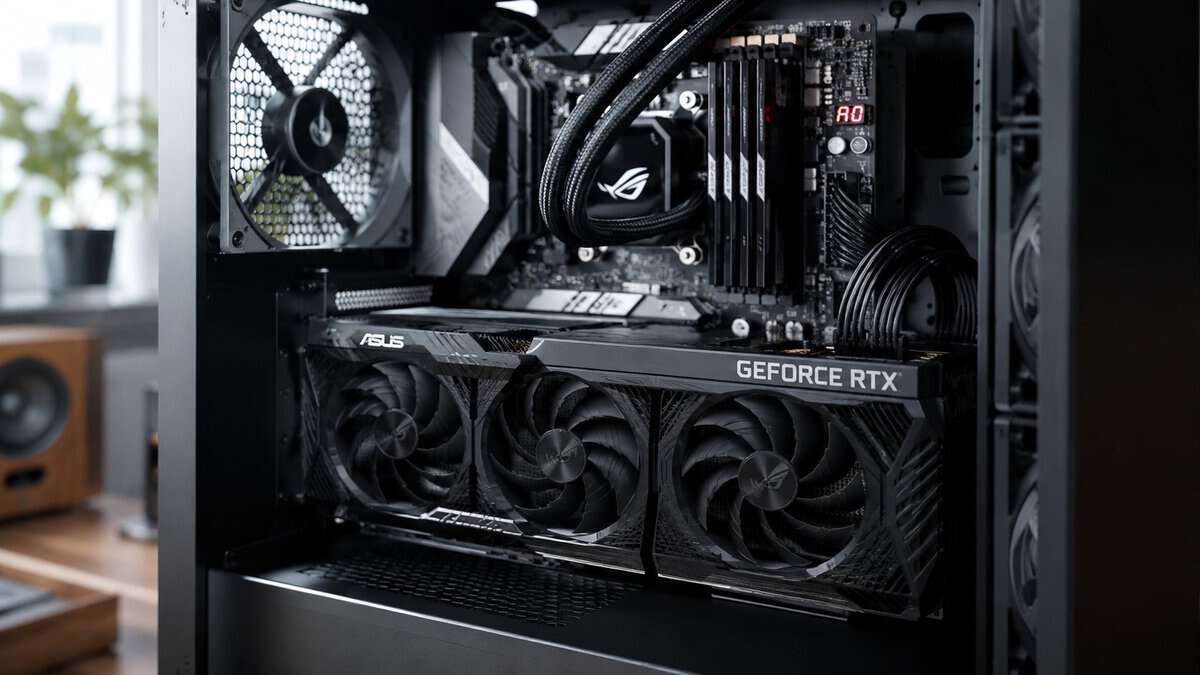
On paper, the gap looks manageable. In a real case, it changes the kind of build that makes sense. The 5070 Ti usually drops into a decent midrange system with fewer compromises. The 5080 asks harder questions about PSU quality, case airflow, cooler clearance, and how much fan noise you are willing to tolerate after a few hours of play.
What that means inside a real build
The first cost is power delivery. A 5070 Ti is easier to pair with the kind of power supply many gamers already own. A 5080 often pushes the build into a higher wattage tier if you want proper overhead instead of running close to the limit under gaming spikes. If your current PSU is older, lower quality, or borderline on capacity, that upgrade moves from nice-to-have to part of the GPU budget.
Heat is the second cost, and it shows up in places people skip over during the buying process. More GPU heat means more case heat. That puts extra pressure on front intake fans, CPU cooler performance, and overall noise tuning. In a compact or airflow-restricted case, the 5080 is much less forgiving.
There is also a physical fit question. Higher-tier cards tend to be larger, heavier, and harder to work around in tighter builds. Clearance near front fans, drive cages, and radiator mounts can become a real problem, especially if the case was already packed.
Here is the practical split:
- 5070 Ti: Better fit for existing mid-tower builds, fewer surprise upgrades, easier to keep quiet.
- 5080: Better fit for newer builds with strong airflow, a high-quality PSU, and enough room for a larger cooler design.
- Either card: Benefits from tuning. A good GPU undervolting guide can reduce heat and noise without giving up much real performance.
My advice is simple. If you are budgeting for a 5080, include the supporting hardware from the start. If you are not prepared to improve power delivery and airflow, the 5070 Ti is usually the cleaner purchase and the easier card to live with every day.
Price to Performance and Total Cost of Ownership
A lot of GPU upgrades look affordable until the cart is complete.
The 5080 is faster. The problem is that the full price gap is rarely just the card itself. Once a build needs a stronger PSU, better case airflow, or a cooler case to keep noise under control, the 5080 stops being a simple GPU upgrade and starts becoming a platform upgrade.
That changes the value equation.
For a lot of 1440p players, the 5070 Ti ends up delivering the better return because more of the budget stays available for the rest of the system. You can keep the build balanced instead of pouring extra money into power and thermal support for performance that may only show up clearly at heavier settings, higher resolutions, or longer-term headroom targets.
The 5080 still has a valid case. Buyers aiming at 4K, heavier ray tracing, or a longer upgrade cycle can justify the extra spend. But the math only works if the system around it is already ready, or if the total budget accounts for those supporting parts from the start.
A practical way to judge it is by asking what the extra money replaces. If choosing the 5080 means settling for a weaker PSU, fewer case fans, less storage, or a noisier case, the overall PC often gets worse, even though the GPU gets better. I would rather see a clean 5070 Ti build with solid airflow and power overhead than a stretched 5080 build that runs hot, loud, and close to the limit.
Here is the value split:
- 5070 Ti: Better price-to-performance for most 1440p gaming builds, especially if you want to avoid extra spending outside the GPU.
- 5080: Better choice for buyers who will use its 4K headroom and already have the supporting hardware budgeted.
- Tight overall budgets: A better mid-range GPU for balanced builds can be the smarter purchase than forcing either card into a compromised system.
Final Verdict: Who Should Buy Which Card
The RTX 5070 Ti is the better buy for most budget-conscious gamers shopping in this class. It gives you strong high-refresh 1440p performance, easier thermals, less demanding power needs, and a more balanced path to a durable build. If you mostly play competitive FPS games, spend hours in MMOs, or want a clean single-PC streaming setup without rebuilding half your system around the GPU, this is the card I’d point to first.
The RTX 5080 is the right card for a narrower buyer. If your target is uncompromised 4K gaming and you care more about max settings and extra headroom than overall value, the 5080 is the better performer. It also makes more sense for buyers who use their machine for demanding creative work alongside gaming. You just have to price it accurately. That means PSU, cooling, airflow, and case quality all count.
Quick buyer breakdown
- Choose the RTX 5070 Ti if you want the best value for 1440p, lower heat, and a build that stays practical.
- Choose the RTX 5080 if native 4K performance is the goal and you’re willing to fund the supporting hardware it needs.
- Choose a lower-tier card if both of these force compromises elsewhere in the build. A cheaper GPU paired with solid cooling, a reliable PSU, and better overall component quality is often the wiser system.
Buy the card that fits the build you can actually finish properly. A powerful GPU in a weak, noisy, heat-soaked system isn’t a value win.
Frequently Asked Questions
The questions builders ask most when choosing between these two cards.
Is 16GB of VRAM enough for the RTX 5070 Ti and 5080?
For gaming in 2026, yes. Both cards carry 16GB of GDDR7, which comfortably handles 1440p and most 4K titles with headroom. Very heavy 4K texture mods or professional creative workloads can approach the limit, but neither card is VRAM-starved for games. The 5080’s advantage comes from its wider chip, not extra memory.
What power supply do I need for the RTX 5070 Ti vs the 5080?
The RTX 5070 Ti (300W) is comfortable on a quality 750W unit. The RTX 5080 (360W) is safer on an 850W supply to absorb transient spikes, and it benefits from stronger case airflow. Factor the bigger PSU and cooling into the 5080’s real cost.
Is the RTX 5070 Ti good enough for 4K, or do I need the 5080?
The 5070 Ti handles 4K well in most games, especially at high (rather than maxed) settings and with DLSS. The 5080 is the better pick if you want consistently maxed 4K with heavy ray tracing and would rather not lean on upscaling. For high-refresh 1440p, the 5070 Ti is more than enough.
Is the RTX 5080 worth the extra money over the 5070 Ti?
For most gamers, no. The 5070 Ti is the stronger value, and at current street prices the 5080 carries a meaningful premium plus higher build costs. The 5080 earns its price only for uncompromised 4K, demanding creative work, or buyers who specifically want maximum headroom.
If you’re trying to stretch every dollar without ending up with regret upgrades, Budget Loadout is built for that exact job. It focuses on practical gaming and streaming gear advice, real trade-offs, and value-first recommendations that help you build a setup that performs well and lasts.
Related Articles