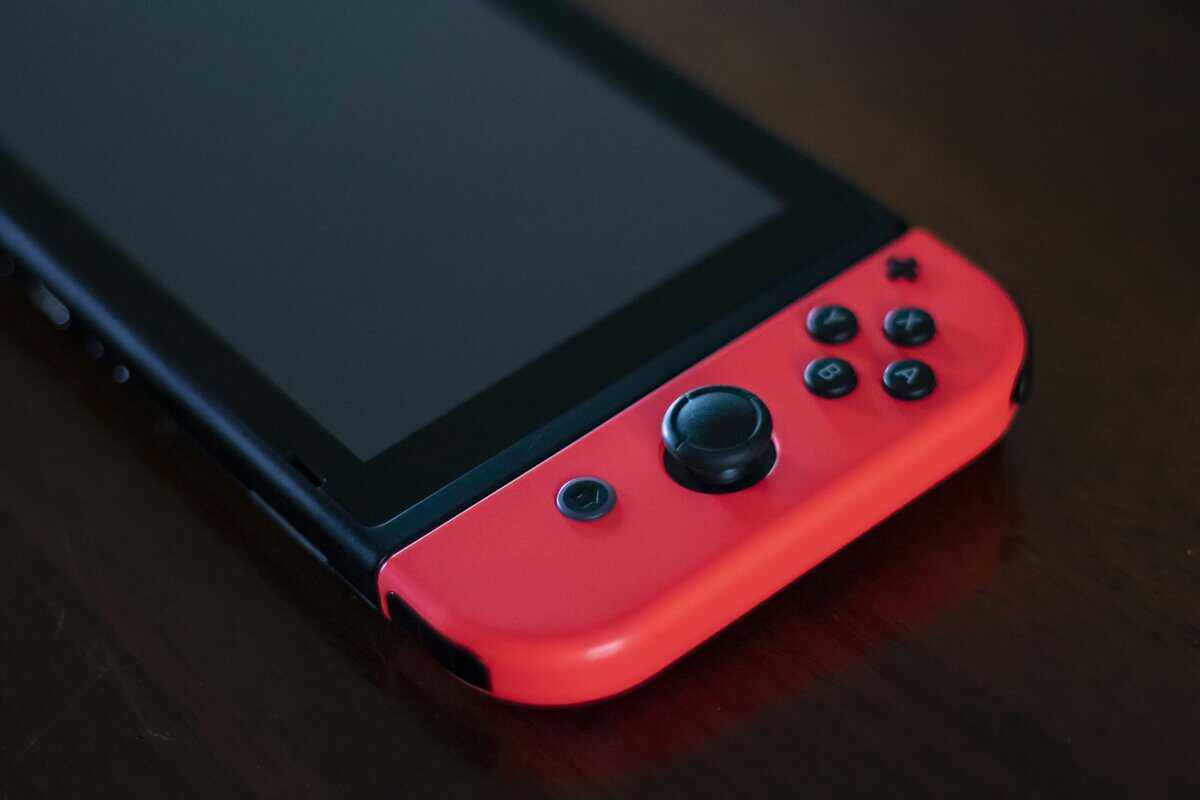
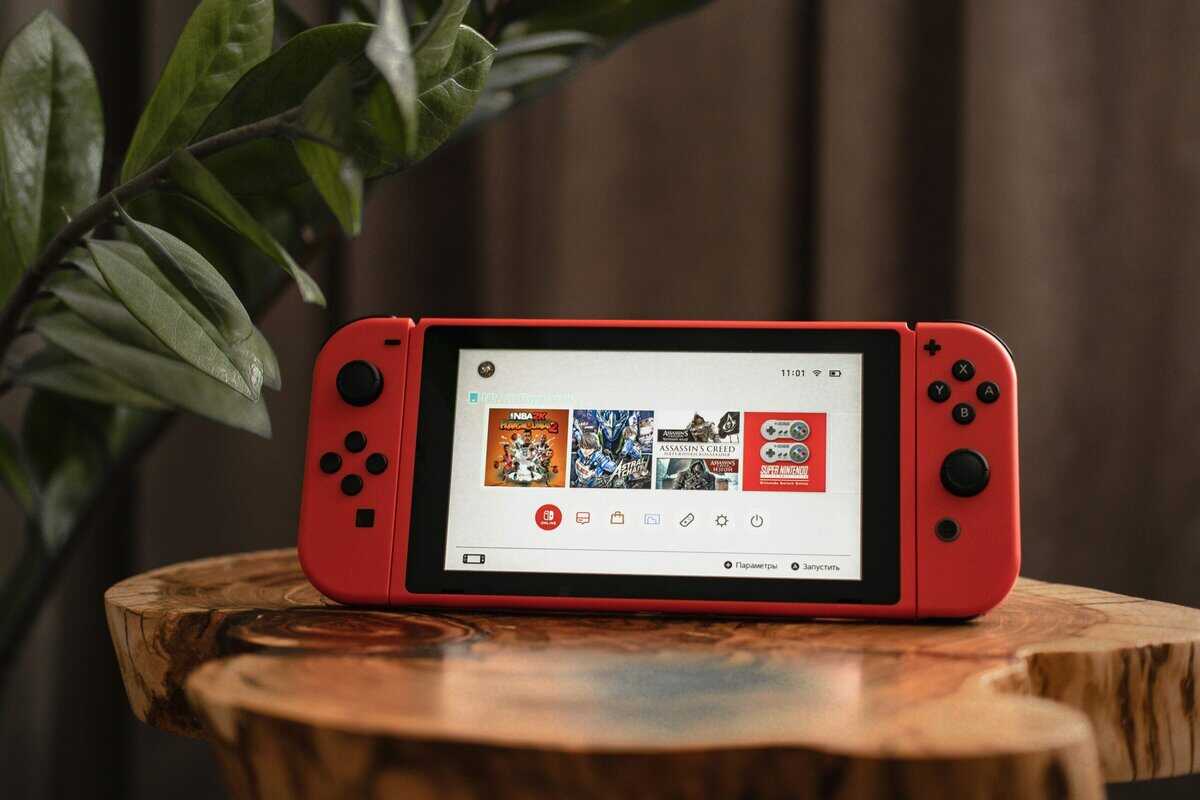
A Switch 2 rarely breaks while anyone is playing it. It breaks in transit: crushed under a laptop in a backpack, scratched by keys in a tote, or dropped on a driveway between the car and the front door. That is why a Switch 2 case is the first accessory worth buying, before a second controller and before extra storage.
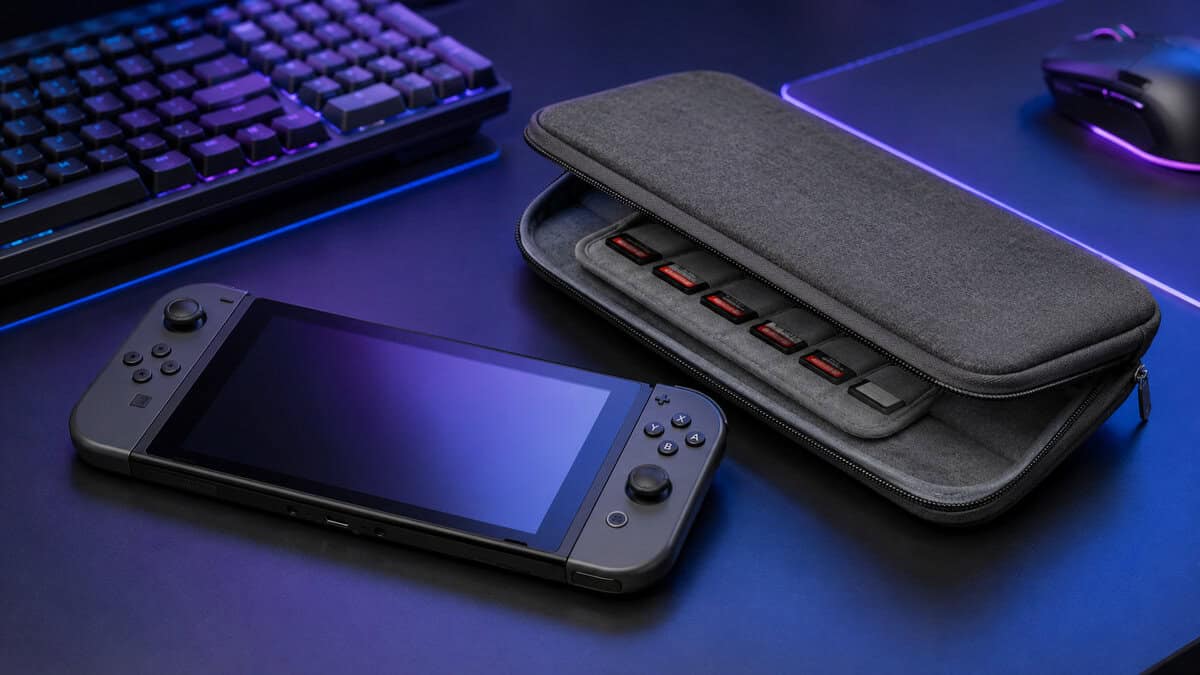
The market already splits into two honest camps: slim shells that protect the console alone, and deluxe kits that move your whole setup. This guide covers the best of both, verified in stock, plus the one on-console option worth knowing about.
Pick for the trips you actually take. The rest follows.
- Slimmest profile in the category while still a genuine hard shell
- Felt shell resists drops and crushing without EVA bulk
- Precision cutouts keep pressure off the sticks and ports
- Costs more than the licensed slim alternatives
- No room for a charger, cables, or a power bank
- Card storage is modest next to deluxe cases
- Play stand unfolds for tabletop mode on planes and desks
- Ten card slots plus a padded screen guard built into the lid
- Officially licensed fit with a soft-lined molded interior
- Structured fabric shell gives less crush resistance than hard shells
- No space for cables or a charger
- Single grey colorway reads more commuter than gamer
- Strapped bottom tray carries the dock or a Pro Controller
- 12-card library flap adds full screen and stick protection
- Fits the Switch 2 and both older Switch models
- Real bulk, overkill for daily backpack carry
- Heavier than both slim picks combined
- Elastic straps take a moment to seat the dock properly
Picks and availability last verified: October 19, 2026
- Most Switch 2 damage happens in a bag, so buy the case before any other accessory.
- The tomtoc Slim Case is the best overall: a true hard shell with the smallest footprint in the category.
- The PowerA Slim Case is the licensed budget pick, with ten card slots and a fold-out play stand.
- The Game Traveler Deluxe moves your whole setup, dock included, in one officially licensed shell.
- Match the case to the trip: slim for daily carry, deluxe only when the dock travels with you.
Table of Contents
Where a Switch 2 Actually Gets Damaged
Look at where repair shops say handhelds come in broken and a pattern shows up fast. The analog sticks take the worst of it, because they are the tallest point on the console and the first thing pressure finds in a packed bag.
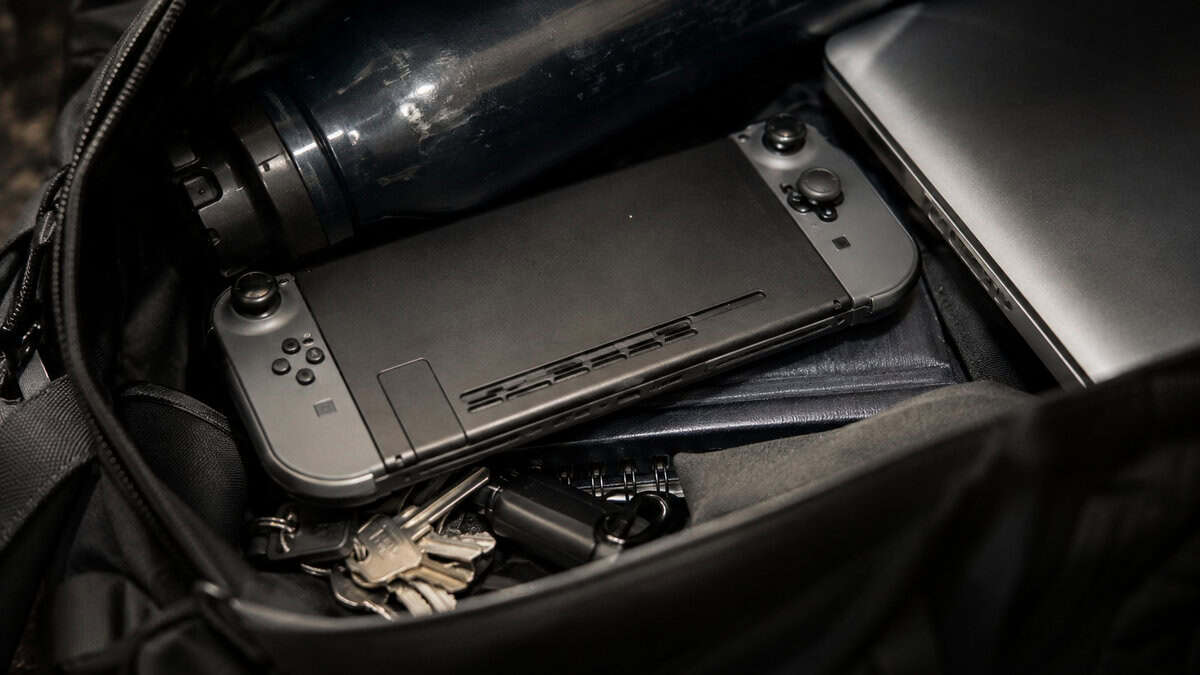
The screen comes second, and rarely from a direct hit. A game card or cable pressed against the glass inside a soft pouch grinds away at it for weeks before the scratch shows. The 7.9-inch display is the biggest screen Nintendo has ever shipped on a handheld, and there is simply more of it to protect.
The sticks stand tallest, so the sticks break first.
Then come the quiet killers. Dust and pocket grit work into the vents and the card slot. Zippers on cheap cases rake across the shell. A loose console in a backpack pocket picks up a dozen tiny impacts a day, and none of them look like anything until the day one does.
The Switch 2 adds one damage point its predecessor never had: the magnetic Joy-Con 2 attachment. Detached controllers in the same pocket click together, twist apart, and grind their rails against whatever shares the space. If you carry the Joy-Cons off the console, they need their own slot or pocket, not a loose ride beside the screen they were just protecting.
A good case answers all four threats at once: a stiff shell over the sticks, a lined lid over the screen, a sealed zip against grit, and padding that turns impacts into nothing. Keep those four jobs in mind and the field below sorts itself quickly.
One honest aside before the picks. If your console mostly travels from the couch to the dock, a carrying case solves the wrong problem. An on-console shell like the JSAUX GoJoy dockable grip case stays on the system even while it docks, adding grip and stick clearance for around-the-house use. It is a newer listing with a short track record, but it answers a question none of the carrying cases below do.
Slim vs Deluxe Is the Real Decision
Every case argument on every forum eventually collapses into one question: does the dock travel with you? Answer that and the category splits cleanly in two.
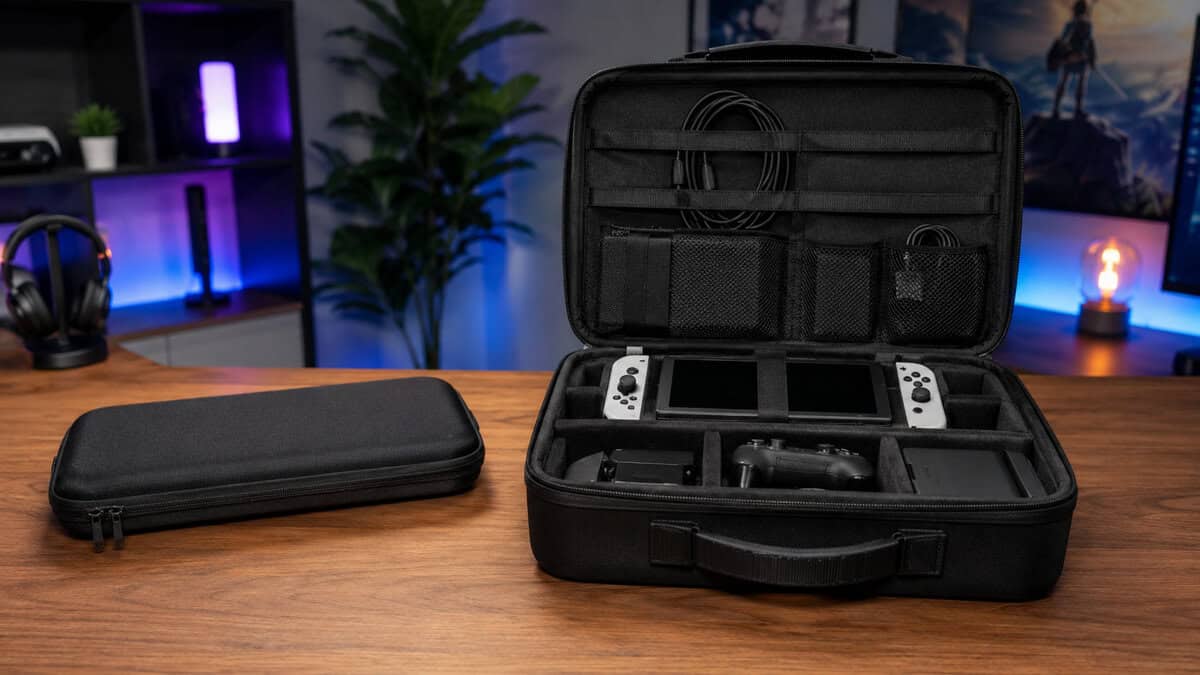
If the dock stays home, buy slim. A slim shell adds almost nothing to the console’s footprint, slips into the same backpack pocket a tablet would, and covers the four damage points completely. Handheld sessions on a commute, at a friend’s place, or on a flight never need more than this.
If the dock travels, slim stops working. TV play needs the dock, the AC adapter, an HDMI cable, and usually a Pro Controller, and carrying those loose defeats the point of protecting the console. Deluxe system cases exist for exactly this load: one shell, everything strapped in place, nothing grinding against anything else.
Slim protects the console. Deluxe protects the setup.
Most owners honestly need slim. The deluxe case earns its bulk for dorm-to-home students, weekend trips where the hotel TV is part of the plan, and anyone who treats the Switch 2 as a portable living room. Be honest about which one you are and the budget stretches further.
There is a third camp worth talking out of existence: the no-case crowd, riding the console bare in a padded laptop sleeve or a jacket pocket. A sleeve built for a laptop holds a flat slab, so the Switch 2’s sticks take the full clamp of the sleeve’s own padding. It feels protected right up until the first drifting stick says otherwise.
The Picks: Slim to Full Kit
Three cases cover the whole decision. One premium slim shell, one licensed budget slim, and one full travel kit. Each earned its spot against a crowded field, and the misses are covered at the end.
What a Switch 2 Case Needs to Cover
A proper switch 2 case gets four things right. A stiff shell: soft pouches transfer crushing force straight to the sticks, so some structure is non-negotiable. A lined interior that cannot scratch the screen it is supposed to guard.
Third, a precise fit. The Switch 2 is larger than the original Switch, and cases built loose enough to fit both let the console rattle, which defeats the padding. Fourth, honest storage: a few game cards at minimum, because loose cards in a bag are how screens get scratched in the first place.
One storage note specific to this console: the Switch 2 uses microSD Express cards, and they are small enough to vanish into a bag seam forever. The deluxe pick’s dedicated microSD wallets earn their place the first time a card worth a full game library goes missing. With any slim case, keep the spare card in its retail sleeve inside a card slot.
tomtoc Slim Case: The Benchmark
The tomtoc Slim Case for Switch 2 is what every other slim case gets measured against. The shell is a compressed felt that tomtoc runs harder and lighter than the EVA foam the rest of the category uses, and the difference shows up exactly where the last section said it matters: crush resistance over the sticks.
It protects like a bulky case and carries like a sleeve.
The fit is the other half of the argument. Cutouts align with every port and the interior holds the console still, so nothing rubs in transit. The previous generation of this exact design earned nods from IGN, CNET, and Wirecutter on the original Switch, and this version carries the formula to the bigger console without gaining bulk. The same felt-shell design tops our Steam Deck accessories guide, which says something about how well it travels across platforms.
The tradeoffs are the honest kind. You pay more than the licensed slim options, the card storage is modest, and there is no pretending a charger fits. If those matter more than the slimmest possible hard shell, the next pick exists for you.
PowerA Slim Case: The Licensed Budget Play
The PowerA Slim Case for Nintendo Switch 2 undercuts the tomtoc by a third and gives up less than the gap suggests. The interior is molded and soft-lined, ten card slots live in the lid, and the whole thing carries Nintendo’s official licensing, which means the fit was tested against the real console.
Its party trick is the fold-out play stand. Unfold it and the case becomes a tabletop mount for the console, which turns tray tables and desks into usable play space. Folded, the same panel sits over the display as a padded screen guard. It is the rare budget feature that is not a gimmick.
The honest cons: the structured fabric shell will not shrug off a crushing load the way the tomtoc’s felt does, nothing bigger than cards fits inside, and the dark grey colorway is more commuter than battlestation. For daily carry on a budget, none of that changes the verdict. It is also the Switch 2 pick in our gift guide for gamers, where it heads the stocking-stuffer tier.
Game Traveler Deluxe: The Whole Setup Moves
The Game Traveler Deluxe System Case answers the dock question with a strapped bottom tray that holds the dock itself, or a Pro Controller if you travel light on TV play. A padded divider takes the AC adapter and an HDMI cable, and the recessed insert holds the console above all of it.
The 12-card Protection Library flap is the quiet best feature: it closes over the screen and sticks, adding a second layer of protection exactly where damage happens. Two microSD wallets come in the box, and the shell is licensed and sized to take the Switch 2 or either older Switch model.
One zipper closes over the console, the dock, the controller, and the games.
The cons follow from the mission. It is bulky, it is the heaviest thing in this guide, and the elastic straps take a moment to seat the dock so nothing shifts. None of that matters on the trips it was built for; all of it matters on a daily commute. This is a second case, not a first one, unless your console genuinely lives on the road.
Two near-misses worth naming. The Belkin Switch 2 case is a solid slim shell that simply does less than the tomtoc for similar money, and the daydayup carrying case brings a huge review history and 24-card storage but could not match the picks on fit precision for the newer console.
Which Case for Which Trip
Match the row to the trips you take most weeks, not the trip you might take someday.
| Case | Built For | Shell | Storage | Carries the Dock |
|---|---|---|---|---|
| tomtoc Slim Case | Daily carry and commutes | Compressed felt hard shell | Game cards | No |
| PowerA Slim Case | Budget daily carry and flights | Structured fabric with molded interior | 10 cards + play stand | No |
| Game Traveler Deluxe | Weekends and dorm-to-home runs | Full hard shell | 12 cards + controller + cables | Yes |
The pattern mirrors the desk and controller categories: the more the product carries, the more deliberate the purchase needs to be. Nobody regrets a slim case. Deluxe buyers only regret it when the dock never actually leaves the house. If you genuinely split time between both patterns, buy the slim case first and let a few real trips prove whether the deluxe one earns its space in the closet.
What Fits Inside and What Never Will
Game cards are the easy part. Every pick here stores at least ten, which covers a physical library most owners never exceed in one bag. Store them face down in their slots and they stop being the loose screen-scratchers from earlier in this guide.
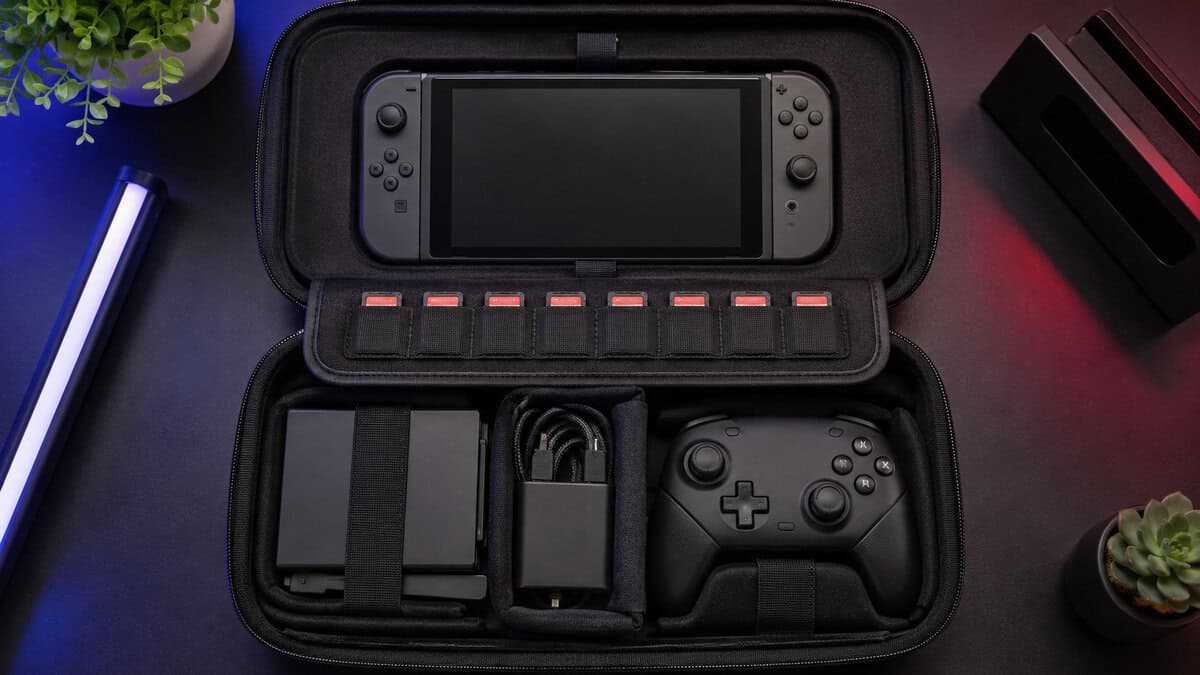
Cables are where slim cases draw the line. A USB-C cable folded into a slim shell presses against the console, and that pressure lands on the screen or the sticks. If a charger has to travel, it belongs in a bag pocket, or in the deluxe case’s padded divider where it cannot touch the console at all.
If it does not have a dedicated spot in the case, it is riding against your screen.
Docks are deluxe-only cargo, and even then only the official dock the tray was cut for. If TV play away from home is the routine, our Switch 2 dock guide covers the portable alternatives that shrink that load, and a dedicated controller earns its tray spot the moment two people want to play on the hotel TV.
Power banks never fit, by design. Any bank strong enough to matter is thicker than the console, and cases sized to swallow one give up the precise fit that makes them protective. Carry it in the bag, not the case, and see our Switch accessories roundup for the rest of the kit.
Flying changes the math one more time. A slim case rides happily inside a personal item, while the deluxe kit is bulky enough to plan around: it wants the top of a carry-on, not the bottom, because everything above it becomes crushing weight on the shell. Either way, keep the console in the cabin. A checked bag is a tumble dryer with worse manners, and no case in this guide is rated for what baggage handling does to electronics.
What Officially Licensed Actually Buys You
Two of the three picks carry Nintendo’s Officially Licensed seal, and it is worth knowing what that does and does not mean. Licensed accessories go through Nintendo’s own compatibility testing, so the fit claims are verified against real hardware rather than a leaked spec sheet. On Nintendo’s Switch 2 page, that seal is the company’s only endorsement of third-party gear.
What it does not mean is that unlicensed cases are worse. The seal costs the maker a licensing fee, and premium brands like tomtoc skip it while out-building the licensed field on materials. PowerA and Game Traveler pay for it partly because their brands live on retail shelves where the seal moves boxes.
The practical read: treat the seal as a fit guarantee, not a quality ranking. A licensed case will never be the wrong shape. An unlicensed case from a brand with a track record can still be the better product, and in this roundup, it is.
One caution while you shop: the seal gets counterfeited in listing photos more than on real boxes. If a suspiciously cheap case shows the licensed badge but the brand does not appear among Nintendo’s named partners, treat the whole listing as fiction. The two licensed picks here are from established accessory makers whose licensing is verifiable on the retail box itself.
Keeping the Case From Wrecking the Console
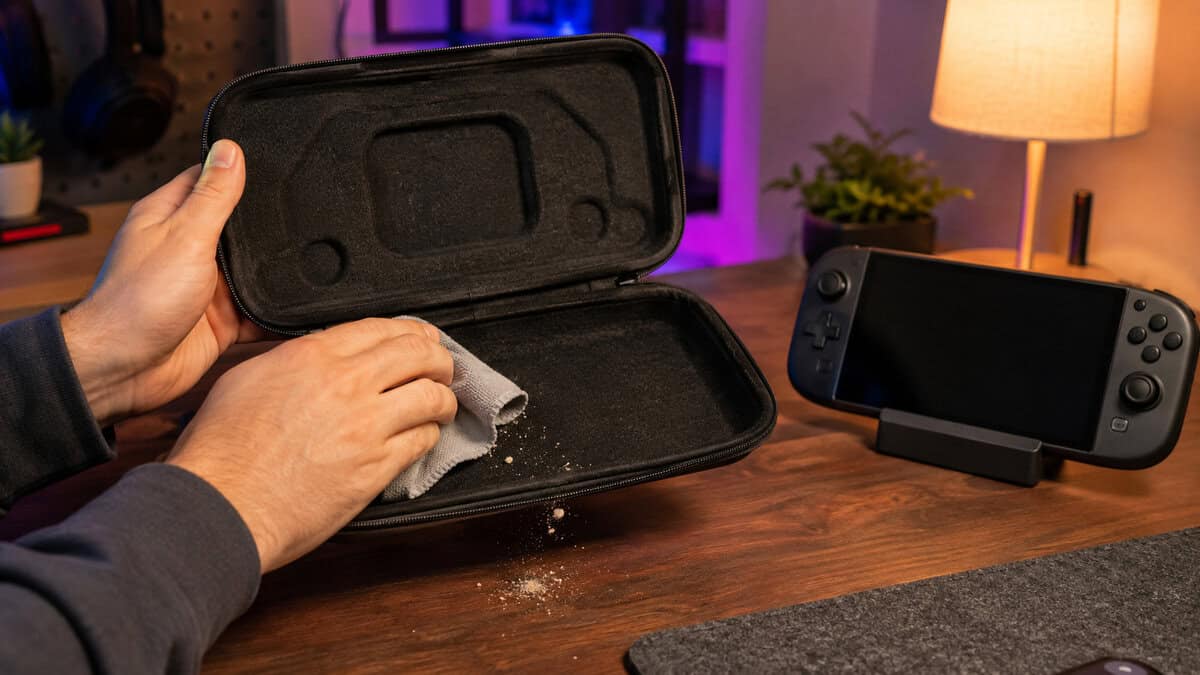
A case collects everything it protects the console from, and then holds it an inch from the screen. Grit that works into the lining becomes sandpaper the next hundred times the console slides in and out. Shake the case out weekly and wipe the lining with a barely damp cloth when you can see dust.
Zip with the sticks facing away from the zipper track. On slim cases the pull tab can drag across whatever faces it, and the sticks are the tallest target. It is a two-second habit that removes the most common self-inflicted scratch.
Where the case lives matters too. A zipped case in a hot car concentrates heat around a battery that would rather stay cool, and a damp basement shelf feeds moisture into the lining that then sits against the vents. Store the loaded case where you would happily leave the console bare. The shell protects against impacts, not against the environment around it.
And empty the case fully every few months. Crumbs, a forgotten card, a loose earbud tip: small objects migrate under the console recess over time, and each one becomes a pressure point the padding was never designed around. Two minutes with the case open solves what no amount of shell stiffness can.
A tempered glass screen protector pairs with any case here rather than replacing one. The case handles crushing and drops; the glass handles the grit that gets past the lining. Together they cover everything short of a swimming pool, and neither does the other’s job alone. Our Switch 2 screen protector guide covers which glass to pick and how to fit it over the factory film.
Frequently Asked Questions
Quick answers to what Switch 2 owners actually ask before buying a case.
Do original Switch cases fit the Switch 2?
No. The Switch 2 is larger than the original Switch in every dimension, so cases molded for the older console will not close around it. The reverse works loosely at best: an original Switch rattles inside a Switch 2 case, which defeats the padding. Buy a case built for the console you own.
Is a slim switch 2 case enough protection for a backpack?
Yes, if it is a structured shell rather than a soft pouch. A stiff slim case spreads crushing force away from the analog sticks and keeps the screen behind a lined lid, which covers the two most common damage points. Soft sleeves protect against scratches only, not against the weight of a laptop pressing down in the same bag.
Do you still need a screen protector if you have a case?
They solve different problems, so ideally yes. The case handles drops and crushing while the console travels; a tempered glass protector handles grit and contact scratches while you play. Neither replaces the other, and the pairing costs little next to what a screen repair does.
Can a Switch 2 case hold the dock and charger?
Only deluxe system cases can. The Game Traveler Deluxe carries the dock in a strapped tray with a padded divider for the AC adapter and HDMI cable. Slim cases hold the console and game cards only, and forcing a cable inside one presses it against the screen. If the dock stays home, slim is all you need.
Are officially licensed cases better than third-party ones?
The license guarantees fit, not quality. Licensed cases are tested against real Nintendo hardware, so they will never be the wrong shape. But premium unlicensed brands often out-build licensed cases on materials, and the best overall pick in this guide is unlicensed. Treat the seal as one signal among several, not a verdict.
Case sorted? Protect the rest of the loadout too. Browse every budget-tested pick at Budget Loadout and keep the whole setup safe without overspending.
Related Articles