Two hours into a session, the headset has become the loudest thing in the room: hot ears, a band pressing on your crown and glasses arms digging in behind each ear. IEMs for gaming fix that by moving the sound into your ear canal, where a light, sealed fit blocks the room and leaves nothing clamped to your head.
The catch is that many in-ear monitors were built for music, so the plug, the mic and the fit decide whether a pair works for your games. The four wired pairs below are sorted by what they plug into, and the sections after the cards cover voice chat, consoles and the seal.
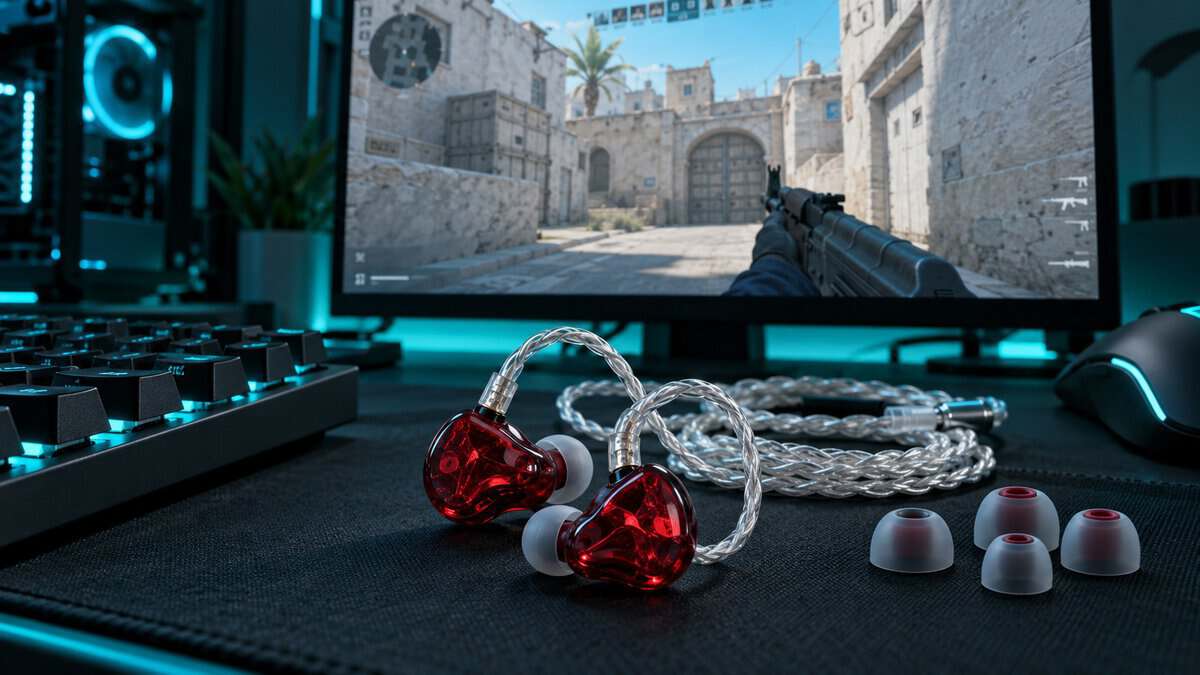
A dual-driver pair with a detachable cable and three kinds of eartips in the box. It suits PC and console players who want clean positional detail and will add a mic separately.
- Two dynamic drivers per side
- Thick, thin and foam tips included
- Detachable 2-pin cable is easy to swap
- No mic on the stock cable
- Needs a mic cable or separate mic
- Bright red shells may not suit everyone
A metal-shell pair whose USB-C cable carries its own DSP and an inline mic. It plugs straight into a PC, phone or handheld with no dongle.
- USB-C plug needs no separate DAC
- Inline mic for Discord and party chat
- Three bass presets in an app
- Will not fit a 3.5 mm controller jack
- Bass presets need the companion app
- Plain S, M and L tips only
A light single-driver pair whose 3.5 mm mic cable plugs into a DualSense or Xbox controller. It is the simplest way to get game audio and chat from one plug.
- One 3.5 mm plug for audio and mic
- Remote on the mic cable
- Six pairs of tips in the box
- Smaller owner-review base
- Plastic shell instead of metal
- Single driver with no bass presets
Sony’s gaming in-ear, developed with Fnatic and tuned for FPS, with a USB-C audio box for spatial sound and EQ. It has no mic, so pair it with a boom or desk mic.
- Developed with Fnatic, tuned for FPS
- USB-C audio box adds spatial sound
- Ear hook keeps it steady
- No built-in microphone
- Priciest pair of the four
- Hub software is PC only
- Choose an IEM by what it plugs into first: a 3.5 mm controller jack, a USB-C port or a PC with its own audio box.
- Many music-first IEMs ship without a mic, so plan voice chat before you buy: inline mic, attachable boom or desk mic.
- A good seal matters more than driver count, so try every tip size in the box.
- Low-impedance IEMs run fine from a controller, phone or motherboard jack without a separate amp.
- Sealed IEMs block room noise, which makes it easier to keep game volume at a safer level.
Table of Contents
IEMs for Gaming by Plug Type
The plug decides where a pair of IEMs for gaming can go, so the four picks split that way: two 3.5 mm pairs, one USB-C pair and one with its own USB-C audio box. The spec table lines them up first. Figures come from each maker’s spec page where one exists, and from the Amazon listing otherwise.
| Model | Drivers | Impedance | Sensitivity | Plug | Cable Connector | Mic | Tips in the Box | Best For |
|---|---|---|---|---|---|---|---|---|
| TRUTHEAR Zero:RED | 10 mm + 7.8 mm dynamic | 17.5 Ω | 117.5 dB/Vrms | 3.5 mm | 0.78 mm 2-pin | None | 3 thick, 3 thin, 1 foam | Footsteps and imaging |
| Moondrop CHU II DSP | 10 mm dynamic | 18 Ω | 119 dB | USB-C with DSP | 0.78 mm interchangeable | Inline | S, M, L | USB-C PCs, phones and handhelds |
| TRUTHEAR GATE (with mic) | 10 mm dynamic | 28 Ω | 122 dB/Vrms | 3.5 mm | 0.78 mm 2-pin | Inline with remote | 6 pairs | Controller jacks |
| Sony INZONE E9 | Sources differ | 16 Ω | 101 dB | 3.5 mm or USB-C audio box | Detachable, 1.8 m | None | 4 sizes | Ranked FPS on PC |
Makers state sensitivity in different units, so treat that column as a rough guide, not a volume ranking.
TRUTHEAR x Crinacle Zero:RED
The TRUTHEAR x Crinacle Zero:RED is the best overall pick for hearing footsteps, and it is widely recommended for shooters. It pairs a 10 mm and a 7.8 mm dynamic driver in each shell, rated at 17.5 Ω and 117.5 dB/Vrms on TRUTHEAR’s spec sheet.
The Zero:RED is the pair to buy if positional detail matters more than anything else.
The box is generous for the class. TRUTHEAR includes three pairs of thick-diameter tips, three pairs of thin-diameter tips, one pair of foam tips and a 10 Ω impedance adapter, and the silver-plated cable ends in a 3.5 mm plug that fits a controller, a PC or any device with a 3.5 mm jack.
The stock cable has no mic. The shells use a standard 0.78 mm 2-pin connector, though, so you can swap in a 2-pin cable with an inline mic, or add one of the mic routes covered further down.
Moondrop CHU II DSP
The Moondrop CHU II DSP is the pick for anyone gaming on a device with a USB-C port. Its cable carries a USB-C plug with built-in DSP, so a PC, phone or handheld PC drives it directly with no separate dongle, and an inline mic handles Discord or party chat.
The CHU II DSP turns a single USB-C port into game audio and voice chat.
Inside the alloy shell is a 10 mm dynamic driver with an aluminum-magnesium dome diaphragm, rated at 18 Ω and 119 dB. The MOONDROP LINK app switches between three bass presets, and the shells take a universal 0.78 mm interchangeable cable if you ever want to change it.
The tradeoff is the plug itself. A USB-C cable will not go into the 3.5 mm jack on a DualSense or Xbox controller, so console players should look at the GATE instead. If you would rather have a gaming-branded earbud with a fixed cable, our best gaming earbuds guide covers that style.
TRUTHEAR GATE With Mic
The TRUTHEAR GATE with mic is the console pick because everything runs through one 3.5 mm plug. Plug it into a DualSense or Xbox controller and the same cable carries game audio and the inline mic, with a remote on the cable as well.
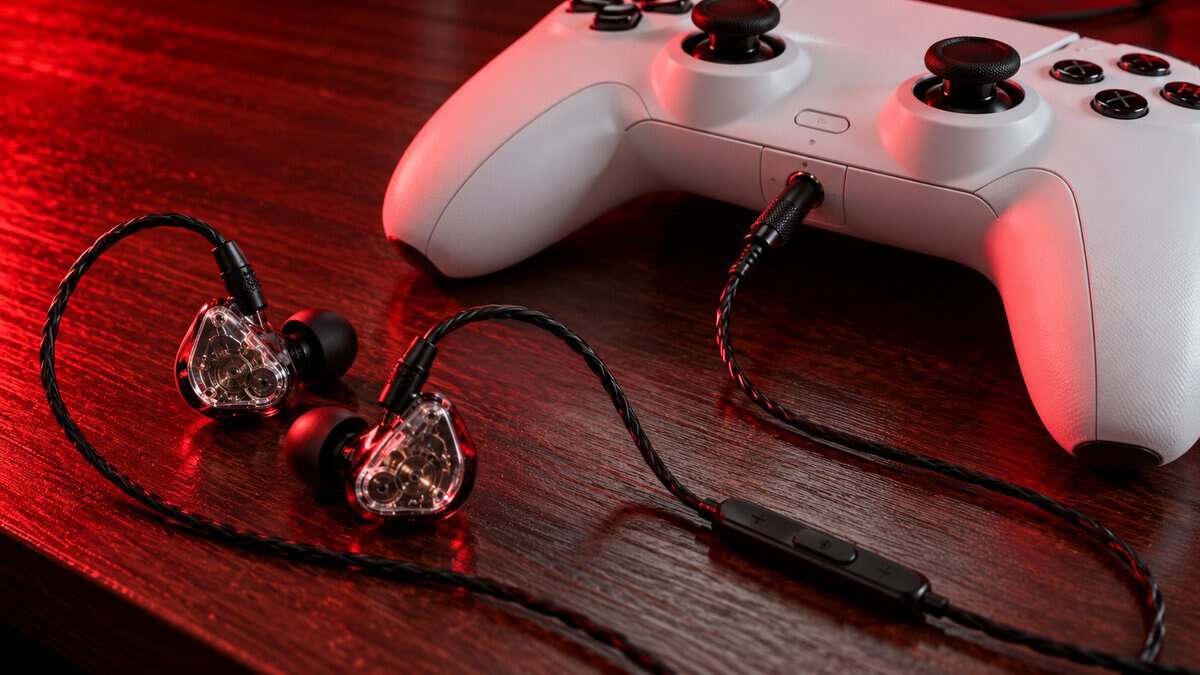
The GATE is the simplest way to get footsteps and squad chat out of a controller.
TRUTHEAR builds it around a 10 mm dynamic driver with a carbon LCP diaphragm, rated at 28 Ω and 122 dB/Vrms, inside a PC and ABS shell with a clear faceplate. The cable detaches at a standard 0.78 mm 2-pin connector, and the listing includes six pairs of tips.
Two things to weigh. The GATE has a smaller owner-review base than the Zero:RED or the CHU II DSP, so there is less long-term feedback to lean on, and its shell is plastic where the CHU II DSP’s is metal.
Sony INZONE E9
The Sony INZONE E9 is the upgrade pick, a gaming in-ear that Sony developed with Fnatic and tuned for FPS games. It comes with a USB-C audio box that adds 360 Spatial Sound for gaming and EQ control through the INZONE Hub software on PC.
The INZONE E9 is Sony’s in-ear tuned for FPS games with Fnatic.
Sony designed it to sit low. A flexible ear hook keeps each earpiece steady, the thin 1.8 m detachable cable is meant to fit under earmuffs or a headset, and the box includes four eartip sizes and a carrying case. The listing puts impedance at 16 Ω and sensitivity at 101 dB.
The INZONE E9 has no built-in microphone, so pair it with a boom or desk mic for voice chat. It is also the most expensive of the four, and INZONE Hub runs on PC, so console players get the sound tuning but not the software features.
IEM Myths That Keep Gamers in Headsets
A few myths about in-ear monitors keep gamers in headsets they no longer enjoy wearing, and each one falls apart on a closer look.
No Soundstage Means Worse Positional Audio
The idea that IEMs sound too narrow for positional audio mixes up two things. Soundstage is how wide a pair sounds, while positional audio in a game is the left and right difference in timing and level that tells you which way a footstep came from.
An IEM delivers that left and right difference straight into each ear canal, and a good seal keeps room noise from masking it. A wide-sounding open-back headset can feel more spacious, but a sealed IEM can still place a footstep to your left or right clearly.
You Need a DAC Before IEMs Sound Right
A dedicated DAC is not a requirement for IEMs. The three 3.5 mm pairs here are low-impedance designs between 16 Ω and 28 Ω, the kind of load a controller or a motherboard jack is built to drive, and the CHU II DSP brings its own DSP in its USB-C plug.
Where a DAC helps is noise. Some PC front-panel jacks pick up hiss or buzz, and a sensitive IEM makes that easier to hear. A small USB-C dongle such as the FiiO KA11 moves the conversion outside the case. Our best budget DAC guide covers that upgrade, though the CHU II DSP and INZONE E9 already bring their own USB-C hardware.
More Drivers Always Sound Better
A higher driver count does not automatically mean better sound. The Zero:RED uses two dynamic drivers per side and the GATE uses one, and both earn a place in this lineup.
Tuning and fit matter more than the number on the box, and a loose seal undoes any driver count.
In-Ear Monitors Are Only for Musicians
In-ear monitors did start on stage, where musicians use them to hear their own mix over a loud band. The Sennheiser IE 100 PRO is a good example of that stage-monitor lineage.
The same traits make in-ear headphones useful for gaming: isolation from room noise, a light fit for long sessions and clear detail for footsteps and reloads. If you want to explore the music side, our best budget audiophile headphones guide covers full-size options.
Solving the Mic Problem With IEMs
Voice chat is the part of IEM gaming that needs a plan before you buy. There are three practical routes, and the right one depends on where you play.
An Inline Mic on the Cable
An inline mic is the simplest route. The Moondrop CHU II DSP and the TRUTHEAR GATE with mic both carry one on the cable, so the mic comes with the IEMs and needs no extra gear.
For the Zero:RED, the 0.78 mm 2-pin connector opens a second option: swap the stock cable for a 2-pin cable with a built-in mic and a 3.5 mm plug. An inline mic hangs below your mouth rather than in front of it, so it picks up more room noise than a boom, but it is usable for squad callouts.
An Attachable Boom Mic
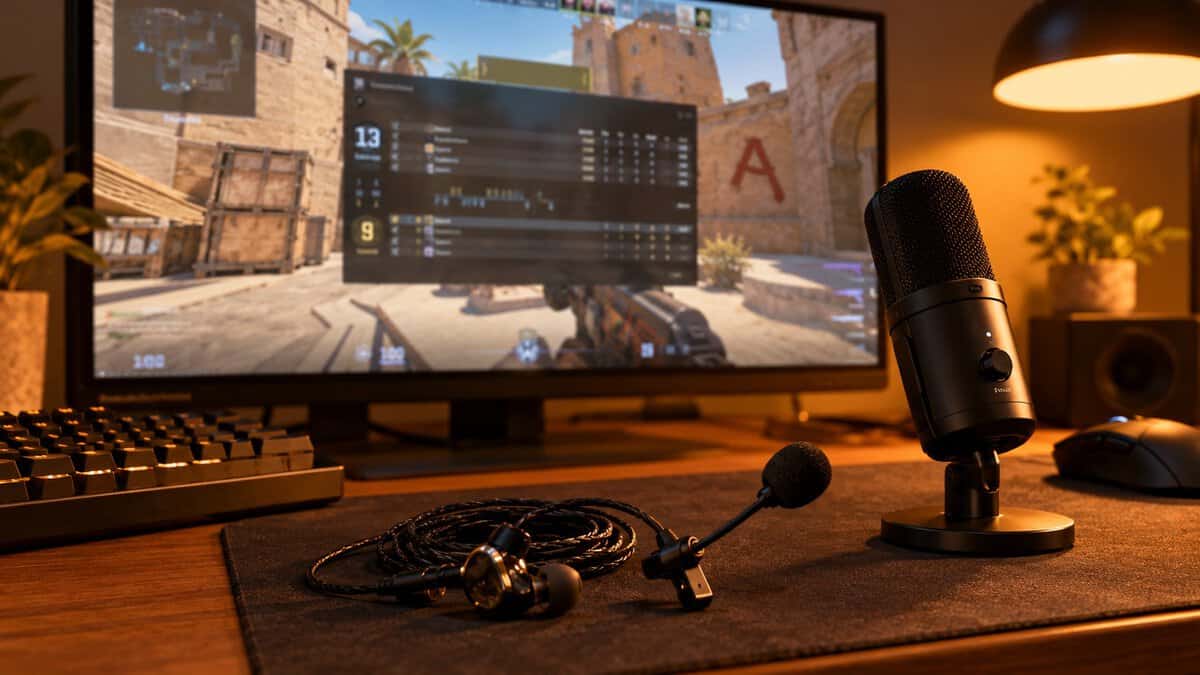
An attachable boom mic gives you a mic in front of your mouth without a headset. The ModMic Uni 2+ is a 3.5 mm attachable mic that works with a PC, PS5 or Xbox.
The ModMic is built to attach to a headset, so with IEMs it needs a workaround such as a collar mount. That is not its intended use, but it can keep a boom near your mouth alongside the INZONE E9 or the Zero:RED.
A Desk Microphone
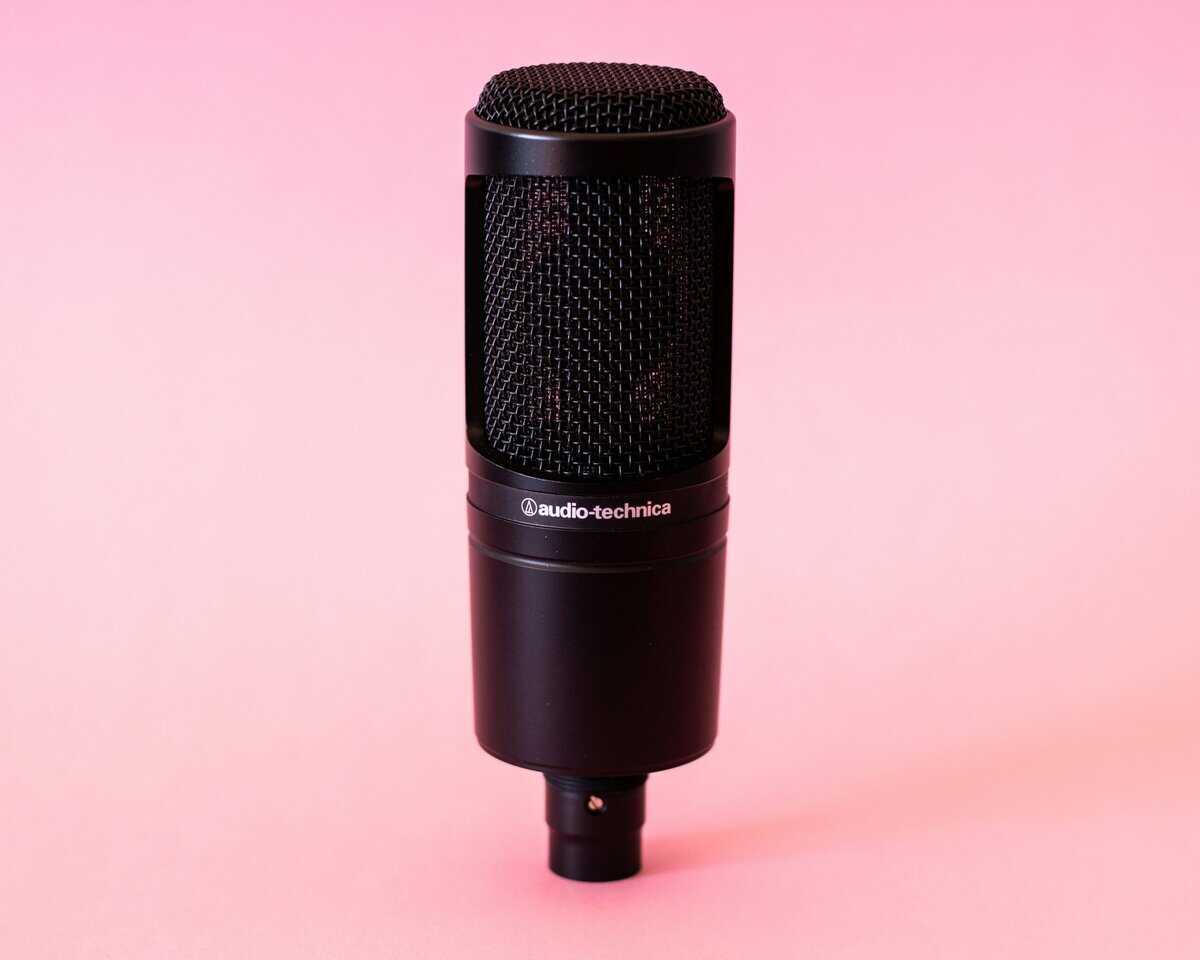
A desk microphone is the cleanest route at a PC. A USB mic on an arm or stand stays put, tends to sound clearer than an inline mic and leaves your IEMs untouched, and our best budget USB microphones guide covers affordable options.
A desk mic only works where it sits, so it suits a PC setup better than a couch.
Plugging IEMs Into Consoles and PCs
IEMs work on consoles and PCs, but the connection changes what you get: a 3.5 mm plug goes almost anywhere, while USB-C trades that reach for extra features.
The Controller Jack
The 3.5 mm jack on a DualSense or Xbox controller is the easiest console connection, and it takes 3.5 mm pairs like the GATE and the Zero:RED. A mic cable with a single 3.5 mm plug, like the GATE’s, carries your voice to the console through the same jack.
On a PS5, Sony’s PS5 audio settings guide walks through the menus. Go to Settings > Sound > Audio Output, where Output to Headphones lets you choose what audio comes through your headphones and Mono Audio for Headphones plays the same sound in both ears. Headphone volume sits under Settings > Sound > Volume. If you are still weighing a headset for the PS5, our best PS5 headset guide covers that route.
USB-C and the PC Front Panel
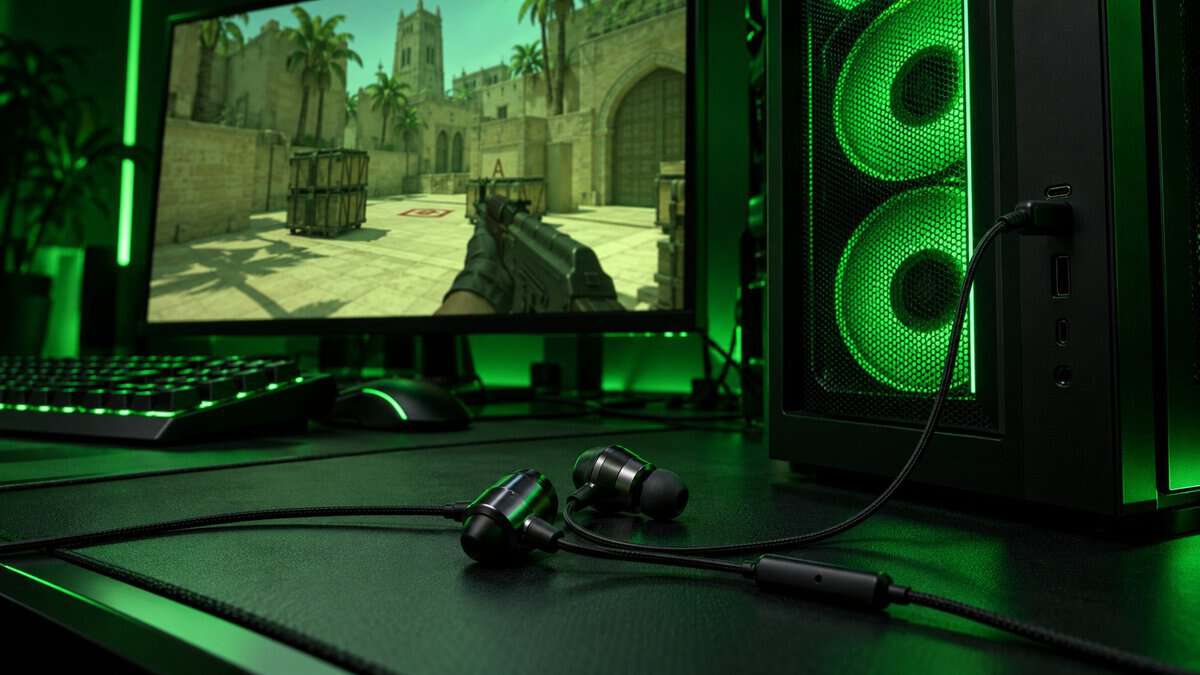
A USB-C pair like the Moondrop CHU II DSP skips the PC’s analog jack entirely, because its cable handles the conversion. That makes it a tidy fit for a PC, a phone or a handheld PC with a USB-C port.
The Sony INZONE E9 takes a middle path. On a PC, its USB-C audio box adds 360 Spatial Sound and INZONE Hub EQ, and without the box it runs from a 3.5 mm jack. A front-panel 3.5 mm jack works too, but it can pick up noise from inside the case.
Getting the Seal Right and Keeping the Volume Down
The seal is what makes an IEM sound right: bass, isolation and footstep clarity all depend on how well the tip fits.
Silicone vs Foam Tips
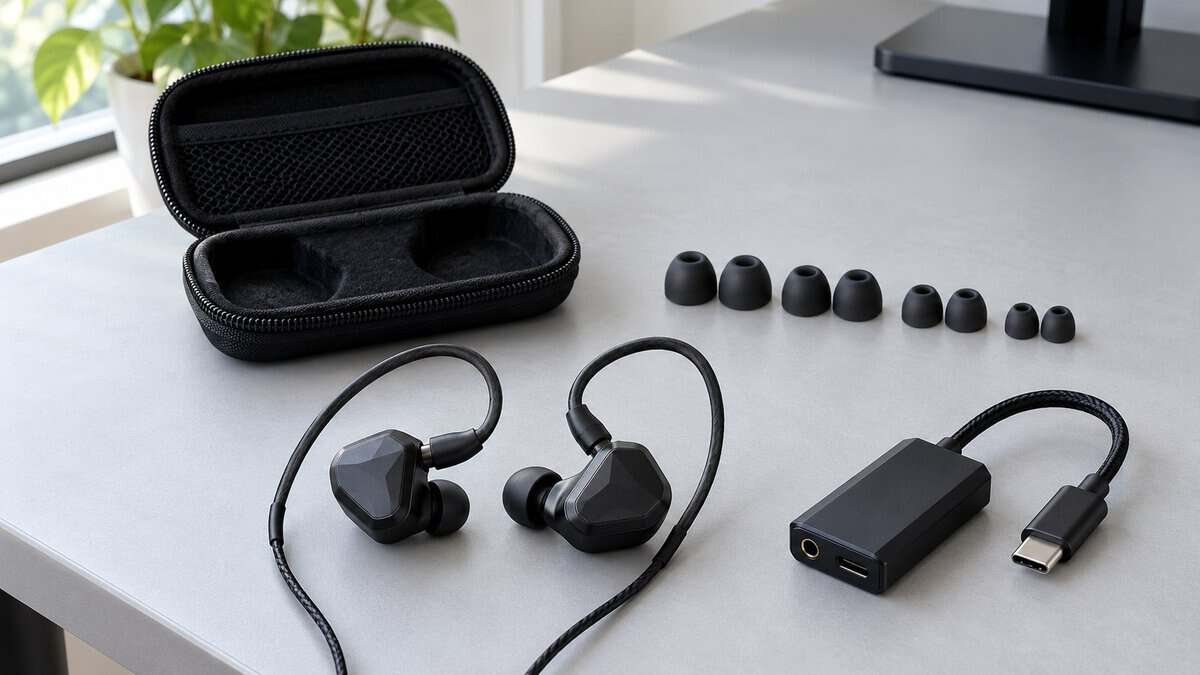
Silicone tips are easy to clean and quick to fit. The Zero:RED ships with both thick-diameter and thin-diameter silicone tips, so you can try both before settling on one.
Foam tips expand to fill the ear canal, which tends to improve isolation and bass at the cost of wearing out sooner. The Zero:RED includes a pair of foam tips, and the INZONE E9 comes with four tip sizes. If a pair sounds thin or bass-light, try a larger tip before blaming the IEM.
Isolation Lets You Play Quieter
A sealed IEM blocks room noise, so you do not have to turn the game up to drown out a fan or a TV next door.
The National Institute on Deafness and Other Communication Disorders says that sounds at or below 70 A-weighted decibels (dBA), even after long exposure, are unlikely to cause hearing loss, while long or repeated exposure to sounds at or above 85 dBA can cause hearing loss. The same page lists listening through earbuds or headphones at high volume as a source of harmful noise. Start low and raise the volume only until footsteps are clear.
Where a Headset Keeps the Edge
A headset is still the better choice for some players, and IEMs are not a straight upgrade for everyone.
A boom mic on a headset sits in front of your mouth and tends to sound clearer to your squad than an inline mic. A headset also goes on and off in a second between rounds, while IEMs need a moment to seat properly each time.
Wireless is another gap. All four picks here are wired, so a wireless headset is still the easier choice if you play from across the room. And some people never get used to the feeling of something in the ear canal, which no amount of tip-swapping will fix.
Pick by What You Plug Into
The table matches each pick to the device it suits best.
| Device You Plug Into | Pick | Why |
|---|---|---|
| PC, phone or handheld with a free USB-C port | Moondrop CHU II DSP | USB-C plug with its own DSP, inline mic and app presets |
| PS5 or Xbox controller | TRUTHEAR GATE (with mic) | One 3.5 mm plug carries game audio and the mic |
| PC or console, shooters first | TRUTHEAR Zero:RED | Dual drivers and a swappable 2-pin cable for a mic route |
| PC with INZONE Hub for ranked FPS | Sony INZONE E9 | Fnatic tuning plus a USB-C audio box for spatial sound and EQ |
If you split time between a PC and a console, a 3.5 mm pair like the GATE or the Zero:RED is the most flexible, since it fits both a controller jack and a PC.
Frequently Asked Questions
Quick answers about using IEMs for gaming.
Are IEMs good for gaming?
Yes, IEMs are good for gaming if you want a light, sealed fit instead of a headset. They isolate room noise and deliver clear left and right cues for footsteps. The tradeoffs are voice chat, since many have no mic, and the fit, since some people find in-ear wear uncomfortable.
Do IEMs work on PS5 and Xbox?
Yes. A pair with a 3.5 mm plug, like the TRUTHEAR GATE or Zero:RED, plugs into the 3.5 mm jack on a DualSense or Xbox controller. A USB-C pair like the Moondrop CHU II DSP will not fit that jack.
Do I need a DAC for IEMs?
No. Low-impedance 3.5 mm IEMs like the Zero:RED, GATE and INZONE E9 run fine from a controller, phone or motherboard jack, and the CHU II DSP carries its own DSP in its USB-C plug. A small USB-C DAC helps if your PC’s headphone jack adds hiss or buzz.
How do I talk on Discord with IEMs?
Use a pair with an inline mic, such as the Moondrop CHU II DSP or TRUTHEAR GATE with mic, swap a 2-pin mic cable onto a pair like the Zero:RED, add an attachable boom mic with a collar mount, or use a USB desk microphone.
What is the difference between IEMs and earbuds?
IEMs sit deeper in the ear canal and seal it with a tip, which blocks more outside noise and can give fuller bass. Regular earbuds often sit in the outer ear and isolate less.
Looking for more budget gaming gear? Check out Budget Loadout for the latest reviews and recommendations.
Related Articles