Ask a sim racer where to spend first and the answer is rarely the wheel. The best sim racing pedals buy more lap time per dollar than a flashier wheelbase, because load-cell braking lets you judge stopping force by pressure instead of by how far your foot has traveled.
The reason is simple. A load-cell brake measures how hard you press rather than how far the pedal travels, and your leg reproduces a force far more reliably than a distance. That is why braking markers keep landing in the same place instead of drifting as your foot tires.
This guide is for budget-conscious buyers who want value, not the cheapest box on the shelf. If you’re choosing between pedals, wheelbases, and displays, start with the feet, then build the rest of the rig around that decision. For a broader beginner setup, this gaming setup guide is a useful starting point.
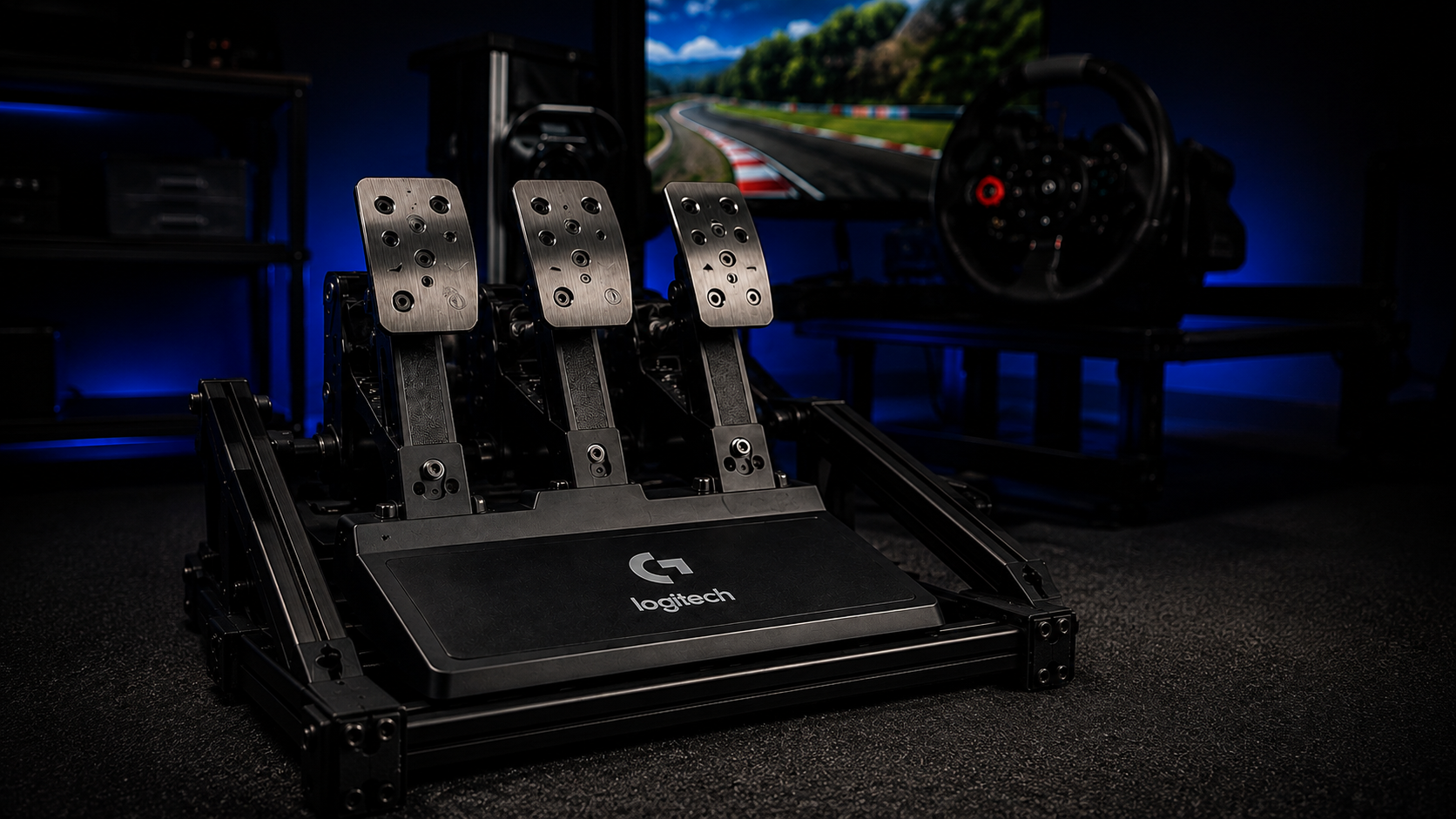
The sensible first load-cell set. You brake by pressure rather than travel, the frame adjusts to your seating position, and it is the only set in this bracket with a genuinely mature review base behind it rather than a handful of ratings.
- Real load-cell braking at the entry price point
- Sold and shipped by Amazon rather than a marketplace seller
- By far the largest review base of any pedal set at this tier
- 75 kg brake rating is lower than pricier competitors
- Steel and polymer build rather than full CNC aluminium
- Clutch pedal is a separate purchase
For drivers who have already worn out the entry tier. The heavier load cell and rigid machined frame hold their feel under hard trail-braking, where lighter sets start to flex and go vague.
- 200 kg cell gives a firmer, more precise brake ceiling
- Machined aluminium frame resists flex under heavy braking
- Strong ratings despite being a newer, specialist product
- Costs well over double the entry pick
- Amazon listing is fulfilled by a third-party retailer, so check return terms
- Overkill until your braking is already consistent
- Load-cell braking is the upgrade that matters: you modulate by pressure, not by pedal travel
- Pedals improve lap consistency more per dollar than a fancier wheelbase does
- Buy a pedal set with a real review base, because this category is full of near-unknown brands with a handful of ratings
- Check who actually ships the set, since several listings here are fulfilled by third-party retailers rather than Amazon
- A rigid mount matters as much as the sensor, because a flexing frame undoes the precision you paid for
Table of Contents
Why Pedals Are Your First Upgrade
Pedals move you faster because braking is where consistency lives. Ask experienced drivers what they would upgrade first and pedals come up far more often than wheels. A wheel can be learned around. Inconsistent braking keeps bleeding time every lap.
The real return on money
The best sim racing pedals are the ones that make your inputs repeatable, not the ones with the longest spec sheet. That’s why load-cell brakes dominate serious buyer guides, because they let you build muscle memory around pressure instead of travel. Pressure is simply the more repeatable variable, which is exactly why pedal upgrades punch above their weight for lap consistency.
Practical rule: if you’re still on basic travel-based brakes, the pedal upgrade is usually the fastest way to make your driving cleaner before you touch anything else.
That doesn’t mean every expensive set is worth it. It means you should compare pedals by the outcome they create, steadier braking, better trail-braking control, and fewer mistakes into corner entry, not by marketing language. For a budget buyer, the right goal is simple: buy the tier that changes how you brake, not the tier that only looks premium.
What this guide is prioritizing
I’m treating pedals as a value hierarchy, not a trophy cabinet. That means the recommendations below focus on build quality, durability, mounting stability, and the kinds of pedal systems that help a real player, whether you’re racing seriously, playing a few nights a week, or doubling your PC as a machine for FPS gaming, MMO grinding, and streaming.
If you want the short version, buy the first pedal set that gives you a real load cell and a rigid platform. Everything else is secondary until you’ve fixed braking.
Pedal Technologies Explained
Potentiometer pedals
Potentiometer pedals measure position, not force. They sit at the entry level for a reason. They’re cheap, easy to understand, and good enough if you only need a basic starting point, but the mechanical contact point wears over time and can drift or develop dead spots. That wear is the problem, because the input you feel today is not always the input you get later.
For a strict budget, they can still make sense. For anyone chasing repeatable braking, they are the first thing to replace. The trade-off is straightforward: lower upfront cost versus weaker long-term precision and less durability.
Hall effect pedals
Hall effect pedals still measure position, but they do it without physical contact. That removes the wear issue, which makes them a better long-term choice for throttle and clutch inputs. You get cleaner signal stability and less maintenance than with basic contact-based sensors.
They’re a sensible middle step, especially when paired with a better brake. The limitation is the same one that holds back the cheapest pedal sets, they still do not fix braking feel. If you’re spending money with lap time in mind, hall effect sensors are a solid upgrade, but they are not where the biggest gains usually come from.
Load cell pedals
Key differentiator: a load cell measures force, not travel, which is why modern buying guides treat it as the standard for serious improvement.
This is the value sweet spot for most racers. Load-cell brakes translate more naturally to real driving because your foot learns pressure, not a travel distance that changes with spring setup. VRS recommends looking for a load cell rated at least 80–100 kg so the sensor has enough headroom VRS. That headroom matters because a saturated brake feels vague when you lean on it.
Treat the brake as the priority and everything else as support. If you are still sorting out what to buy first for your rig, start with the pedals before you spend more on a wheelbase or chase a stronger steering setup. A basic wheel can wait, but a better brake changes how consistently you drive.
Hydraulic pedals
Hydraulic pedals add a more complex feel and usually appeal to drivers who want richer brake texture and heavier-duty hardware. They can be excellent, but they are more about refinement once you already know what feel you want. The trade-off is cost and complexity versus a brake response that can feel closer to real hardware.
That is why the best sim racing pedals for most buyers are still load-cell pedals, not hydraulic sets. Hydraulic is a luxury step, load cell is the sensible performance step.
Use the brake type to sort the market first, then compare the build and adjustment options. The technology tells you where the money goes furthest.
Key Specs That Matter for Budget Buyers
A budget pedal set can look fine on paper and still waste money if the brake is soft, the frame flexes, or the setup fights your seating position. The buyers who get the best results focus on the parts that change braking consistency first, then worry about the rest.
Force rating and brake feel
The brake sensor rating shows how much force the pedal can read before it stops giving you useful resolution. For budget buyers, a sensible target is enough headroom to brake hard without hitting the ceiling too early. That matters because a brake that saturates feels vague the moment you push for a real stopping point.
Low-cost load-cell sets often advertise enough force to get started, but the number alone is not the whole story. What matters is whether the pedal lets you modulate pressure cleanly, because that is what turns a sloppy stop into repeatable braking lap after lap.
Build materials and mounting
Cheap pedals usually fail the feel test because the frame gives up before the sensor does. Steel or aluminum construction with solid mounting points keeps the pedal planted when you stomp on the brake, and that stiffness is part of the performance you are paying for.
A good sensor inside a flexy shell still feels off. The readout may be accurate, but the chassis moves under load and the whole pedal loses the firm, connected feel you want from a load-cell brake.
Adjustability and fit
Adjustability matters because your body position decides how consistently you can brake. A buyer guide says an angle of 5-20° suits most racers, while F1-style setups may need pedals closer to 90° from the floor simracingsetup.com. If the pedals do not let you tune angle, spacing, or spring tension, you end up adapting your body to the hardware instead of setting the hardware up for your driving style.
That is a bad trade in a budget build. Simple adjustment options make a cheap set feel far more sorted than a fixed layout with prettier branding.
Mounting compatibility
A strong pedal set still needs a strong base. If the platform or rig flexes, brake feel becomes inconsistent and the precision advantage of the sensor gets wasted. Budget buyers who plan to upgrade in stages should pay attention here, because a good load cell on a weak mount still feels compromised.
The rig matters just as much as the pedal body. If the base slides, the brake pressure you build with your foot is not the pressure the sensor sees in a clean, repeatable way.
What to compare first
Brake force headroom: enough range to brake hard without saturating.
Pedal construction: steel or aluminum beats flexy frames.
Angle and spacing: the pedals should fit your seat and ankle comfort.
Spring and elastomer tuning: lets you match firmness to your style.
Mounting method: rigid mounting is part of performance, not an accessory.
If you want a broader ergonomics reference for control layout, this flight stick guide is useful for thinking about reach, placement, and how much the hardware fights your body position.
Best Sim Racing Pedals by Price Tier
If you want the best sim racing pedals by value, start with the outcome, not the feature list. Pedals are the first upgrade that can cut lap-time waste in a real way, because braking consistency matters more than flashy extras. The clean split is simple: the cheapest serious load-cell entry, the most flexible budget all-rounder, and the step-up option that feels like long-term hardware instead of a stopgap. I’m not listing anything here just because it is popular, I’m listing what makes sense for a real buyer.
Logitech G RS Pedals: the one most people should buy
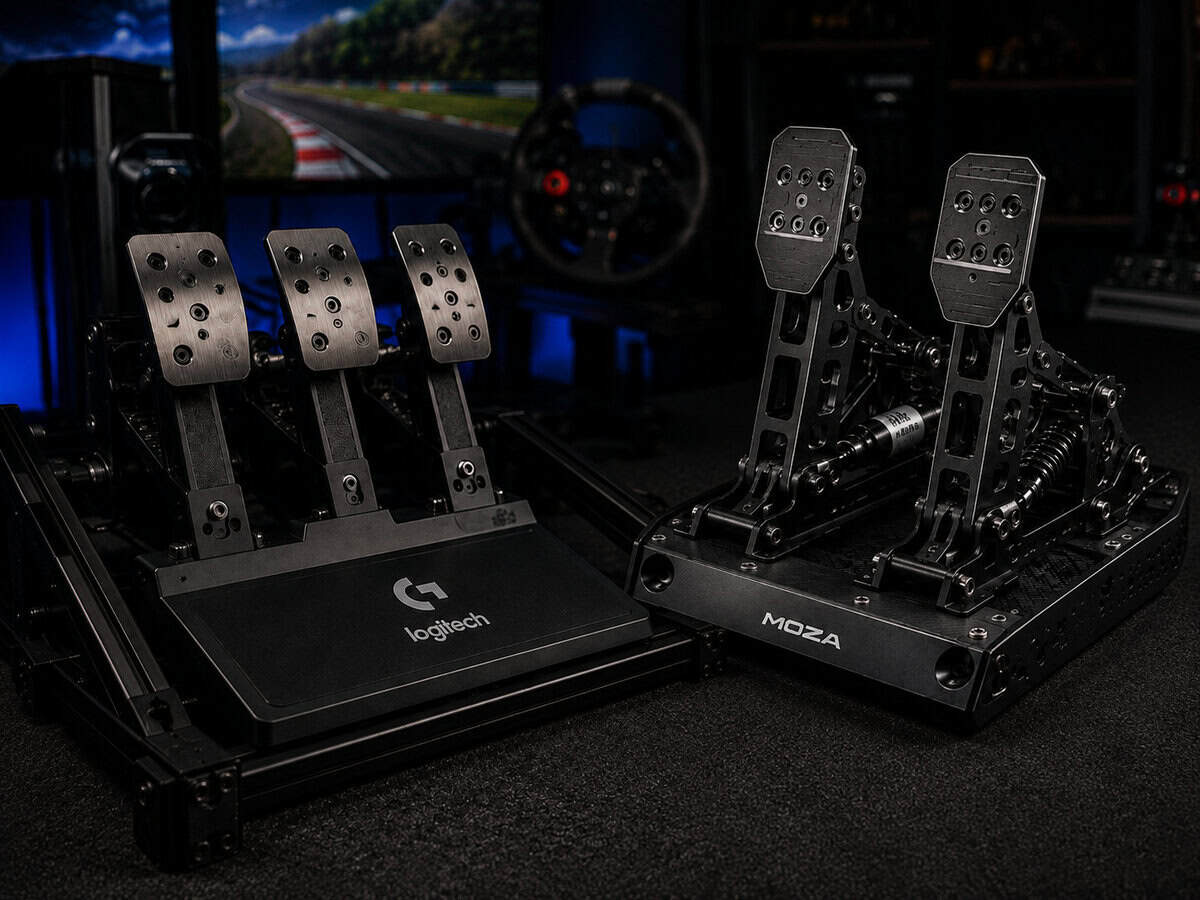
The Logitech G RS Sim Racing Pedals are the entry point that actually makes sense. You get a genuine 75 kg load-cell brake, so you are braking by pressure rather than by travel, which is the whole reason to leave potentiometer pedals behind. The frame is extendable steel with adjustable pedal positions, and the modular design means you are not locked out of a clutch later.
What separates it from the cheaper load-cell sets is not the spec sheet, it is the evidence. This is the only pedal set in its bracket with a large, mature review base behind it, and it ships from Amazon directly rather than through a marketplace seller. In a category full of near-unknown brands with a handful of ratings, that matters more than a few extra kilograms of sensor rating.
MOZA CRP2: the step up, if you have outgrown the entry tier
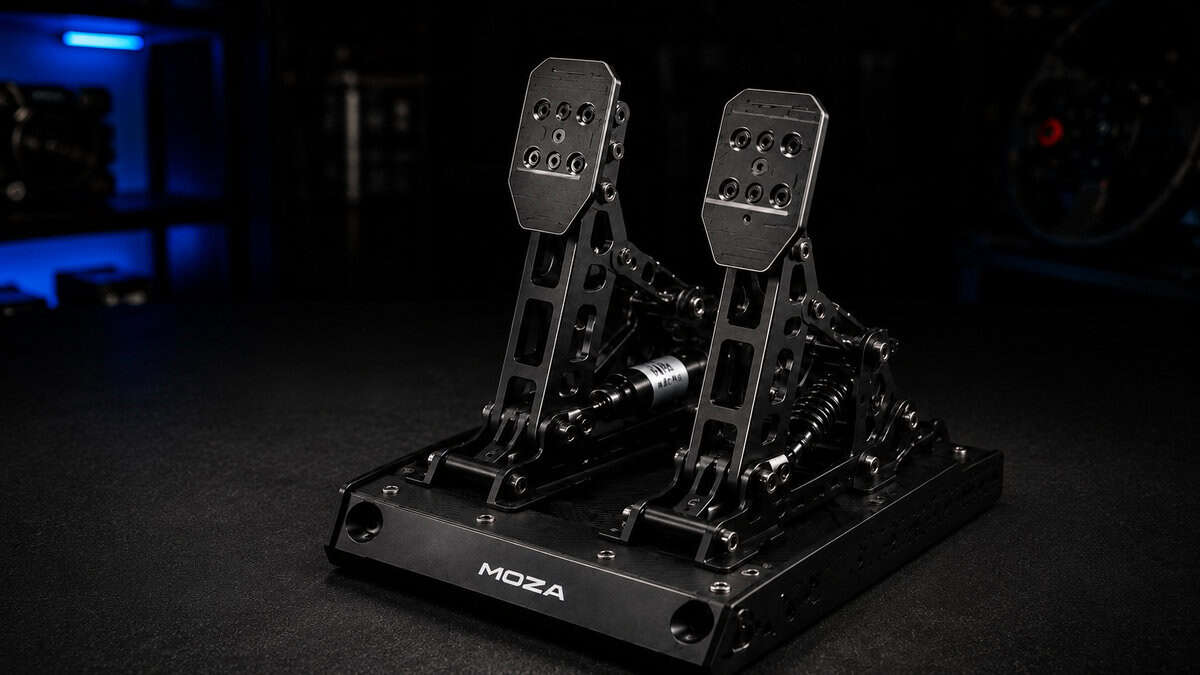
The MOZA CRP2 Load Cell Pedals move you to a 200 kg load cell, CNC aerospace-grade aluminium and a carbon fibre heel plate. That buys you a firmer, more repeatable brake and a set that will not flex under hard trail-braking, which is where cheaper frames start to feel vague.
Two honest caveats. It costs well over double the Logitech, so it only pays off once you are consistent enough to feel the difference. And its Amazon listing is fulfilled by a third-party retailer rather than Amazon itself, so check the seller and return terms before committing.
| Model | Brake Sensor | Frame | Sold By | Best For |
|---|---|---|---|---|
| Logitech G RS Pedals | 75 kg load cell | Extendable steel, modular | Amazon | First real load-cell set |
| MOZA CRP2 | 200 kg load cell | CNC aluminium, carbon heel plate | Third-party retailer | Drivers who have outgrown the entry tier |
If you have not settled on a wheel yet, start with our gaming steering wheel guide, since the base you choose determines which pedals will even connect. For buyers who want a more comfortable seat-and-pedal pairing around a full setup, this racing chair guide is a useful companion read.
Setup and Calibration for Real-World Performance
Angle and body position
Start by placing the pedals at an angle that matches your seating position, not your ego. The practical target is 5-20° for most racers, while F1-style rigs may push pedals closer to 90° from the floor simracingsetup.com. If the angle fights your ankle, your braking will get lazy or inconsistent.
A simple test works better than guesswork. Sit in your normal driving position, rest your heel, and press the brake repeatedly for ten seconds. If your ankle feels like it’s reaching or collapsing, the angle is wrong.
Mounting rigidity and calibration basics
Mount flex is the silent killer here. A load-cell brake only helps if the pedal doesn’t move around underneath you, so the frame, baseplate, and fasteners need to stay locked down under hard pressure. Press the brake hard with the car off, then watch the mount, if the pedal base shifts, the setup is lying to your feet.
For calibration, set the brake dead zone so the first touch registers cleanly, then tune spring tension until the pedal reaches your preferred stop without forcing your leg into a strain. Keep the heel pivot point consistent, because a repeatable foot anchor makes threshold braking easier.
Practical checkpoint: if the same brake input feels different from one lap to the next, fix the mounting and calibration before blaming your driving.
If you’re trying to debug timing or signal issues elsewhere in your setup, this input lag guide is a good reference point.
Before your first session, make sure the pedal angle feels natural, the rig doesn’t flex, the dead zone is clean, and the brake force is set so hard braking feels controlled instead of forced.
Maintenance and Long-Term Durability
Pedals last longer when you treat them like precision hardware, not a disposable accessory. Clean the pedal faces and any exposed sensor areas regularly, check the mounting bolts after heavy sessions, and watch for spring tension changes that signal fatigue or loosening over time.
Those three habits prevent three different failures. Dust can interfere with sensor accuracy, loose mounts introduce flex that ruins load-cell consistency, and tired springs change the force curve you’ve learned to trust. That’s why build quality matters so much, steel and aluminum frames with anodized finishes need less babysitting than cheaper polymer-heavy alternatives, and that shows up over months of use simracingcockpit.gg.
If you already maintain other gear, the logic is the same as home bike maintenance tips: keep the moving parts clean, keep the fasteners tight, and don’t wait for a problem to become a failure. Pedals are no different, they just punish neglect faster because they’re under load every lap.
A simple schedule works. Check the bolts and surface condition after a hard weekend, clean the pedals when grime builds up, and recheck spring feel whenever the brake starts to feel softer or less predictable. That keeps the set honest and preserves the feel you paid for. Pedals are the upgrade that shows in lap times, and the VR headset guide for sim racing covers the one that shows in the mirrors.
Sim Racing Pedal Questions, Answered
The same handful of questions come up whenever someone shops for their first proper set.
Are load cell pedals really worth it over potentiometer pedals?
For anyone lapping seriously, yes. A potentiometer measures how far the pedal has moved, so your brain has to reproduce a distance with your leg. A load cell measures how hard you are pressing, and force is far easier to reproduce consistently.
The practical result is that braking points stop drifting as your foot gets tired, which is where most lap-time inconsistency actually comes from.
Do I need a load cell if I only play casually?
No. If you race a few times a month for fun, the pedals bundled with your wheel are fine and the money is better spent elsewhere.
The upgrade earns its place once you are chasing consistent lap times rather than just enjoying the drive, because that is the point at which repeatable braking starts to matter.
Does a higher kilogram rating mean better pedals?
Not by itself. The rating describes the maximum force the sensor can read, not how precise it is. A 200 kg cell in a flexing frame will feel worse than a 75 kg cell bolted to something rigid.
Treat the rating as a ceiling that should match your leg strength and preferred brake stiffness, not as a quality score.
Do sim racing pedals work on consoles?
It depends entirely on the wheel base they connect to rather than the pedals themselves. Most load-cell sets are designed for PC use and connect through a compatible base.
Always confirm compatibility with your specific wheel and platform before buying, because pedal sets are rarely universal.
How important is mounting compared with the pedals themselves?
More important than most buyers expect. Pedals bolted to a rigid rig transmit exactly the force you apply, while a set sliding on carpet or flexing on a desk mount blurs the input you just paid for.
If you are on a budget, a solid mount plus modest pedals usually beats expensive pedals on a wobbly one.
Budget Loadout breaks this kind of decision down the right way: value first, hype last, and no wasted money on gear that doesn’t move the needle. If you want more clear-cut recommendations for gaming and streaming upgrades that earn their spot on your desk or rig, visit Budget Loadout.
Related Articles