Most mousepad advice assumes the thing you are aiming at is another player, and in Arc Raiders that is only half true. Half your fights are against machines that move on rails of their own logic, and the other half are against raiders who move like people. The best mousepad for Arc Raiders has to serve both, usually in the same raid and sometimes in the same fight.
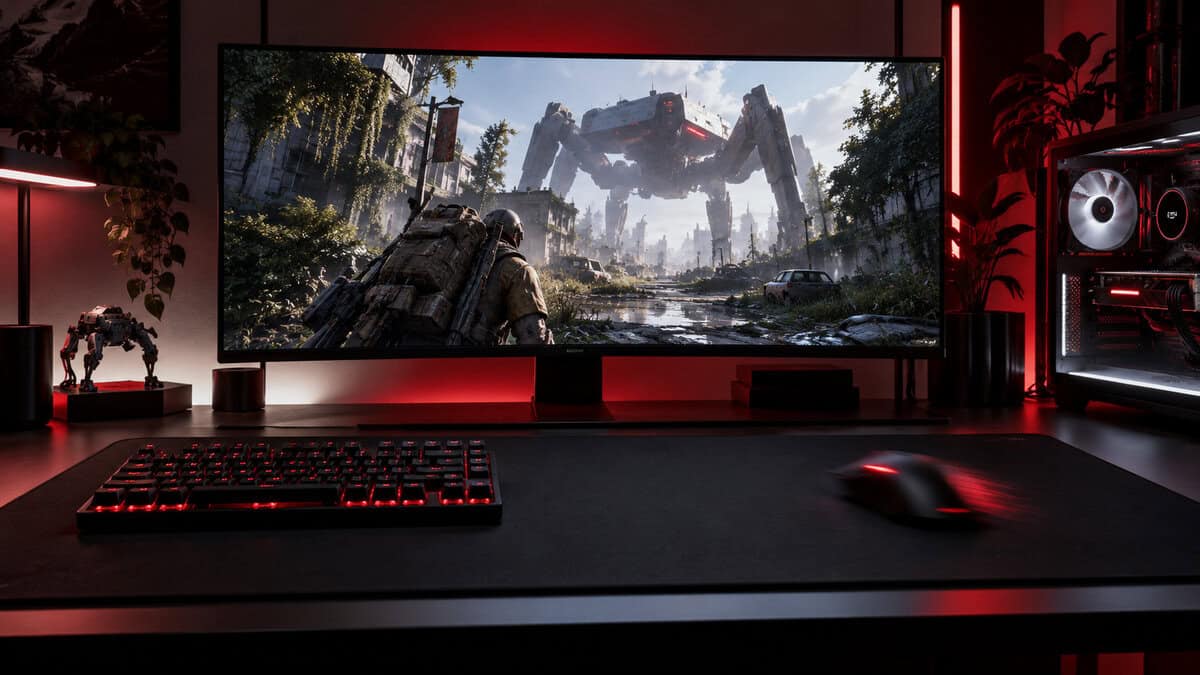
That is why all three picks below are desk-wide 900 x 400 mm pads. They differ in what they do best: one balanced all-rounder, one coated surface built for long sessions with a drink nearby, and one budget control cloth for raider duels.
The most balanced surface for a game with two kinds of enemy. It glides evenly for tracking machines and still lets you settle on a raider without fighting the cloth.
- Even glide for tracking and stopping
- Room for low-sensitivity arm aim
- Fits a full keyboard on top
- Logitech lists no stitched edge
- No spill coating on the cloth
- Plain black look only
Built for marathon sessions with a drink on the desk. The coated cloth shrugs off spills and grime, and the stitched edge resists fraying under your forearm.
- Coating repels water, oil and dust
- Flat-stitched edges resist fraying
- Smooth glide suits steady tracking
- XXL size comes in Arctic Gray here
- Hot drinks can harm the coating
- Smaller review base than the others
The cheapest way to cover the desk with a control surface. The slower microfiber helps you stop dead on a raider at low sensitivity, and the thin base keeps the mouse low.
- Control cloth helps flicks stop
- Water-repellent top coating
- Thin build keeps the mouse low
- Less cushion than a 3 mm pad
- Slower on long tracking swipes
- Fewer reviews than rival budget pads
- Arc Raiders mixes two kinds of target, predictable ARC machines and unpredictable raiders, so a balanced surface beats an extreme one.
- Smooth, consistent glide helps you hold steady on big machines, while a little drag helps you stop on a raider who changes direction.
- A desk-wide 900 x 400 mm pad gives low-sensitivity players room for full camera turns in third person.
- Long sessions favor a coated cloth that resists spills and grime, plus stitched or locked edges that resist fraying.
- Printed Arc Raiders art pads are decor first; buy a performance surface if aim is the reason you are shopping.
Table of Contents
Three Desk-Wide Pads for Arc Raiders
All three picks share the same footprint, so the real differences sit in the surface, the edges and the spill protection. Start with the Glide and Spill Resistance columns, then read the section for the pad that sounds like your raids.
| Pad | Surface | Glide (maker wording) | Size | Thickness | Base | Edges | Spill Resistance | Best For |
|---|---|---|---|---|---|---|---|---|
| Logitech G840 XL | Cloth | Performance-tuned | 900 x 400 mm | 3 mm | Rubber | Not listed by maker | Not listed | Mixed PvE and PvP |
| ASUS ROG Scabbard II XXL | Nano-coated cloth | Smooth with adequate friction | 900 x 400 mm | 3 mm | Non-slip rubber | Anti-fray flat-stitched | Repels water, oil and dust | Long raids |
| Lenovo Legion Gaming Control XXL | High-density microfiber | Control, tuned for low DPI | 900 x 400 mm | 2 mm | Rubberized | Braided locked edge | Water-repellent coating | Budget raider fights |
Every pick here is a full desk pad on purpose. Arc Raiders is a third-person game with a lot of looking around, and most players who aim with the arm run out of a standard pad long before the end of a turn.
Why the Logitech G840 XL Is the Best Mousepad for Arc Raiders
The Logitech G840 XL wins because it does not lean hard in either direction. Logitech calls its cloth a performance-tuned surface, and in practice it sits in the middle: quick enough that tracking a slow machine never feels sticky, with enough grip that your hand can settle on a raider without sliding past.
That middle ground matters more in this game than in most shooters. A pure speed pad makes the raider half of your fights harder, and a heavy control cloth makes the machine half feel like dragging the mouse through sand. The G840 XL asks you to give up the least on either side.
In a game with two kinds of enemy, the pad that compromises least wins.
At 900 x 400 mm and 3 mm thick, with a rubber base, it covers the desk and leaves room for a keyboard on the same surface. The 3 mm cloth also cushions the forearm through a long session and smooths over small bumps in the desk underneath.
Know its limits before you buy. Logitech does not list a stitched edge, so we never call it stitched, and the plain cloth has no spill coating. If you raid for hours with a drink at your elbow, the next pick deals with that better.
ASUS ROG Scabbard II XXL Shrugs Off Spills
Two things to know up front about the ASUS ROG Scabbard II XXL: the XXL size we picked comes in Arctic Gray, a light colorway that will not suit every desk, and ASUS warns that hot liquids can damage the coating. Keep coffee off it and the rest of the case is strong.
That coating is the reason it is here. ASUS describes a nano-coating that repels water, oil and dust, which is exactly the grime that slowly changes how a plain cloth pad glides over months of long raids. A spilled glass of water beads up instead of soaking in, and skin oil has a harder time building up where your palm rests.
The rest of the build backs it up. Anti-fray flat-stitched edges keep the border from peeling under your forearm, and a non-slip rubber base keeps the pad planted when you swing the mouse hard. ASUS describes the glide as smooth with adequate friction, which suits the steady tracking that big ARC machines ask for.
Its review base is moderate rather than thin, smaller than the other two picks, so it has less history behind it. If you want the same family in black, the ROG Sheath II XXL covered in the durability section below is the alternative.
Lenovo Legion Gaming Control XXL Covers the Desk for Less
The Lenovo Legion Gaming Control XXL is the budget answer, and it is a control pad through and through. Lenovo describes its top as high-density microfiber cloth optimized for low-DPI movement, which means it adds a little drag that helps a low-sensitivity hand stop right where it aimed.
That drag is what you want when a raider steps out from behind a wall and you need one clean snap to them. The pad also carries a water-repellent top coating and a braided locked edge, so it covers the durability basics that cheaper pads often skip, on a non-slip rubberized base.
A control cloth will not make you faster, but it will make you stop where you meant to.
The tradeoffs are plain. At 2 mm it is thinner than the two 3 mm pads, which keeps the mouse close to desk height but gives your arm less cushion. Its slower surface asks for more effort on long tracking swipes, and its review base is smaller than some rival budget pads, such as the Gigantus V2 XXL mentioned further down.
Two Enemies Ask for Two Kinds of Aim
Embark sums up the danger on the official Arc Raiders site as lurking threats, from deadly machines to other Raiders. That short line is the whole case for how to pick a pad for this game, because the two threats ask your hand for different things.
Machines tend to move in patterns. A large walker plods, turns and stomps, and you can learn its rhythm. The job is to stay on it smoothly while you shoot, which rewards a surface that glides evenly from start to finish.
Raiders do not move in patterns. They strafe, crouch, break line of sight and peek again from somewhere else. The job is to snap to them and stop, which rewards a surface with enough grip to end a flick where you aimed.
A pad that is very good at one of these is usually worse at the other. That is why this guide leans toward balanced and control-leaning cloth pads rather than the slick hard surfaces that suit pure tracking games.
Fighting ARC Machines
Most of your time topside is spent avoiding, stalking or fighting ARC. The machines range from small airborne scouts to huge walkers, and each size puts a different demand on your mouse hand.
Big Machines Reward Steady Tracking
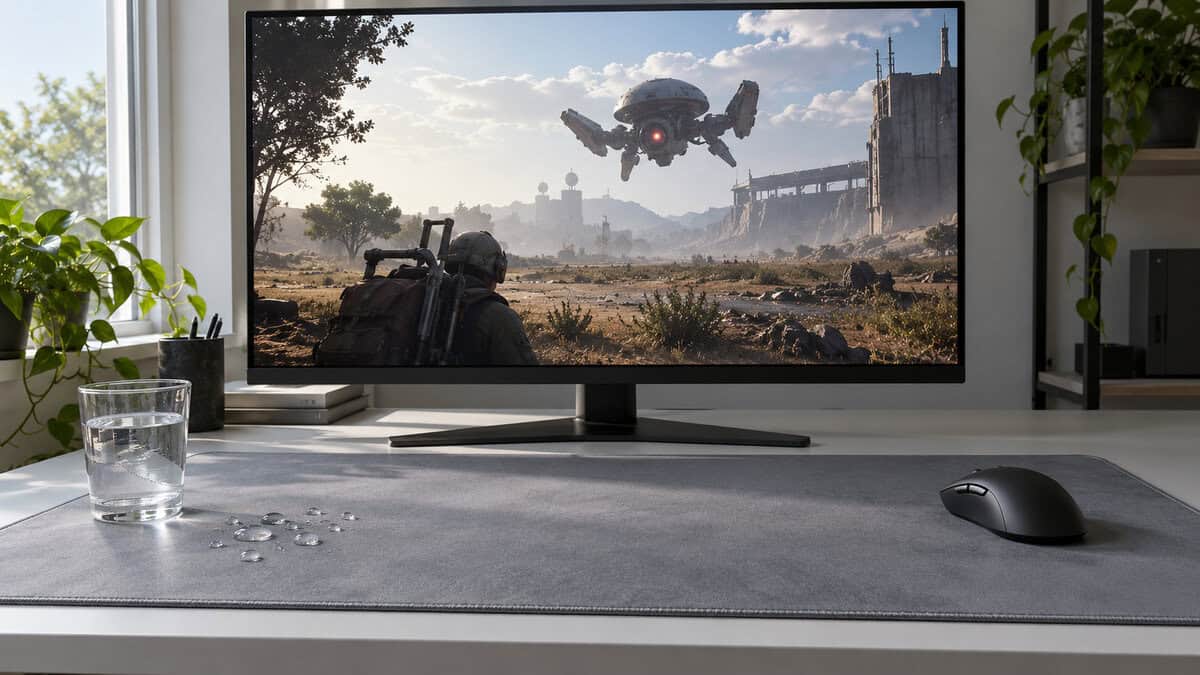
Embark’s patch notes describe the stomp attacks of the Queen and the Matriarch, and anyone who has fought either knows how much ground they cover. Against large ARC machines like these, you are rarely flicking. You are holding the crosshair on a target that moves slowly but keeps moving, often for the whole length of a magazine.
That kind of aim is a long, slow, steady swipe. Any hitch in the glide shows up as a wobble in your crosshair, so the even surface of the G840 XL and the smooth coated cloth of the Scabbard II both suit it well. A heavy control cloth can make slow tracking feel stiff, because your hand has to keep pushing through the drag.
Against a big machine, consistency beats speed every time.
Small Flyers Punish Jerky Corrections
Small flying ARC are the opposite problem. They change direction quickly and close the distance fast, and you often have to follow one across the sky in short corrections. If each correction starts with a little catch, your aim lags a step behind.
Here a pad with low starting friction helps, and so does depth. Flying targets pull your aim up and down far more than a ground-only enemy does, and a 400 mm deep pad gives you room to pull the mouse toward you for a high shot without lifting it.
Fighting Other Raiders
Raider fights are short, sharp and decisive. They often end with the first player to land a clean hit, and the cost of losing is everything in your backpack.
The First Clean Hit
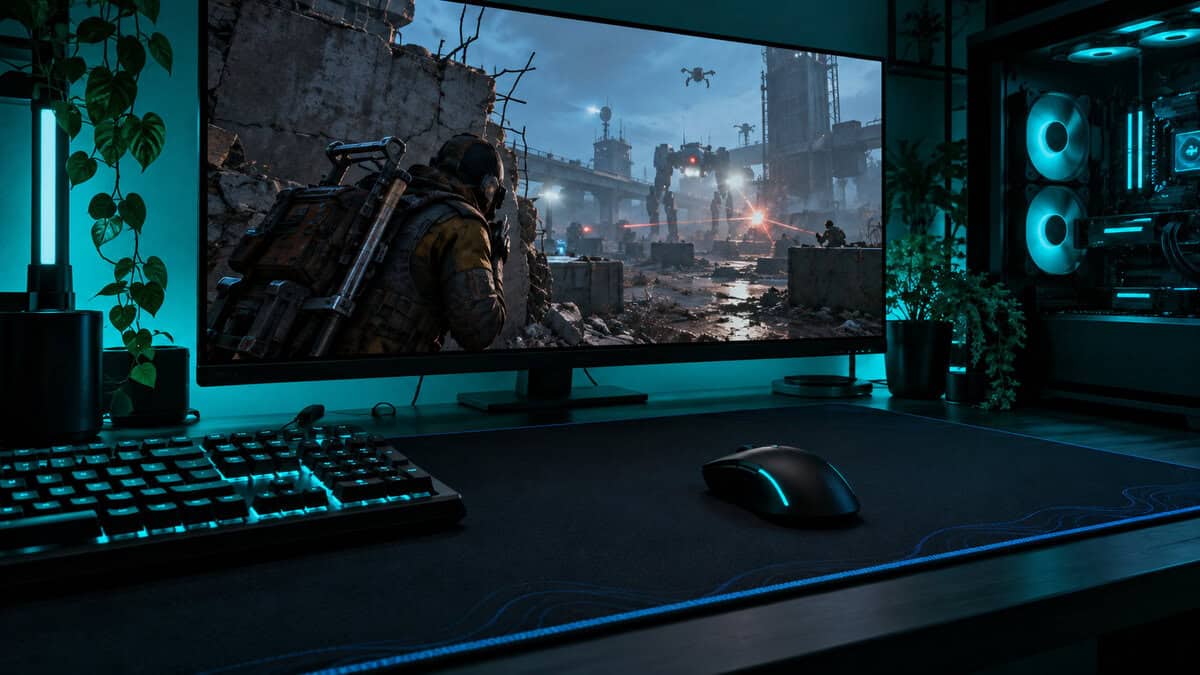
Most raider duels start with a snap: you hear a footstep, turn, and flick onto a target that has just appeared. The first half of that flick is fast and rough. The second half is the stop, and most missed flicks are overshoots rather than shots that were too slow.
This is where the Legion’s control microfiber earns its slot. Its slight drag helps your hand stop on target instead of sliding past, especially at a low sensitivity where the whole arm is moving. The G840 XL gives you a softer version of the same stopping help.
Chasing Someone Around Cover
When a raider breaks line of sight, the fight turns into short repositions: peek, adjust, duck back, peek again. Each peek ends with a small correction onto a target that may have moved, and a surface that lets you place those small corrections precisely matters more than raw glide speed.
Keep your sensitivity low enough that those small corrections come from the wrist, and let the big turns come from the arm. That split only works on a pad large enough to hold both, which brings us back to the desk-wide picks.
When a Fight Pulls In Both
The fight most mousepad guides never think about is the one Arc Raiders throws at you constantly: a raider duel that draws ARC in, or a machine fight that another squad decides to join. Gunfire is noisy, and noise brings company.
Switching Targets Without Switching Settings
In those moments you go from tracking a slow, predictable machine to flicking onto a fast, unpredictable player in the same second. There is no time to change sensitivity, and you cannot change pads. Whatever surface sits under your mouse has to handle both jobs on the spot.
That is a strong argument against extreme surfaces. A very fast pad makes the raider flick harder to stop, and a very slow one makes the machine track feel heavy. Keep one sensitivity for every fight and let the surface carry the difference.
Why a Balanced Cloth Is the Honest Compromise
This is the case for the G840 XL as the overall pick. It is not the best pad here for either half of the game alone. It is the pad that asks the least of you when both halves arrive at once, which in Arc Raiders happens more often than you would think.
If your raids lean hard one way, pick the specialist instead. Players who mostly avoid other raiders and spend their sessions on ARC should look at the Scabbard II, and players who hunt other raiders at a low sensitivity get more from the Legion.
The Third-Person Camera Needs Room
Arc Raiders is played over the shoulder, and that changes how much you move the mouse. You swing the camera to check behind you, look around corners before you commit, and turn to face a sound you just heard.
Arm Swipes for Camera Turns
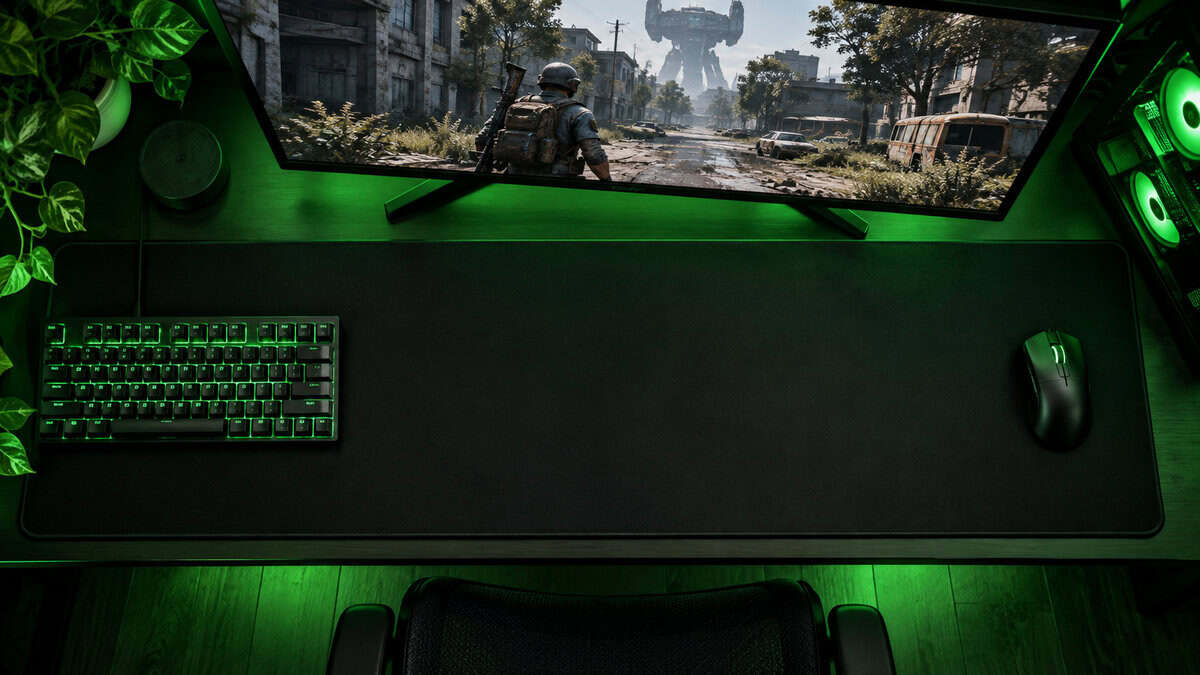
At a low sensitivity, a full camera turn can take a long sweep of the arm. On a pad only 300 mm deep or narrower than your swing, you run off the edge mid-turn and have to lift the mouse, which is exactly the moment someone peeks you. A 900 x 400 mm pad leaves room for the whole sweep.
If you are still choosing a mouse to match, our best budget mouse for Arc Raiders guide covers weight and sensor choices, and its sensitivity advice pairs naturally with a pad this size.
Keyboard and Mouse on One Surface
A desk-wide pad also sits under the keyboard. That keeps everything on one even surface, stops the keyboard’s front edge from catching your mouse hand on a wide swing, and gives a slightly softer feel under the wrists. If you need ideas for the keyboard half, our Arc Raiders keyboard guide covers movement and looting binds.
Measure the desk before you order. A 900 mm pad needs a desk at least that wide, and a monitor arm base or speaker that sits on the pad can create a bump under the cloth. If your desk is shallow, a full desk mat may suit it better, and our best desk mat roundup covers those.
A Pad That Survives Hundreds of Raids
Arc Raiders sessions run long. A raid, a trip back to sort loot and craft, then another raid, often for hours at a stretch. Over months of that, the pad’s surface and edges wear, and that wear slowly changes your aim.
Coated Cloth vs Plain Cloth
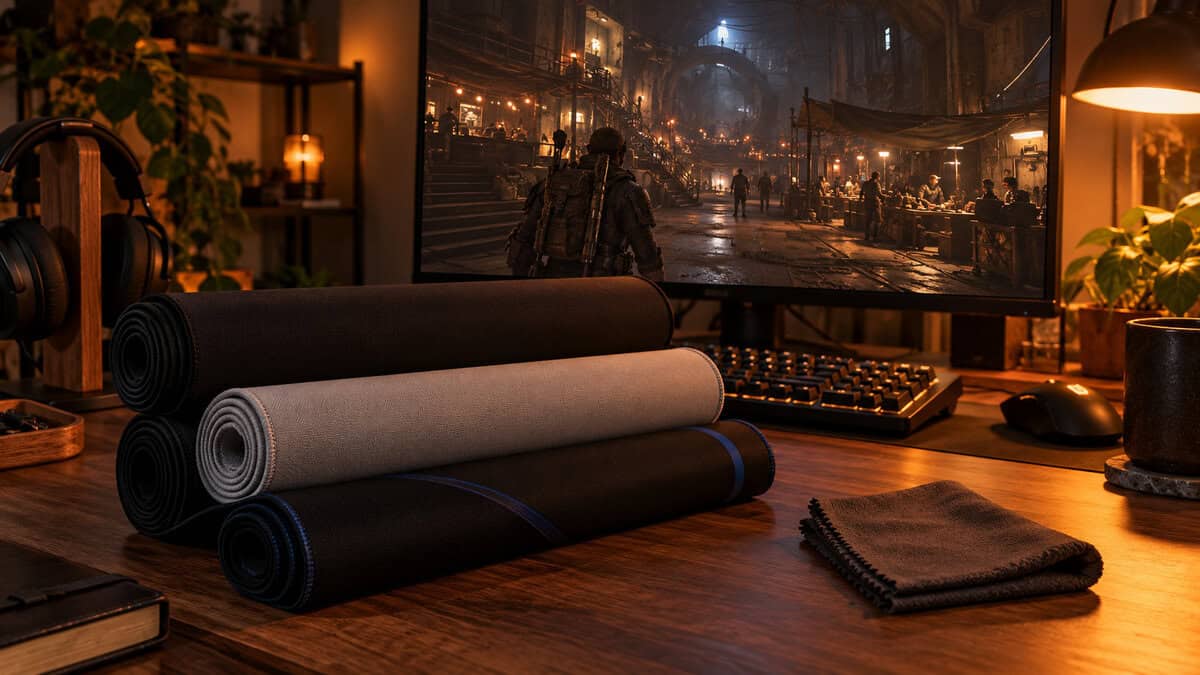
Plain cloth soaks up skin oil, dust and the odd drink, and every bit of that adds drag where your palm and mouse feet travel most. A coated cloth like the Scabbard II or the Legion resists that buildup, so the glide stays closer to how it felt on the first day. The tradeoff is care: never put a hot drink on a coated pad.
Stitched Edges vs Plain Edges
Your forearm drags across the near edge of the pad all session long. Unstitched cloth edges can fray and lift over time, and a lifted edge catches the arm. Stitched or locked edges, like the Scabbard II’s flat stitching and the Legion’s braided edge, hold up longer.
If you want more options in the same size class, the Razer Gigantus V2 XXL is a thick, soft control cloth with a huge review base, the SteelSeries QcK XXL is the long-running control standard many players already own, and the ASUS ROG Sheath II XXL is a black ROG alternative to the Scabbard.
Cleaning and When to Replace
ZOWIE’s guide on how to clean a mousepad for a consistent glide recommends shaking off loose dust, wiping the surface with a damp cloth and letting the pad air dry fully in the shade before you put it back. It also suggests cleaning about once a week and replacing a pad that still feels worn after cleaning.
That last point is the one most players ignore. If your aim feels off after months on the same pad and a clean does not fix it, the surface is probably worn where your mouse lives, and a fresh pad is a cheaper fix than a new mouse.
Your Raid Style Picks the Pad
Find the row that sounds most like the way you raid.
| Pad | Raid Style | Why It Fits |
|---|---|---|
| Logitech G840 XL | Mixed PvE and PvP raiders at low to mid sensitivity | One predictable surface that tracks machines and stops on raiders |
| ASUS ROG Scabbard II XXL | Long sessions with a drink on the desk and lots of ARC fights | Coated cloth resists spills and grime, with smooth glide for tracking |
| Lenovo Legion Gaming Control XXL | Budget players at low sensitivity who mostly fight other raiders | Control microfiber helps flicks stop, on a thin desk-wide pad |
A pad is one part of the kit. Our Arc Raiders monitor guide covers spotting movement at range, and the best headset for Arc Raiders roundup helps you hear a machine or a raider before either sees you. For another game where the pad choice splits by aim style, see our Marvel Rivals mousepad guide.
Building out the rest of your Arc Raiders setup? Our gaming setup builder fills every slot from monitor to mousepad, and if you play more than one game, it finds the gear our guides recommend across all of them.
Frequently Asked Questions
Quick answers about mousepads and aim in Arc Raiders.
What size mousepad is best for Arc Raiders?
A desk-wide XXL pad around 900 x 400 mm suits most players. Arc Raiders is played in third person with a lot of camera movement, and a large pad gives low-sensitivity players room for full turns without lifting the mouse.
Is a cloth or hard mousepad better for Arc Raiders?
Cloth suits most players. Hard pads glide fast, which helps tracking, but raider fights reward stopping power, and cloth gives you more of it. A balanced cloth like the Logitech G840 XL handles both machines and raiders well.
Is there an official Arc Raiders mousepad?
Printed pads with Arc Raiders art are decor first, and the printed top says little about how the surface glides or stops. If you want a pad that helps your aim, pick a performance surface and add style with the rest of your desk.
How often should you clean a cloth mousepad?
A light clean about once a week keeps the glide consistent. Shake off loose dust, wipe the surface with a damp cloth and let it dry fully before use. If it still feels worn after cleaning, it is time to replace it.
Does a 2 mm pad aim differently from a 3 mm pad?
Slightly. A 3 mm pad cushions the arm and hides small bumps in the desk, while a 2 mm pad keeps the mouse closer to desk height and feels firmer. The surface and size matter more than thickness, so choose those first.
Looking for more budget gaming gear? Check out Budget Loadout for the latest reviews and recommendations.
Related Articles