You’re probably in the same spot most builders hit at some point. The parts list looks good, the GPU is expensive enough that you don’t want to risk it, and then you get stuck on the power supply. Is 750W the smart middle ground, or are you paying for wattage you won’t use?
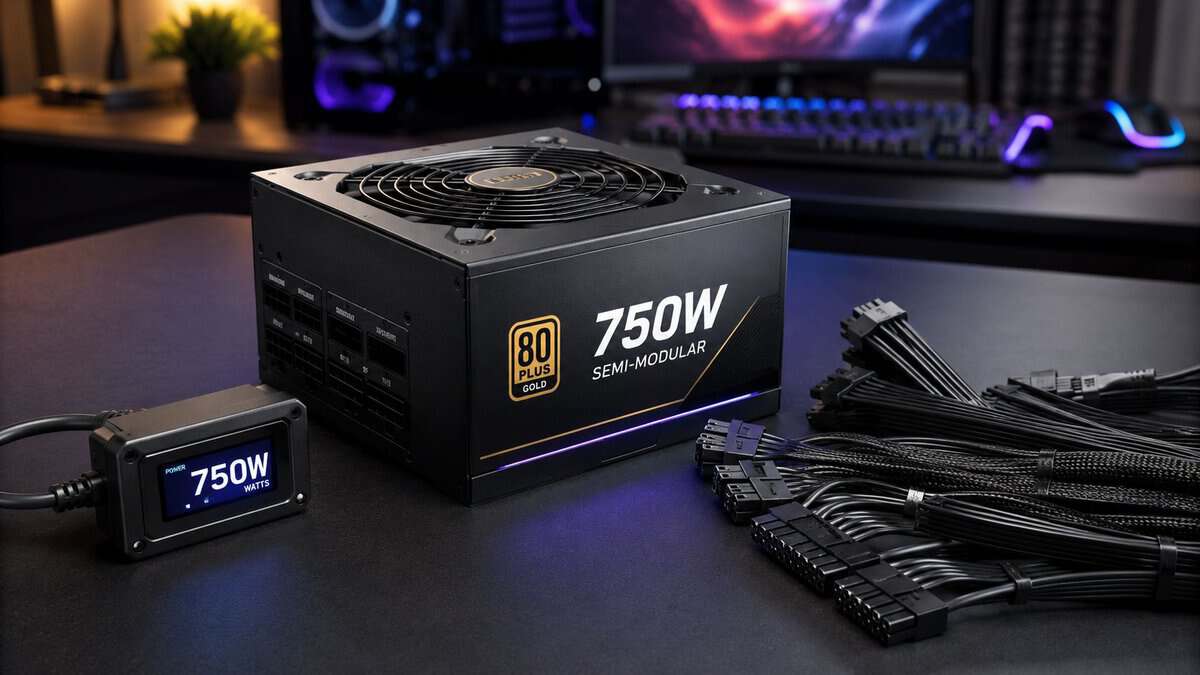
For most gaming PCs, 750W is where value and reliability start to line up. It’s enough for a serious gaming build, enough headroom for streaming and power spikes, and usually the tier where build quality gets meaningfully better. That matters more than shaving a little off the price.
A good PSU doesn’t boost frame rates on its own. What it does is keep the whole machine stable during long FPS sessions, MMO raids, or a stream running in the background. It also tends to last through more than one upgrade cycle, which is why I treat the best 750W PSU as a long-term value purchase, not a throwaway box in the bottom of the case.
- Native 12V-2×6 for modern RTX cards
- Quiet, low-noise operation
- Strong reviews above its price bracket
- Gold, not Platinum, efficiency
- No flashy cosmetics
- Shorter warranty than Seasonic
- Ten-year warranty
- In-house, proven platform
- Reviewer-favorite stability
- Costs a little more up front
- Overkill for a short-term build
- Gold, not Platinum
- Major-brand value line
- Compact, fits tight cases
- Solid protections and quiet fan
- Fewer premium extras
- Shorter warranty than Seasonic
- Cosmetics are basic
- Full 600W native 12V-2×6
- High Cybenetics efficiency
- Zero RPM silent mode
- Priced above the budget pick
- More than a modest build needs
- Newer, fewer reviews
- Match the connector to your GPU: an ATX 3.1 unit with a native 12V-2×6 cable powers current RTX cards without an adapter.
- 80 Plus Gold is the sensible efficiency floor for a 750W gaming build: cooler and quieter without paying for Platinum.
- Platform quality beats modularity: a well-built unit from a proven brand matters more than the cable count.
- Do not skip the protections (OCP, OVP, OPP, SCP): they stand between a power fault and dead components.
- 750W is the sweet spot for a mainstream single-GPU rig; step up to 850W only for higher-end or heavily overclocked cards.
Table of Contents
Is a 750W PSU the Right Choice for Your Build
If you’re building a modern gaming PC, 750W is often the sweet spot. Not because bigger is always better, but because this wattage usually gives you enough room for real-world gaming loads without forcing the PSU to work too close to its limit.
That’s the part many buyers miss. A PSU decision isn’t just about whether the PC turns on. It’s about how the system behaves after hours of gaming, during sudden GPU load changes, or while you’re playing and streaming at the same time. Cheap units can technically meet the number on the box and still be the weak point in the build.
For a budget-conscious gamer, that makes 750W appealing for a simple reason. You’re not paying only for wattage. You’re often paying for better internal components, cleaner power delivery, lower heat, and a warranty that suggests the manufacturer expects the unit to survive for years.
If you’re still sorting out the rest of the build, it helps to step back and look at the system as a whole. A practical gaming PC build guide can help you line up CPU, GPU, cooling, and PSU choices so you don’t overspend in one area and cut corners in another.
Practical rule: Buy the PSU for the system you’ll actually run, plus a little headroom for the way games behave under load. Don’t buy the cheapest thing that only works on paper.
There are real trade-offs between units in this class. Some focus on value. Some run quieter at lighter loads. Some lean harder into durability and newer connector support. Those differences matter more than flashy branding.
The best 750W PSU isn’t the one with the loudest marketing. It’s the one that matches your build, stays stable under stress, and still feels like a good purchase a few years from now.
When to Choose a 750W Power Supply
The easiest way to judge PSU size is to stop thinking in vague categories like “mid-range” or “high-end” and use headroom. For gaming rigs, headroom is what keeps a stable build from turning into a crash-prone one when the GPU suddenly ramps up.
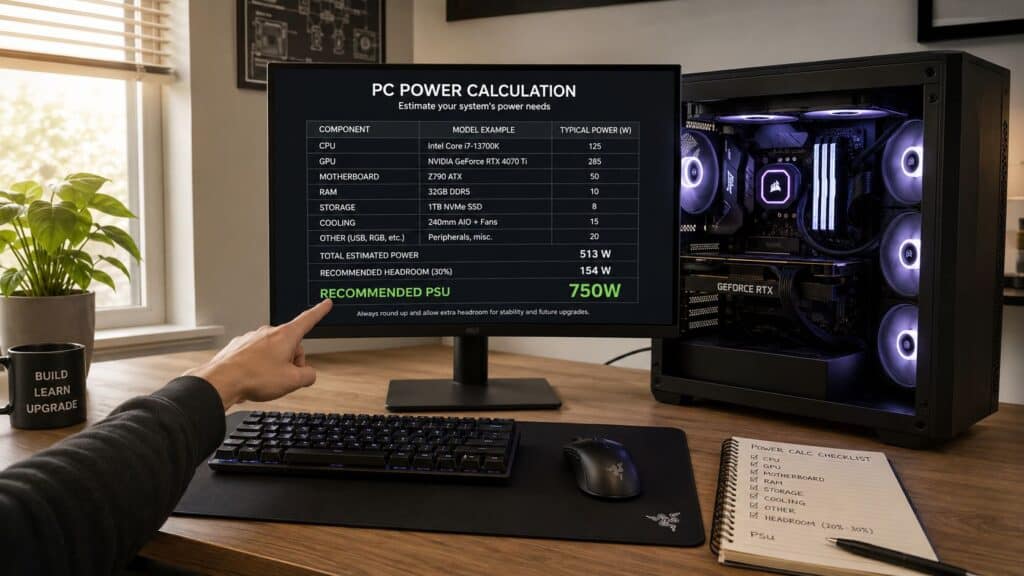
A solid rule is simple. For a PC with a maximum component draw of 500 watts, sizing the PSU to at least 1.5 times that draw results in a 750-watt minimum PSU requirement, which provides headroom for sustained FPS gaming spikes and streaming encoding loads without thermal throttling, as noted in this power supply sizing breakdown.
What that looks like in a real build
A lot of gamers land near this range without realizing it. Pair a strong mainstream CPU with a modern upper-midrange GPU, add storage, memory, cooling, USB devices, and normal overhead, and suddenly 750W stops looking excessive.
That’s especially true if you play:
- Competitive FPS titles: These games can push high frame rates for long sessions, which means repeated load changes rather than a gentle, predictable draw.
- MMOs and large online games: Long play sessions expose weak thermals and unstable power more than short benchmark runs do.
- Gaming plus streaming: Encoding and background tasks stack on top of the GPU load, and that extra strain is where undersized or lower-quality PSUs start showing their limits.
If you’re choosing a graphics card in that mainstream performance tier, this mid-range GPU guide is a useful reference point because PSU sizing makes more sense once the GPU target is fixed.
When 750W makes sense and when it doesn’t
A 750W unit is a strong fit if your build falls into one of these situations:
- You want upgrade room: Maybe the current build is moderate, but you don’t want to replace the PSU when the GPU gets bumped up later.
- You care about lower stress on the PSU: Running a unit with breathing room is usually better for heat and fan behavior than running close to the ceiling.
- You want a better class of unit: In practice, the 750W tier often gives access to better platforms, longer warranties, and stronger build quality than the bargain end of lower wattages.
It’s not the right answer for every system, though.
If your machine is genuinely low power and meant to stay that way, buying 750W only because it sounds safer can be wasted money.
For lighter builds, a smaller unit can still be the better buy. But for a gaming PC that’s meant to handle modern titles, regular multiplayer sessions, and maybe some content creation on the side, 750W is often the point where practicality wins over guesswork.
Key PSU Specs for Value-Conscious Gamers
A cheap PSU can make an affordable gaming build expensive later. Extra heat, louder fan behavior, shorter lifespan, and a weak warranty all cost more than the few dollars you saved upfront. If you want a 750W unit that holds up for years, ignore the flashy features and check the specs that affect reliability.
Efficiency matters because heat and noise add up over time
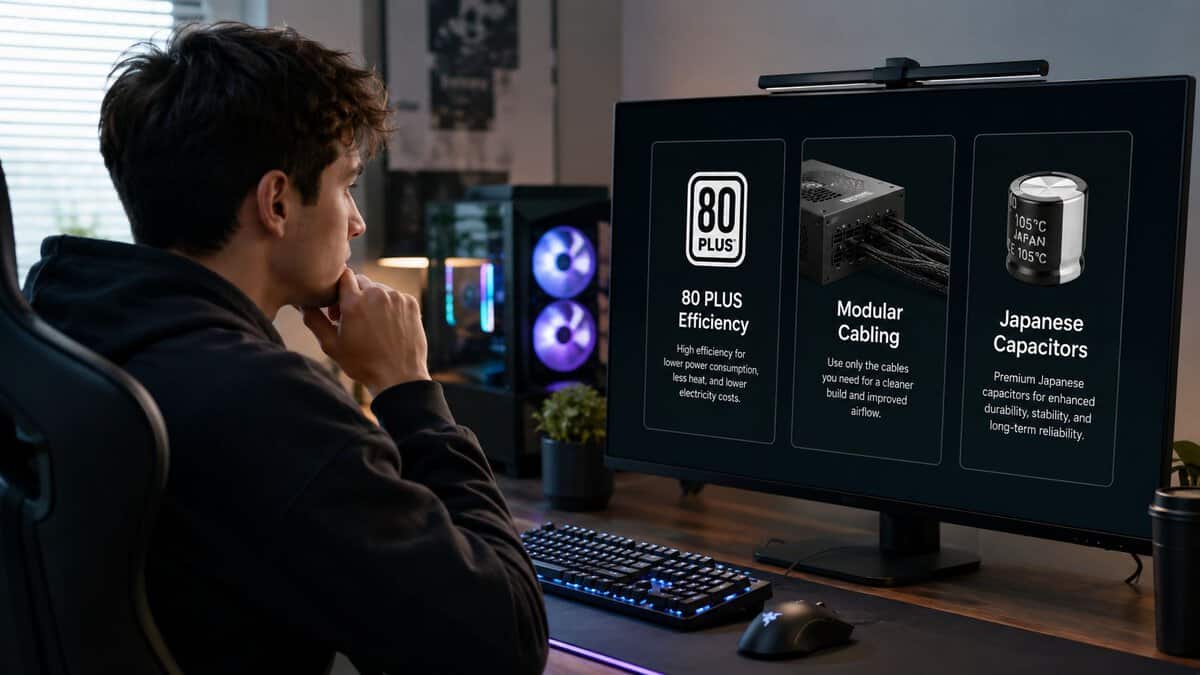
A 750W PSU usually runs most efficiently in the middle of its load range, as noted in this 750W PSU efficiency explanation. For a gaming PC, that matters because better efficiency means less wasted power turning into heat inside the PSU.
Less heat helps in a few ways. The fan often stays calmer. Internal parts spend less time baking. Long sessions feel easier on the whole system, especially in warmer rooms or compact cases.
Gold is usually the sweet spot for value. Bronze can still make sense in a tight-budget build if the platform and warranty are solid. Platinum only makes financial sense if the price gap is small or the system sees heavy daily use for years.
Modularity is nice, but platform quality matters more
Fully modular cabling is convenient. It makes cleaner builds easier and simplifies upgrades or case swaps later. Every pick here is a full-size ATX unit, so if your case only takes the smaller SFX size, start with our SFX PSU guide instead.
Still, removable cables do not tell you whether the PSU is built well.
For budget-conscious gamers, modularity usually breaks down like this:
- Fully modular: Best if you care about cleaner cable routing and easier rebuilds.
- Semi-modular: Often the best value. You keep the main cables attached and remove the clutter you do not need.
- Non-modular: Fine if the unit is well-built, the warranty is strong, and the price savings are enough to matter.
If the choice is between a better internal design and full modular cables, buy the better internal design every time.
The specs that actually protect your parts
Store pages love to push RGB, badges, and cosmetic finish. None of that helps a PSU deliver cleaner power or last longer.
What matters more is boring on paper and important in practice:
- Voltage regulation: Stable output helps avoid crashes or weird behavior when load changes quickly.
- Ripple suppression: Lower electrical noise is better for long-term component health.
- Thermal design: Good heatsinks, sensible fan tuning, and decent internal layout usually age better than corner-cut designs.
- Protection circuits: OCP, OVP, OTP, SCP, and similar protections are worth checking because they are part of what separates a safe PSU from a risky one.
- Warranty length: A longer warranty does not prove quality by itself, but it is still one of the clearest signals that the manufacturer expects the unit to last.
This is also why total cost of ownership matters more than raw price-per-watt. A PSU with better efficiency, lower heat, and a longer warranty can be the cheaper choice if it stays in your system through one or two upgrades.
If you want to lower overall system power draw, this guide on how to undervolt your GPU pairs well with a quality PSU. It can reduce case heat, cut GPU fan noise, and keep your gaming load closer to the PSU’s more efficient operating range.
There’s also a practical angle for streamers and creators watching both hardware costs and income. If you’re trying to understand YouTube channel earnings, it helps frame setup spending in a more realistic way, especially if the PC needs to stay reliable for long sessions over several years.
How We Judge a 750W PSU
The best 750W PSU is not always the one with the flashiest spec sheet. A unit can look great in a product listing and still disappoint where it counts, which is under real load, in a warm case, over long sessions. So our picks lean on independent lab reviews and long-run owner reports, not marketing numbers.
We weigh four things:
Electrical behavior under stress
A PSU has to stay stable when the system demand changes fast. That matters more than idle behavior because gaming loads aren’t static. A good unit handles sudden changes without wobbling where it shouldn’t.
Noise and thermal trade-offs
Silence on a product page means nothing if the fan ramps aggressively once the build gets warm. What matters is how the unit behaves during actual gaming, not just desktop use.
Some power supplies are quiet because they’re efficient. Others are quiet because they delay fan speed until heat builds up, then get noticeably louder.
Build quality inside the housing
I look beyond the sticker and the exterior finish. Internal layout, component selection, cooling approach, and overall platform quality tell you more about durability than branding does.
Value in the real sense
Value isn’t the lowest upfront cost. It’s the balance between price, reliability, warranty, efficiency, and whether the unit makes sense for a gaming PC that might get upgraded later.
Independent lab data helps ground those judgments, especially for efficiency, voltage behavior, and acoustics. But lab results still need context. A PSU that looks strong in isolation may not be the best choice for a budget-conscious gamer if the extra spend doesn’t buy anything meaningful for that build.
Best 750W PSU Recommendations for 2026
You finish a new gaming build, cable-manage everything cleanly, and then the one part buried under the shroud ends up deciding how stable that system feels over the next five years. That is why I do not buy a 750W PSU by price alone. For a budget-conscious gamer, the smart pick is the one that stays electrically stable, runs reasonably quiet, and carries a warranty long enough to suggest the manufacturer expects it to last.
A gamer shopping for the best 750W PSU usually needs a short list of PSU types, not a wall of product names. The better approach is to match the unit to the build, the upgrade path, and how long you plan to keep it.
750W PSU recommendations at a glance
| Category | Best For | 80 PLUS Rating | Modularity | Warranty Range | What You’re Paying For |
|---|---|---|---|---|---|
| Overall value pick: Corsair RM750e | Balanced gaming builds | Gold | Fully modular | Mid to long | Good electrical performance without premium pricing |
| Long-term reliability pick: Seasonic Focus GX-750 | Builders keeping the PSU through multiple upgrades | Gold | Fully modular or semi-modular | Long | Better platform quality, better support, lower replacement risk |
| Budget-conscious pick: MSI MAG A750GL | Cost-controlled builds that still need a respectable PSU tier | Bronze or Gold | Semi-modular or fully modular | Varies | Lower upfront cost with fewer extras |
| Modern-platform pick: NZXT C750 Gold Core | Newer builds with current connector standards in mind | Gold | Fully modular | Long | Cleaner compatibility for future GPU upgrades |
If your parts list is creeping upward and you want more GPU headroom, compare these best 850W PSU options before you buy.
The Overall Value Pick: Corsair RM750e
For a typical gaming PC with a strong CPU and an upper-midrange GPU, the Corsair RM750e is the one to start with. It is fully modular, 80 Plus Gold, and fully ATX 3.1 and PCIe 5.1 compliant, with a native 12V-2×6 cable so a current GPU plugs in cleanly.
What makes it the value default is the balance. It runs quiet, has a long service record, and does not charge a premium for the badge. Independent reviews consistently rate its electrical performance well above its price bracket.
If you want one safe pick and do not want to overthink it, this is the one.
The Long-Term Reliability Pick: Seasonic Focus GX-750
If you plan to carry the same PSU through two or three builds, the Seasonic Focus GX-750 earns the reliability slot. Seasonic builds its own platforms and backs this unit with a ten-year warranty, a strong signal of long-term confidence.
It is 80 Plus Gold, ATX 3.1, and PCIe 5.1 ready with a native 12V-2×6 cable, and it holds a reputation for clean, stable output that reviewers return to year after year.
You pay a little more up front, but a decade of coverage and a proven platform make it the buy-once choice.
The Budget-Conscious Pick: MSI MAG A750GL
When the goal is a safe, no-frills unit that keeps money in the rest of the build, the MSI MAG A750GL is the value-tier pick from a major brand. It is fully modular, 80 Plus Gold, and ATX 3.x ready, with a compact body that fits tight cases.
It skips the premium cosmetics and focuses on the essentials: solid protections, quiet operation, and current-GPU compatibility. For a mainstream build, that is exactly the right set of priorities.
If you want a trusted name without paying for extras you will not use, this is the sensible budget choice.
The Modern-Platform Pick: NZXT C750 Gold Core
For a build centered on a current GPU, the NZXT C750 Gold Core is the most future-ready choice. It offers a full 600W native 12V-2×6 connector, ATX 3.1 compliance, and Cybenetics-rated efficiency, so it absorbs the fast power spikes modern cards produce.
A Zero RPM mode keeps it silent under light loads, and the higher efficiency tier runs cool during long sessions. It is the pick when platform compatibility and transient handling matter most.
If your rig leans on a power-hungry GPU, this is the unit built for it.
Build Quality and Long-Term Value
A power supply usually fails the long game in slow, annoying ways. Fan noise creeps up, voltage gets less consistent under heat, or the unit starts tripping during spikes that a better design would shrug off. On a spec sheet, two 750W models can look close. After a few years in a gaming PC, they often do not.
What contributes to durability
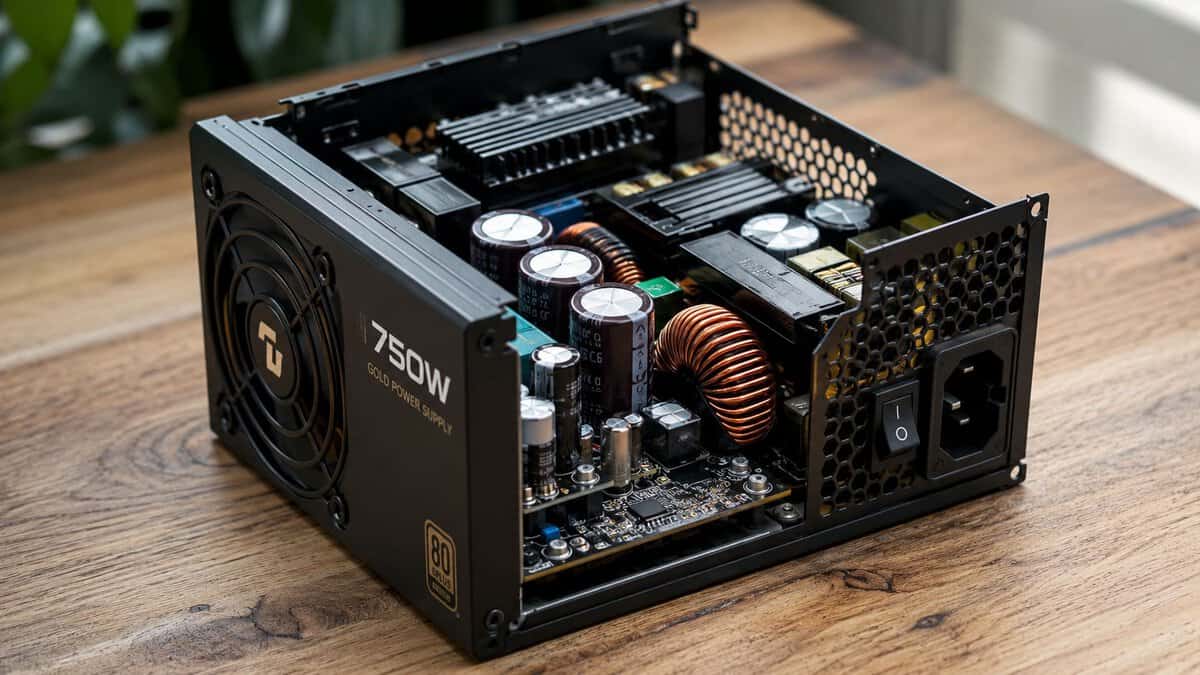
Long-term value starts inside the PSU. Higher-grade capacitors age better under heat. Better fan bearings hold up longer and stay quieter. Cleaner soldering, a sensible internal layout, and solid protection circuits reduce the chance of random instability after years of gaming sessions, summer temperatures, and repeated shutdown cycles.
This is why I treat the PSU like a five-to-ten-year part, not a throwaway box that happens to power the system.
Warranty matters too, but only as one signal. A long warranty is useful because it lowers the risk of replacement cost later. It also suggests the manufacturer expects the platform to last. Still, I would take a well-built unit with a good reputation for thermal behavior over a cheaper model that wins on wattage and loses on parts quality.
Why better electrical performance saves money over time
The cheapest 750W PSU is rarely the best value. Efficiency affects heat, and heat affects fan noise and component aging. A unit that stays efficient across the loads a gaming PC sees most often will usually run cooler and quieter, which is better for long sessions and better for lifespan.
Voltage regulation and ripple control matter for the same reason. Clean, stable power helps the rest of the system behave predictably, especially under GPU load swings. Good electrical performance is not marketing fluff. It is part of the total cost of ownership because it reduces the odds of troubleshooting crashes, replacing a noisy PSU early, or buying twice.
Top-tier ATX 3.0 ready units tend to justify their price over time for this reason. You pay more up front, but you often get better thermals, better acoustics, a longer warranty, and a stronger chance that the PSU survives multiple rebuilds.
Wall power matters as well. If your area gets frequent outages or rough power, pairing the system with a quality UPS for a gaming PC gives the PSU and the rest of the build a better shot at a long service life.
A PSU is one of the few PC parts that can outlast your CPU, GPU, and motherboard, if you buy for build quality instead of price alone.
Frequently Asked Questions About 750W PSUs
Quick answers to the questions gamers ask most before choosing a 750W PSU.
Do you need ATX 3.0 and PCIe 5.0 support?
A lot of builders hit this question when they are choosing between a discounted older unit and a newer design with the latest cable standard.
For a current midrange gaming PC, an older high-quality PSU can still be a smart buy if it has the right protections, good thermals, and the connectors your parts already use. You do not get better frame rates from a newer PSU standard by itself.
ATX 3.0 and PCIe 5.0 support matter more for upgrade flexibility and cleaner cabling. If there is a good chance this PSU will carry over to your next GPU, buying the newer standard now can save hassle later and reduce your need for adapters. That has real long-term value, which is the whole point of spending carefully on a power supply.
Is a longer warranty always proof of better quality?
A long warranty is useful, but it is not enough on its own.
The better way to read a warranty is as one part of the value equation. A unit with a long warranty, tight voltage regulation, low ripple, and sensible fan tuning is usually worth more than a cheaper model with a shorter term and weaker electrical performance. A unit with a long warranty but poor acoustics or questionable thermal behavior can still be a bad fit for a gaming rig that sees long sessions.
Treat warranty length as a confidence signal, then check whether the platform behind it looks built to last. That is what determines whether the PSU stays in your system for one build or survives two or three upgrades.
Is a 750W PSU wasteful for a lower-power system?
Usually, no. The PSU only supplies what the PC pulls.
What matters is where your system will spend most of its time on the load curve. A 750W model often lands in a comfortable range for a gaming build with a mainstream or upper-midrange GPU, which can help with heat and fan noise. If your machine is low-power and likely to stay that way for years, a smaller, better-built unit may be the smarter buy.
This comes down to upgrade plans. If you expect a future GPU swap, 750W often gives you useful headroom without pushing you into the price bracket where you are paying for wattage you will never use.
What should gamers prioritize first?
Start with the parts that affect reliability and ownership cost, not the box art. In rough order of priority: platform quality and safety protections first, then enough wattage with ATX 3.1 and a native 12V-2×6 cable for your GPU, then efficiency at 80 Plus Gold or better, then a long warranty, then modularity, with cosmetics like RGB last.
For a budget-conscious gamer, the best 750W PSU is the one you can install, forget about, and keep using years from now. If you want more straightforward buying advice for gaming and streaming gear that respects your budget, check out Budget Loadout. It’s built for people who want reliable recommendations, honest trade-offs, and fewer wasted purchases.
Related Articles