Stick sensors do not get replaced often, and when they do, the marketing gets ahead of the physics. The tmr vs hall effect debate sounds like a generational war. It is closer to a family argument: two magnetic sensors, one shared idea, and a difference you have to go looking for.
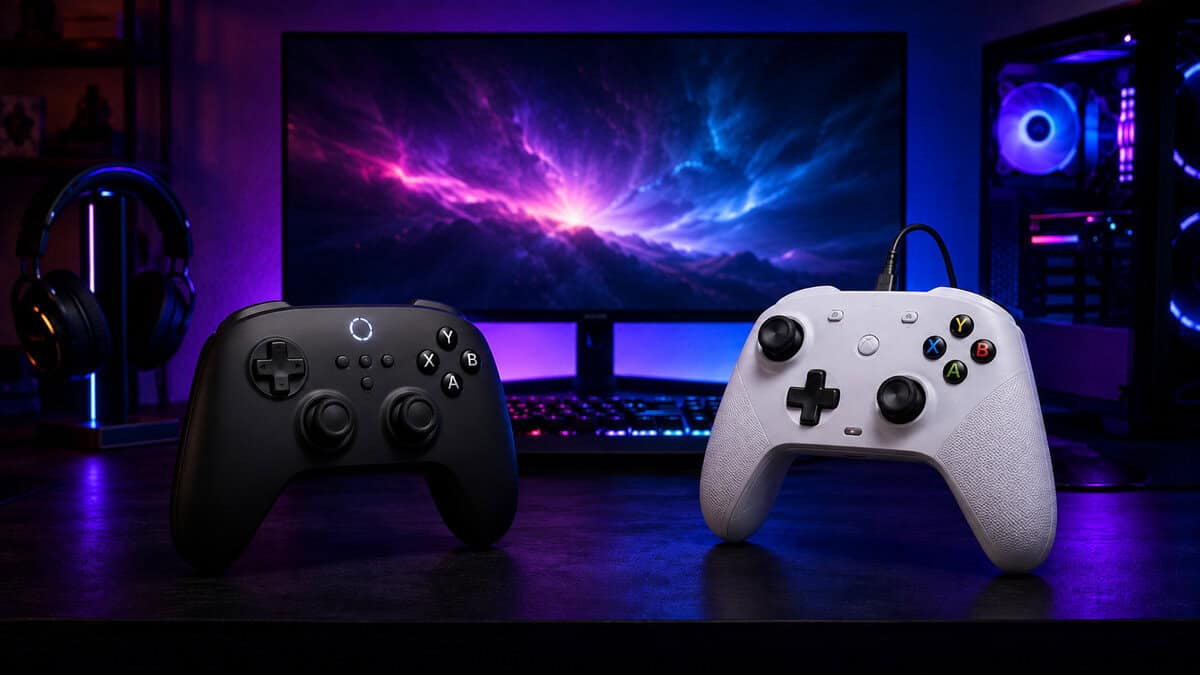
This guide explains what each sensor actually does, where TMR genuinely pulls ahead, and why the controller wrapped around the sensor still matters more than the sensor itself. Two verified pads settle the argument at the end.
- TMR sticks read finer movement than typical hall effect units
- Charging dock and low-latency dongle included in the box
- Mature 8BitDo software with per-game profiles
- PC-focused variant with no Xbox or PlayStation support
- Costs more than comparable hall effect pads
- Deeper tuning requires the desktop app
- Hall effect sticks and analog triggers shrug off drift
- Officially licensed for Xbox with a huge proven track record
- Costs less than any TMR pad of comparable quality
- Wired only with no battery to lean on
- No PlayStation or Switch support
- Polling rate trails TMR flagship dongles
Picks and availability last verified: October 12, 2026
- Both TMR and hall effect sticks sense magnets without physical contact, so both eliminate the wear that causes classic stick drift
- TMR is a refinement rather than a revolution: a newer sensor element with higher sensitivity and lower power draw
- Hall effect still wins on price and product choice, with far more proven controllers on the market
- Implementation beats sensor type. A well-tuned hall effect pad outplays a sloppy TMR pad every time
- Wireless players benefit most from TMR because the lower power draw stretches battery life
Table of Contents
The Short Answer
Both sensor types solve the problem that actually matters. Stick drift comes from potentiometers physically wearing out, and neither TMR nor hall effect sticks have anything to wear. Once you remove the scraping contacts, the biggest failure mode in controller history simply leaves the building.
Past that shared victory, TMR reads finer movement, wastes less battery, and reacts to smaller changes in the magnetic field. Hall effect answers with maturity: more controllers, more price points, and years of firmware tuning that the newer sensor is still accumulating.
Buy the controller, not the sensor.
Why the tmr vs hall effect debate is smaller than it looks
If you put a well-tuned pad of each type in front of most players, the honest result is a shrug. Dead zones, calibration quality, shell shape, and software polish shape the feel of a controller far more than the sensor element buried under each stick.
That is not an argument against TMR. It is a reminder that the sensor is one ingredient, and the kitchen still decides the meal. The rest of this guide covers where the real differences live so you can decide whether they are worth paying for.
Who should actually care
Wireless competitive players sit at the center of the TMR pitch. They benefit from the finer resolution, the polling headroom, and the battery savings all at once, and they replace controllers often enough to ride the new curve.
If you play wired story games on a pad you replace every few years, the sensor war is background noise. Buy on shape, software, and price, and let either magnetic sensor quietly solve drift for you in the background.
How Both Sensors Kill Drift
A traditional stick module reads position through a potentiometer: a metal wiper physically scraping across a resistive track thousands of times per session. The scraping is the mechanism, and the scraping is the failure. Wear a groove in the track and the stick starts reporting movement that never happened.
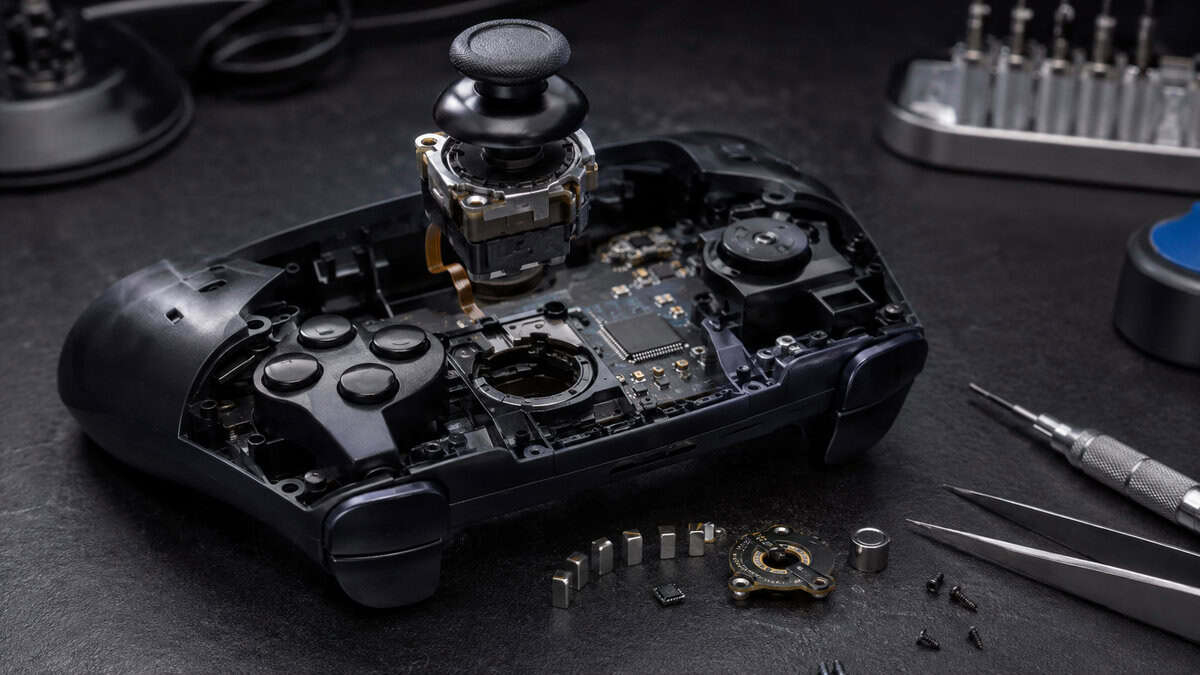
Magnetic sensing removes the contact entirely. A magnet moves with the stick, a sensor reads the changing field from a distance, and nothing touches anything. Potentiometers survived for decades anyway because they were cheap, simple, and good enough until esports made stick precision a durability question. Magnetic modules used to carry a real cost premium; volume has now shrunk it to pocket change, which is why the whole budget tier flipped so quickly. That single design change is why our hall effect controller roundup exists, and it applies to TMR pads identically.
The part both camps share
Every drift-proof stick on the market is a magnet plus a reader. The debate is only about which reader. Hall effect sensors measure the field through the voltage it induces in a conductor. TMR reads it through a quantum effect in a layered film. Different physics, same job, same immunity to wear.
This is also why the drift conversation has moved from “which pads fail” to “which pads feel better.” That is a much nicer problem to have, and it is the one the next two sections argue about.
What drift-proof does not fix
Magnetic sensing cures reported movement that never happened. It does nothing for the mechanical half of stick feel: spring tension, snapback wobble after a flick, or a gate that catches your thumb on diagonals. Those live in the module’s mechanics, not its sensor.
Dead zones are the other survivor. Manufacturers still ship them, sometimes generously, to mask center-point noise. A drift-proof stick with a lazy dead zone feels worse than an honest potentiometer in its prime, which is why tuning keeps outranking sensor choice in practice.
What TMR Actually Does Differently
TMR stands for tunnel magnetoresistance, and the name describes the trick. The sensor is a film stack with an insulating barrier thinner than a virus, and electrons cross it through quantum tunneling. How easily they cross depends on the magnetic field, which makes the film a wildly sensitive field reader. TDK’s TMR sensing primer covers the physics in full if you want the deep version.
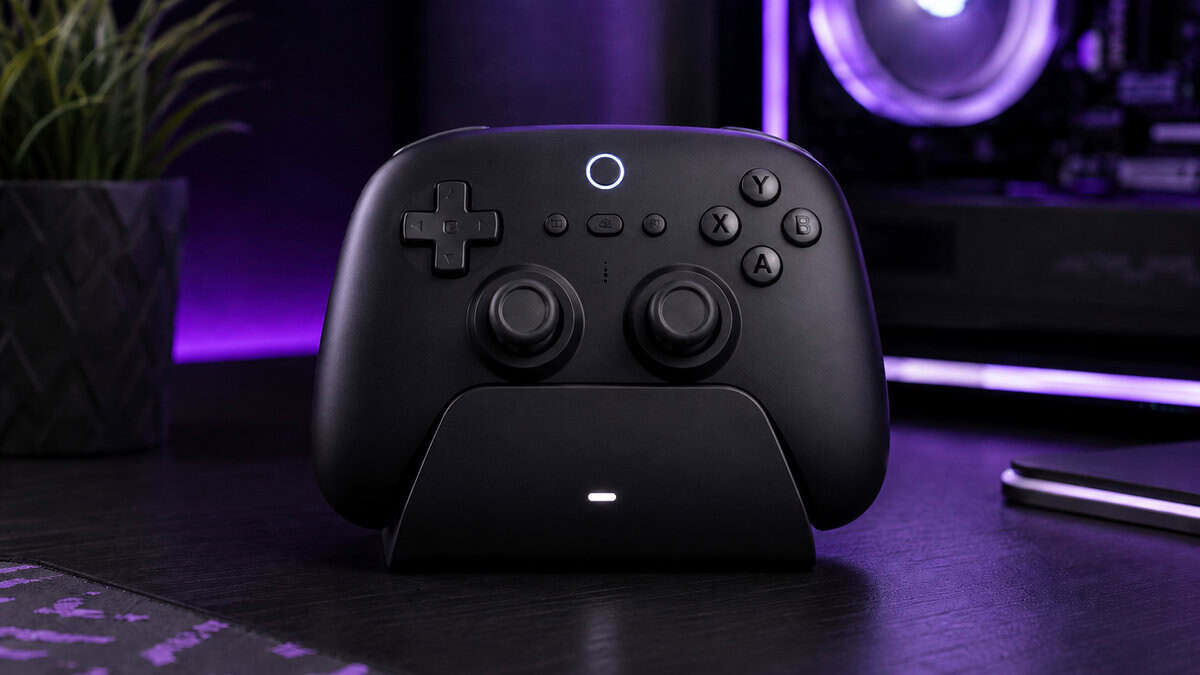
In a controller, that sensitivity translates to finer position resolution: the stick reports smaller movements more cleanly, which is why TMR pads pair naturally with high polling rates. The signal coming off the sensor is strong enough that it needs less amplification and less correction downstream.
TMR is the same trick as hall effect, performed with a much better antenna.
The battery angle
The quieter advantage is power draw. TMR elements produce a large signal from very little current, and in a wireless controller that thrift compounds over every hour of play. Manufacturers spend that surplus differently: some on longer battery life, some on higher polling without shorter sessions.
If you play wired, this advantage evaporates. A cable does not care how thrifty the sensor is, which is worth remembering when the premium for TMR shows up on a wired pad.
Why TMR and high polling travel together
Polling rate decides how often the controller reports its state. Reporting more often only helps if each report contains something new, and that is the real reason flagship high-polling pads reach for TMR: the sensor produces a signal clean enough to be worth sampling that fast.
Be honest about the ceiling, though. Past the standard rate most players cannot feel further gains, and a high number on the box does not make your hands faster. Treat extreme polling as a competitive luxury rather than a requirement.
Where Hall Effect Keeps the Edge
Hall effect sensing is decades old, and in hardware that is a compliment. The sensors are cheap, the supply chains are deep, and controller firmware has had years of tuning around their behavior. When a budget pad ships with hall sticks today, it ships with a solved problem.
The product landscape shows it. Hall effect pads span every price tier from pocket money to premium, while TMR still lives mostly in flagship models. Our hall effect roundup has an Amazon-sold pick at a price no TMR pad approaches, and TI’s linear hall sensor catalog hints at why: the component ecosystem is enormous.
The maturity dividend
Maturity also means predictability. A hall effect stick’s quirks are known quantities that firmware teams have compensated for through multiple hardware generations. Early TMR pads occasionally shipped with center-point calibration wobbles that patches later fixed, the classic tax of being first.
If you keep controllers for years, that track record is worth real money. The exciting sensor is not always the dependable one in year three.
Repairability leans the same direction. Swappable stick modules, replacement parts, and community fix guides all grew up around hall effect hardware first. When something does go wrong outside warranty, the older ecosystem gives you more ways out than the new one.
The trigger story
Sticks get the headlines, but triggers wear out the same way, and here hall effect quietly owns the market. Magnetic analog triggers are common on hall pads, including budget models, while TMR triggers remain rare even on flagships.
If your genres lean on analog triggers, racing especially, a full hall effect pad may protect more of the controller than a TMR-stick model that kept potentiometer triggers. Read the whole spec sheet, not just the stick line.
Sensor vs Sensor at a Glance
Here is the whole argument in one table. Neither column has a drift problem, so read this as a list of tiebreakers rather than dealbreakers.
| What you care about | Hall Effect | TMR |
|---|---|---|
| Drift resistance | Contactless, drift-proof | Contactless, drift-proof |
| Position resolution | Strong | Finer, cleaner signal |
| Power draw | Modest | Lower, helps wireless battery |
| Product choice | Every price tier | Mostly flagships so far |
| Track record | Years of tuned firmware | Newer, still maturing |
| Typical cost | Lower | A premium for now |
The Two Pads That Settle It
Specs argue in the abstract. Controllers settle it. One verified pick per camp, each the strongest expression of its sensor at a budget-site price.
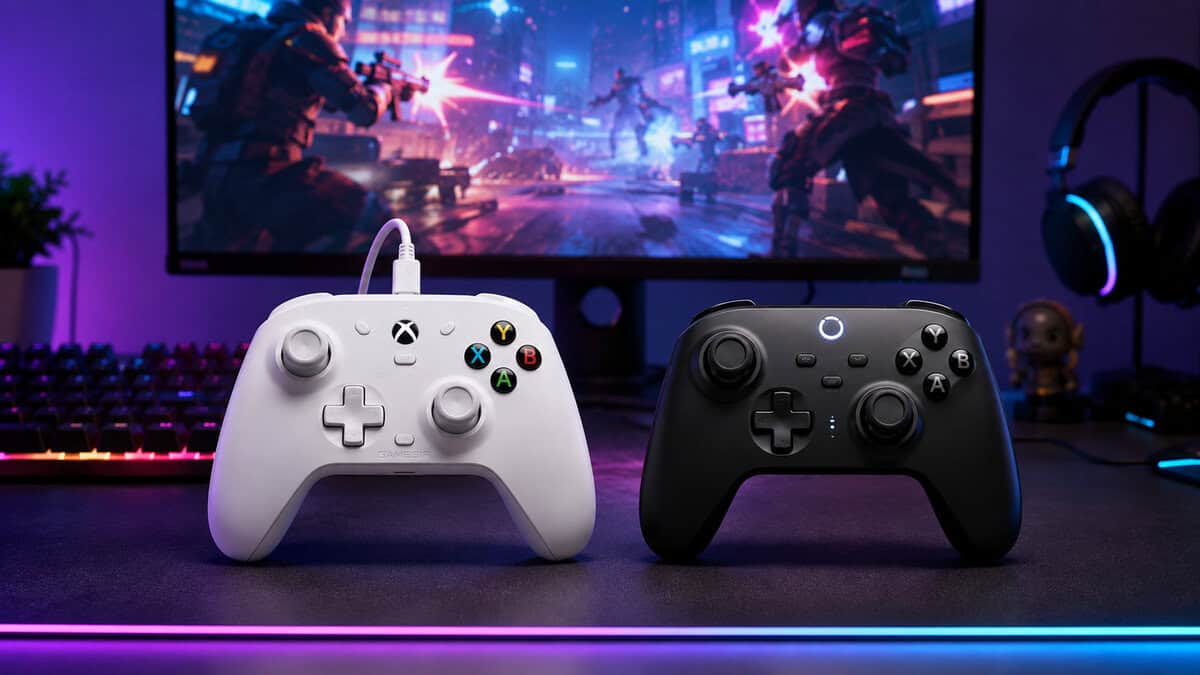
The TMR case: 8BitDo Ultimate 2
The 8BitDo Ultimate 2 is what TMR looks like when it grows up. The sticks read fine movements cleanly enough to justify the high-rate dongle in the box, the charging dock removes the battery chore, and 8BitDo’s software lets you tune curves per game. It is the pad to buy if you want to feel what the newer sensor adds.
The stick feel is the closest thing to a demo TMR has. Slow crosshair drags in a shooter track with a smoothness that potentiometer veterans notice immediately, and the sticks hold their center honestly even with tight dead zones dialed in.
Know the boundaries: this is the PC-focused variant, and the deeper features live in the desktop app. It also carries the TMR premium, which is exactly the tradeoff this article exists to price for you. A different variant of the same pad serves Switch owners, which our Switch 2 controller guide covers from that side.
The hall effect case: GameSir G7 SE
The GameSir G7 SE is the argument for maturity. Hall effect sticks and triggers, an official Xbox license, and a review base in the tens of thousands. It won the top slot in our hall effect roundup on merit, and nothing in the TMR camp matches its price-to-polish ratio.
It also carries hall effect into the triggers, protecting the whole analog surface of the pad rather than just the sticks. For racing and anything with pressure-sensitive aiming, that coverage matters more than a sensor upgrade under the thumbsticks alone.
One pad is the future arriving. The other is the present, perfected.
The rest of the field
Two more names matter. The GameSir Cyclone 2 pioneered TMR at a mainstream price and remains the Ultimate 2’s closest rival, complete with swappable stick modules. And the GameSir Nova Lite proves the hall effect floor: drift-proof sticks at pocket-money pricing that TMR simply cannot reach yet.
What to Buy by Platform
On PC you have total freedom, and both champions above work wired or wireless. This is the platform where the TMR premium is easiest to justify, since every feature actually functions.
On Xbox the licensed field skews hall effect, led by the G7 SE and its stablemates in our budget controller roundup. On Switch, TMR arrived through the Ultimate 2’s Bluetooth variant, and the sensor conversation is genuinely live on both sides.
On PS5 the conversation stops at the licensing wall. Sony’s protocol locks out most third-party pads regardless of sensor, a situation our PS5 controller guide explains in full. Do not buy a drift-proof pad for a console that will not run your games on it.
And whichever platform you play on, remember the wired shortcut: a cable erases the battery half of TMR’s pitch instantly. Wired players can weigh the two sensors purely on feel and price, which usually makes the decision for them.
The best sensor in the world loses to a licensing check it cannot pass.
The keyboard side of the same debate
This sensor war is not controller-exclusive. Magnetic switches power the rapid-trigger keyboards taking over competitive shooters, and today that market runs almost entirely on hall effect, a field our hall effect keyboard guide covers pick by pick.
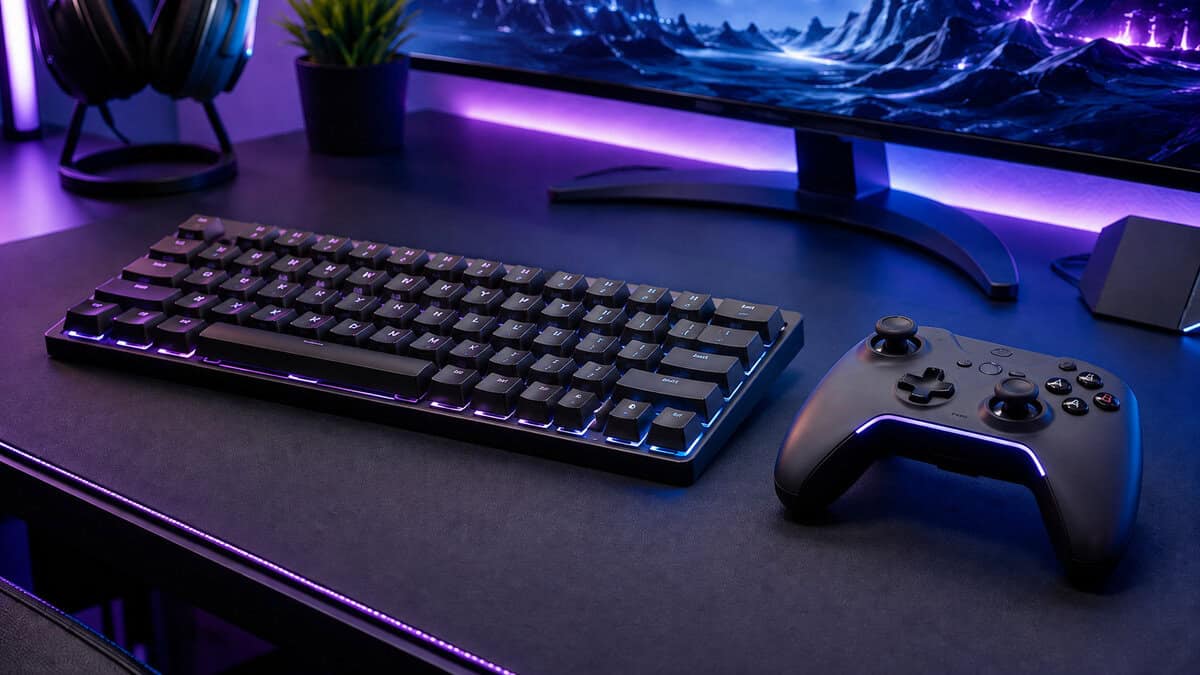
TMR keyboards are beginning to appear at the enthusiast fringe with the same pitch: finer actuation resolution for the same magnetic idea. Expect the keyboard debate to replay this article in miniature over the next year or two.
How to Read a Spec Sheet Without Getting Played
The marketing around magnetic sticks has gotten loose, so three checks protect your wallet. First, “drift-resistant” is not “drift-proof”: some budget pads advertise resistance while still shipping potentiometers with slightly better coatings. Look for the words hall effect or TMR by name.
Second, check what the sensors cover. “TMR joysticks” says nothing about the triggers, and a pad is only as durable as its most worn part. Third, treat giant polling numbers as a bonus rather than a benchmark, because the sensor, the connection, and your monitor all have to cooperate before you feel any of it.
When a spec sheet passes all three checks at a sane price, you are looking at a genuinely modern controller, whichever sensor camp it comes from. The first all-button board to use TMR switches, the HyperX Clutch Tachi, is covered in our leverless controller guide.
The same magnetic idea has reached keyboards, covered in our Hall effect vs mechanical keyboard comparison.
Frequently Asked Questions
The questions buyers actually ask when these two sensors end up on the same shortlist.
Is TMR Better Than Hall Effect?
It is better on paper: finer resolution, a stronger signal, and lower power draw. In your hands, the difference depends entirely on how well the controller around it is tuned.
A polished hall effect pad beats a rough TMR pad every time. Treat TMR as a tiebreaker between otherwise equal controllers, not a reason to dismiss the mature option.
Do TMR Sticks Ever Drift?
Not the way potentiometer sticks do. There is no physical contact, so there is nothing to wear a groove into.
What can still happen on any magnetic stick is a calibration wobble, where the center point reads slightly off. That is a firmware issue rather than a hardware failure, and recalibration or a patch usually settles it.
Why Do TMR Controllers Cost More?
The sensor element is newer, fewer suppliers make it, and manufacturers position it as a flagship feature. All three pressures ease with time.
Hall effect went through the same curve: a premium spec a few years ago, standard on budget pads today. Expect TMR to follow the same road down the price list.
Does TMR Actually Improve Battery Life?
On wireless pads, yes. TMR elements produce a strong signal from very little current, and that saving runs for every minute the controller is on.
On wired pads the advantage is irrelevant, so weigh the TMR premium against how you actually play.
Should I Replace a Working Hall Effect Controller with TMR?
No. If your current pad tracks cleanly and feels good, the upgrade buys you almost nothing you can feel.
TMR makes sense at natural replacement time, or when you are buying your first drift-proof controller and the price gap has narrowed enough to shrug at.
At Budget Loadout, we believe in building a high-performance setup without overspending. To find more gear that hits the perfect balance of quality and price, visit our homepage at Budget Loadout.
Related Articles