$2,000 is a strange budget for a gaming laptop in 2026. It is enough money to buy genuinely fast hardware, and exactly enough to attract every scalped, reseller-fronted listing on the market. Finding the best gaming laptop under 2000 is less about chasing spec sheets and more about knowing which listings are actually worth buying from.

- 2.5K OLED 165Hz is a class above rival panels
- Full RTX 5070 with solid Legion cooling
- Sold by Amazon, not a reseller
- 16GB RAM is workable but not generous
- 15-inch panel if you wanted bigger
- OLED needs care with static HUDs
- 32GB RAM handles streaming and heavy multitasking
- 17.3-inch panel at a value price
- Sold by Amazon with a full RTX 5070
- FHD resolution on a large panel
- 144Hz trails the Legion for esports feel
- Bulkier machine to carry
- Under $2,000 in 2026, the seller matters as much as the specs: most listings in this bracket ship from third-party resellers, and only two strong machines are sold by Amazon directly.
- The Lenovo Legion 5i is the overall pick, pairing an RTX 5070 with a 2.5K OLED 165Hz panel at about $1,816.
- The Acer Nitro V 17 AI is the value play at about $1,500, trading OLED for 32GB of RAM and a 17.3-inch panel.
- The RTX 5070 Ti tier technically exists under $2,000, but only through reseller listings that are not worth the risk on a purchase this size.
- Buy on GPU wattage, cooling, and seller trust, not the badge on the lid.
Table of Contents
What $2000 Actually Gets You in 2026
The buying decision usually starts here. You can save a little longer and chase a pricier machine, or you can buy now and make sure every dollar goes into hardware you’ll notice in games. At this budget, you should stop thinking in terms of “entry-level gaming laptop” and start thinking in terms of smart compromise with real headroom.
The market has moved fast. Current 2026 roundup sources describe the usual sweet spot as RTX 4060 to RTX 5070-class GPUs, 16GB to 32GB of RAM, and 144Hz to 240Hz displays, with 1440p/QHD play now realistic in many titles instead of just 1080p. Older 2025 examples in the same price range were still centered on RTX 4050/4060/4070 systems with 16GB RAM and 1080p 144Hz panels, which tells you how much more laptop this money now buys. That shift matters because the GPU is still the main event, but the display is finally good enough to show what the GPU can do. Of Zen and Computing’s 2026 roundup
What that means in practice
You’re no longer shopping for “good enough” 1080p performance unless you want to. A solid machine in this tier can handle FPS gaming, MMO raids, and modern AAA titles without feeling dated on arrival. The catch is that cooling, wattage, and display quality decide whether the laptop feels fast or merely looks fast on paper.
Practical rule: if a laptop spends the money on a strong GPU but cuts corners on thermals or the panel, you’ll feel the compromise every time the fans ramp up or the frame rate drops under load.
Budget here doesn’t mean cheap plastic and bottom-of-the-barrel parts. It means choosing between a better screen, stronger sustained performance, more RAM, or more portability. That’s why the next section matters so much, because the spec sheet can lie by omission. If you want a quick reality check before chasing a theoretical upgrade path, the RTX 5090 laptop guide is useful for understanding where the ceiling sits, even though it’s far above this budget.
The Specs That Actually Matter
This price tier punishes shallow shopping. A laptop can have a good GPU name and still underperform if the chassis can’t feed it, the screen can’t keep up, or the memory runs tight under modern game loads. You want to read the spec sheet in the same order the machine will behave on your desk, not the order marketing wants you to notice.
Start with GPU wattage, not just GPU model
A lot of buyers fixate on the label and stop there. That’s a mistake. Independent buying guides note that an RTX 5070 in a 90W chassis can be outperformed by an RTX 4050 in a 140W chassis, and typical gaming-laptop GPU power envelopes in this class often sit between 85W and 140W. That’s why a thicker, better-cooled laptop can be the smarter purchase than a thinner one with a shinier badge. The Wearify’s guide
Then look at CPU, RAM, storage, display, and thermals
CPU matters most if you stream, multitask, or keep a lot of apps open while gaming. For pure FPS chasing, the GPU still wins the budget battle, but don’t settle for a weak CPU if you plan to run Discord, capture software, and a browser at the same time. RAM should land at 16GB minimum, and 32GB is the nicer ceiling if you want more breathing room. Storage should be an SSD, not a slow leftover compromise, and a bigger drive helps because modern games eat space fast.
For display, 240Hz only matters if the rest of the laptop can push frames to match it. 3ms response times and high refresh rates are premium differentiators in this class, but they only pay off when the GPU and cooling can keep pace. If you want a quick refresher on memory choices, the RAM guide is a sensible place to sanity-check your needs.
If you’re comparing listings and one has a flashy GPU but a vague display spec, skip it. If you need a broader shopping list that keeps the price grounded, it’s also worth a look to find budget-friendly laptops here, because not every “deal” is good value.
The Best Gaming Laptop Under 2000 at a Glance
The Lenovo Legion 5i is the safest buy in this group because it pairs a full RTX 5070 with proven Legion thermals and a 165Hz 2.5K OLED panel. That combination matters more than a flashy badge on the lid, because sustained performance is what keeps a gaming laptop from turning into an expensive compromise.
With the market as reseller-heavy as it is, the honest shortlist is two machines. The Lenovo Legion 5i covers competitive and AAA play with its OLED speed, while the Acer Nitro V 17 AI is the multitasking and big-screen choice, with 32GB of RAM and a 17.3-inch panel for less money. Everything else at this budget currently ships from third-party resellers, and that is a trade we do not recommend on a purchase this size.
For buyers trying to stay under the ceiling without wasting money, the lesson is simple. Pick the machine that matches your playstyle and workload, not the one with the loudest spec sheet.
Best for Competitive Esports and High-FPS Play
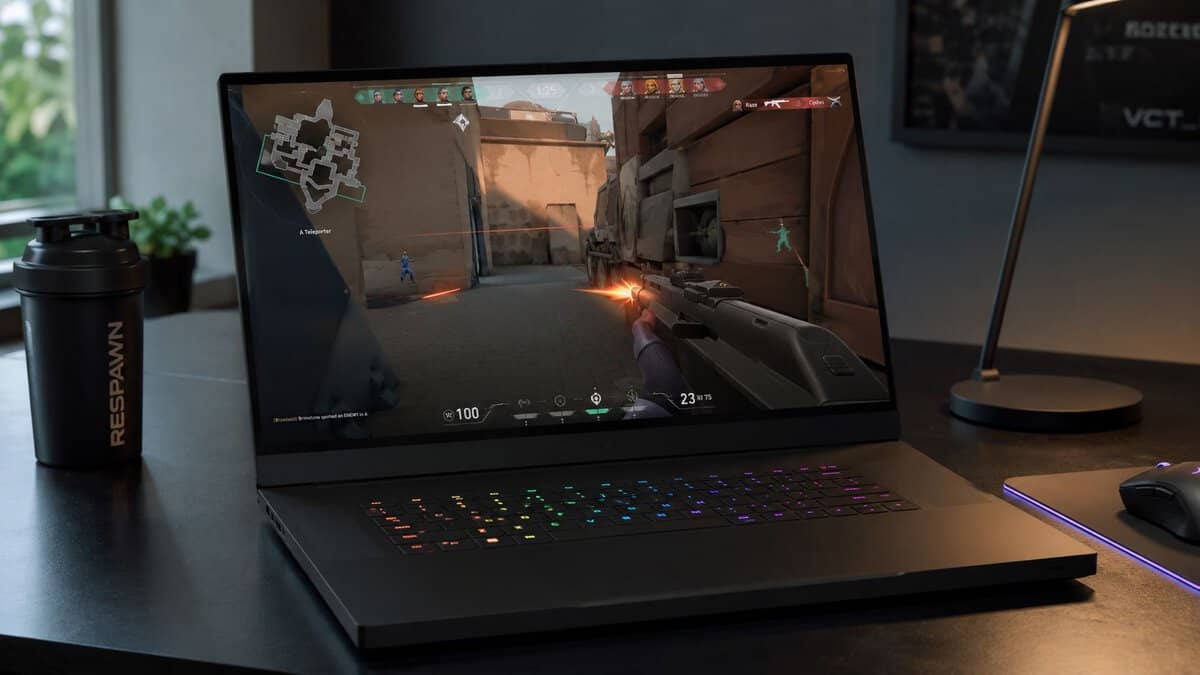
Competitive gaming is where people waste the most money. They buy a heavier GPU than they need, then run the game at settings where the screen, not the graphics chip, becomes the limit. For FPS games, MOBAs, and fast MMO combat, the goal is simple, smooth frame delivery and low delay, not cinematic eye candy.
Pick the screen first, then the chip
A 240Hz panel is the right target if you play ranked shooters or fast-response competitive titles. Pair it with 16GB DDR5 and a chassis that doesn’t throttle after a few matches, because frame consistency matters more than a peak benchmark screenshot. The Lenovo Legion 5i is the cleanest example of that approach, and it is where serious competitive players should look first.
The build quality and durability conversation matters too. A laptop that’s meant to be moved around, opened and closed daily, and shoved into a bag for LAN nights needs a chassis that feels sturdy enough to survive that routine. Cheap-feeling plastics and flexy decks are annoying on day one, then they become a problem after a few months.
Practical rule: if you mainly play esports titles, don’t overpay for resolution you won’t use. Spend on refresh rate, cooling, and a keyboard that feels stable under fast input.
For readers shopping this lane, the budget monitor guide for Valorant is a helpful complement if you’re pairing the laptop with an external display at your desk. But if you want a single portable machine, the G16-style configuration is the one that makes the most sense. It’s fast, it’s controlled, and it avoids the fake luxury of paying for power you can’t sustain.
Best for AAA Gaming and Visual Showcase Titles
If you care about ray tracing, big open worlds, and pushing modern releases harder, spending closer to the ceiling starts to make sense. AAA gaming is less forgiving than esports. It punishes weak cooling, light VRAM, and laptops that look good in a short benchmark but fall apart once the session runs long.
Why wattage and thermals beat brand names
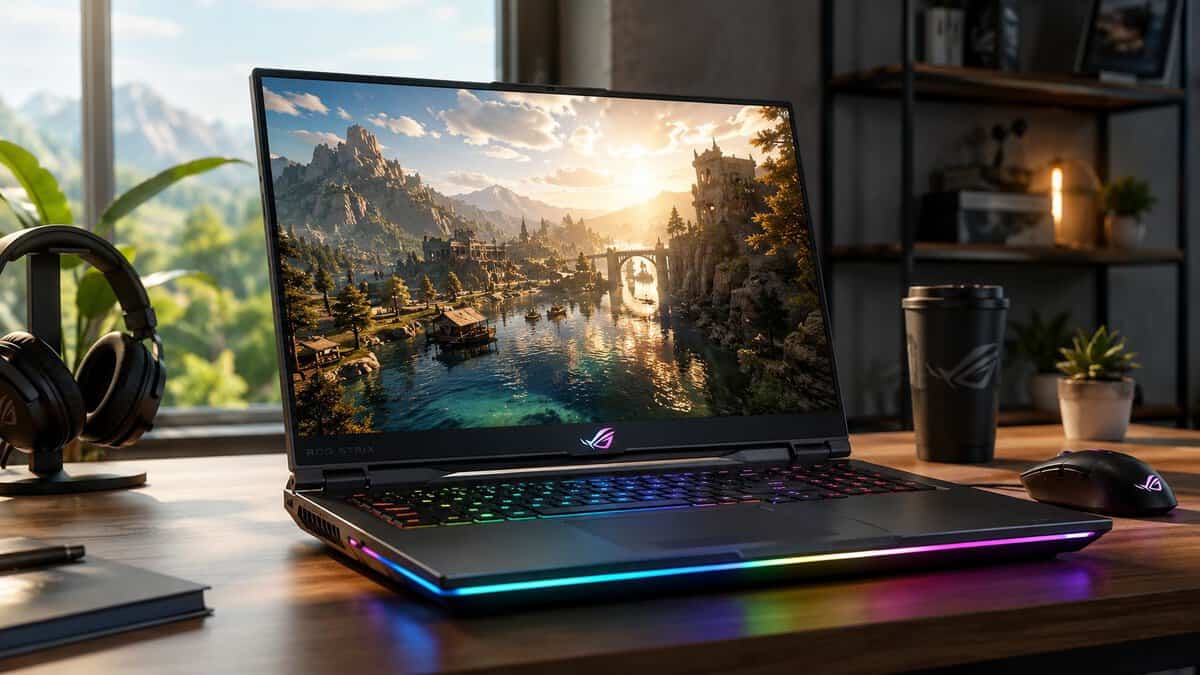
For this kind of gaming, GPU wattage and cooling are the primary filters. A laptop that can hold its power draw will keep frame rates steadier in dense, hot games, and that matters more than a flashy badge on the lid. A machine like the Lenovo Legion 5i, with a full RTX 5070, a 165Hz OLED display, and headroom for sustained loads, holds its frame times when sessions run long.
Build quality matters too. A heavier chassis is not a dealbreaker if it keeps the GPU fed and the screen stable under load. The trade-off is straightforward, though. You give up some portability, and the fans can get loud when the machine is doing the work you bought it for.
The reason I recommend this class for AAA players is simple, it is the first budget-adjacent tier where 1440p/QHD play starts to feel sensible on the laptop’s own screen. You are not pretending the machine is a desktop replacement, but you are also not stuck in the old “1080p and hope” mindset. That is a better use of two grand than buying a thinner shell with a weaker power ceiling.
For a broader look at how a high-end gaming build fits into a mixed setup, the best streaming PC guide is a useful companion if you are also planning a desk rig around the same budget.
Best for Streaming, Content Creation, and Multitasking
The biggest mistake streamers make is shopping by GPU alone. Gaming while recording, chatting, switching scenes, or editing clips in the background leans harder on the CPU, memory headroom, and storage than pure game FPS does. If you split your time between gaming and work, the “fastest” laptop on paper is often the wrong buy.
The Acer Nitro V 17 AI is the clearest example of a practical hybrid machine. At $1,499.99 it carries an RTX 5070, 32GB of DDR5, a 1TB SSD, and a 17.3-inch 144Hz panel, which is exactly the mix that keeps a dozen browser tabs, a stream, and a game running without drama. If you want a second opinion on how the sub-$2K field shakes out right now, Laptop Mag’s sub-$2,000 gaming laptop breakdown lands on a similar read of where the value actually sits.
The catch you shouldn’t ignore
The 8GB VRAM ceiling is the weak point. It’s fine for plenty of current use, but it can become a practical limit in some newer AAA titles when you push higher texture settings. That doesn’t make the laptop a bad choice, it makes it a clear one. Buy it if your priority is mixed workloads, not if your only goal is maximum texture quality in the heaviest games.
If you’re building a small creator-and-gaming setup, the streaming PC guide is a sensible companion piece. For laptop buyers, the rule is simple, choose the machine that keeps multitasking stable rather than chasing the highest GPU tier with no room for background work. That usually means a better-balanced chassis wins over a raw spec monster.
The Portability Trade-Off Nobody Talks About
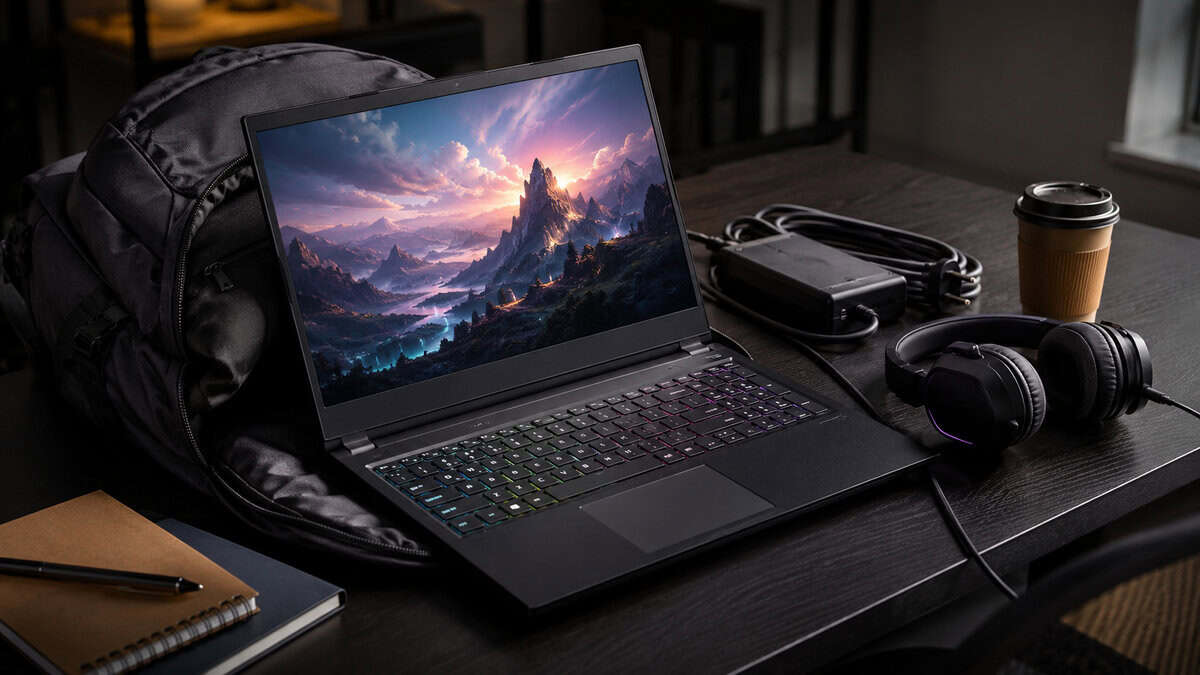
This is the part most roundups skip because it’s inconvenient. A laptop under $2,000 can be fast, but that doesn’t mean it’s pleasant to carry, use on battery, or live with in a dorm, classroom, or hybrid office. Buyers who travel a lot need to care about weight, charger size, and unplugged usability as much as they care about the GPU badge.
Performance machines usually pay the mobility tax
A thicker laptop with a stronger cooling system can be the better gaming buy, but it’s usually less fun to tote around every day. Thin-and-light options like the Gigabyte Aero X16 exist in this bracket, but they currently sell only through third-party resellers, so treat them as a watch-list item rather than a buy. The trade-off is obvious once you start carrying the charger, opening the lid in cramped spaces, and moving between locations all week.
Most roundup content still frames the sub-$2000 decision mainly around CPU, GPU, and display specs, even though portable use matters for students, commuters, and hybrid work/gaming buyers, leaving the real-world battery and weight trade-off under-quantified compared with performance and specs, display quality, and battery life/portability as listed factors. Game Rant’s under-$2000 laptop coverage
For a student or commuter, I’d rather see a slightly slower GPU in a chassis that’s easier to live with than a brute-force machine that stays plugged in most of the time. That doesn’t mean sacrificing durability. It means being honest about what you’ll do with the laptop outside your desk. If you need a lighter option, the lightweight gaming laptop guide is the right place to compare that trade-off before you buy.
Shopping Tips, Common Traps, and FAQs
Buy the spec, not the marketing. The easiest way to get burned under $2,000 is to trust a big GPU name and ignore wattage, cooling, or display details. A good listing tells you the GPU class, power behavior, refresh rate, response time, RAM amount, and storage size clearly. A weak listing hides those parts and hopes the badge does the selling.
What to avoid
- Thin chassis with vague cooling details: These often look premium, then choke under long gaming sessions.
- 8GB VRAM when you want maxed textures in newer AAA games: It’s a workable ceiling for many buyers, but it’s not the safest long-term bet.
- Fast refresh without enough GPU: A 240Hz screen is wasted if the laptop can’t drive enough frames consistently.
- Tiny SSDs on a gaming laptop: Modern game installs fill them fast, and you’ll start managing storage instead of playing.
A few buying rules that actually hold up
- Pick the strongest sustained GPU you can afford. A better-cooled RTX 4060 or 4070-class machine can beat a flashier but throttled rival.
- Treat 16GB RAM as the floor. More headroom helps if you stream or keep multiple apps open.
- Care more about build quality and durability than notebook hype. Hinges, keyboard stability, and chassis rigidity matter when you use the machine every day.
- Buy for your main game type. Esports wants refresh. AAA wants sustained power. Streaming wants CPU and memory balance.
FAQ
Should I wait for the next refresh?
Only if your current laptop still works and you’re not in a rush. This market already gives you strong options now, and the bigger mistake is waiting forever for a cleaner spec sheet.
Is refurbished worth considering?
Yes, if the seller is reputable and the unit clearly states its exact configuration. Refurbished makes more sense when you want a better chassis at a lower price, not when you’re gambling on missing details.
Is 8GB VRAM still acceptable?
It’s acceptable for some buyers, especially if you stream less and keep settings sensible. It’s not the safe choice if you want to push newer AAA games hard at high texture settings.
What’s the single smartest target under $2,000?
A full-wattage RTX 5070 Ti with a 240Hz display and strong thermals. That’s the clearest balance of speed, screen quality, and sustained performance in this price band.
For budget-conscious gamers, that’s the whole point of this category. $2,000 should buy balance, not empty bragging rights, and the right laptop is the one that still feels worth using after the novelty wears off. If you want more no-nonsense buying help and tighter value picks, keep following Budget Loadout.
Related Articles