Let’s get straight to it. The IPS vs VA for gaming debate isn’t about which panel technology is superior, but which one is the right tool for the job. It all comes down to the games you play and the experience you prioritize. If you live in fast-paced shooters like Valorant, an IPS panel’s motion clarity is a necessity. But if you’d rather get lost in a dark, atmospheric world like Baldur’s Gate 3, a VA panel’s deep contrast is what brings those games to life. This guide will provide specific recommendations for different use cases and budgets so you can invest wisely.
- 240Hz refresh rate with 1ms response for smooth, ghost-free gameplay
- Slim-bezel design keeps the focus on the screen
- Above-average IPS contrast ratio compared to similarly priced models
- Stand only offers tilt adjustment, with no height or swivel
- 240Hz is slightly lower than some 280Hz competitors in this range
- No USB hub or built-in speakers for added convenience
- Deep VA contrast ratio enhances dark scenes and atmosphere
- 1440p resolution with 180Hz for smooth, detailed gameplay
- 1500R curve improves immersion and viewing angle consistency
- Pixel response trails IPS panels
- Tilt-only stand lacks height adjustment
- Narrower viewing angles than IPS
- Accurate IPS panel suits streaming and content work as well as gaming
- Native 240Hz refresh with 1ms response time
- G-SYNC compatible and FreeSync Premium support
- Lower contrast than VA panels
- Pricier than budget IPS options
- No USB-C input
Picks and availability last verified: October 19, 2026
- IPS panels deliver faster response times and better color accuracy, ideal for competitive FPS games like Valorant and CS2
- VA panels offer significantly deeper contrast ratios and richer blacks, best for immersive single-player games and dark environments
- For mixed-use gaming, streaming, and work, an IPS panel like the LG 27GR83Q-B provides the best all-around balance
- Curved screens pair better with VA panels since the curve enhances immersion and helps compensate for VA’s weaker viewing angles
Table of Contents
The Quick Answer for Value-Focused Gamers
Choosing a monitor panel is a game of trade-offs, especially when you want a well-built product that delivers value for your money. This isn’t about finding a one-size-fits-all winner. It’s about matching the technology to your playstyle so you can invest in a durable monitor that enhances your gaming.
We’ll skip the marketing jargon and focus on what these specs mean for your experience, from landing critical shots in a firefight to feeling fully immersed in a sprawling open world. Understanding the core trade-offs between IPS and VA makes finding a quality monitor that elevates your favorite games without overspending a straightforward process.
Speed vs. Visual Depth: The Central Trade-Off
The decision boils down to two key specs: response time and contrast ratio. One technology is engineered for speed, while the other is built for visual depth.
- IPS (In-Plane Switching): The established choice for speed and motion clarity. This makes it the standard for competitive esports titles like FPS and MOBAs where every millisecond influences the outcome.
- VA (Vertical Alignment): The leader in contrast. Its ability to produce deep, inky blacks creates a more immersive and cinematic experience in atmospheric games like RPGs, horror, and single-player adventures.
To give you a clearer picture, here’s a direct breakdown of how these two panel types compare in the areas that matter most to gamers.
IPS vs. VA: A Head-to-Head Comparison
| Feature | IPS Panel (In-Plane Switching) | VA Panel (Vertical Alignment) |
|---|---|---|
| Best Use Case | Competitive Esports (FPS), Fast-Paced Action | Immersive Single-Player, Cinematic Games, MMOs |
| Contrast Ratio | Low (~1000:1). Blacks can look gray in dark rooms. | High (~3000:1+). Delivers deep, convincing blacks. |
| Response Time | Excellent. Fastest pixel response for minimal motion blur. | Adequate to Poor. Can suffer from “black smearing” in dark scenes. |
| Color Accuracy | Excellent. The standard for vibrant, accurate colors. | Good. Modern VAs are much improved but can’t match top IPS panels. |
| Viewing Angles | Excellent. Colors remain consistent from extreme angles. | Average. Colors and contrast shift when viewed from the side. |
| Common Flaw | “IPS Glow” – a noticeable backlight bleed on dark scenes. | “Black Smearing” – dark pixels struggle to keep up with motion. |
Ultimately, this table highlights the core trade-off: IPS provides speed and color consistency, while VA delivers superior contrast and image depth. Neither is perfect, but one is likely a better fit for your primary gaming habits.
For fast-paced competitive gaming, IPS panels dominate with superior response times. Detailed testing shows IPS delivers 2x faster response times and 4x better motion consistency than VA, which is crucial where even a small reduction in motion blur can swing match outcomes. Discover more about how panel speed impacts performance on DisplayModule.
While modern VA panels have gotten much faster, they can still exhibit “black smearing,” a distracting motion artifact where dark pixels are slow to transition, creating visible trails. Conversely, IPS panels often suffer from “IPS glow,” a noticeable backlight haze that can make dark scenes look gray, especially in a dimly lit room.
Both technologies are durable, but their inherent strengths and weaknesses define where they excel. If you’re looking for specific product recommendations that balance these factors, check out our guide on the best budget gaming monitor.
How IPS and VA Panels Actually Work
To understand monitor specs, you need to know what’s happening behind the screen. Both IPS and VA monitors use liquid crystals to create an image, but how they manipulate those crystals is fundamentally different. This core distinction is responsible for every strength and weakness in the IPS vs VA for gaming debate.
Imagine the liquid crystals in an IPS (In-Plane Switching) panel as lightweight doors that twist horizontally, parallel to the screen. They don’t have to lift or tilt, just rotate in place.
This quick, simple movement is why IPS panels are known for two things: fast response times and excellent viewing angles. Because the crystals just spin on an axis, the image looks almost identical whether you’re viewing it from dead-center or far off to the side.
The Structure of VA Panels
Now, picture the crystals in a VA (Vertical Alignment) panel. Think of these as vertical gates. In their default state, they stand upright, forming a tight seal that blocks the backlight.
When it’s time to let light through, an electric current causes these “gates” to tilt. The angle of the tilt determines how much light escapes.
This vertical structure is the key to VA’s high contrast. By blocking almost all of the backlight when displaying black, VA panels can achieve deep, convincing blacks with contrast ratios of 3000:1 or higher. It’s what makes dark dungeons in Diablo IV feel genuinely atmospheric, not just a sea of gray like on a typical 1000:1 IPS panel.
But there’s a trade-off. Physically tilting these crystals takes more time than the simple rotation of IPS crystals. This slower physical movement is what can lead to motion handling issues like black smearing, where dark pixels lag behind bright ones in fast-moving scenes.
Build Quality and Durability
From a build quality perspective, neither panel technology has an inherent advantage. A monitor’s durability and lifespan are determined by the manufacturer’s quality control, the materials used for the stand and chassis, and the quality of internal components like the power supply.
A well-built VA monitor from a reputable brand like Samsung will outlast a cheaply made IPS monitor, and vice-versa. When shopping for value, your focus should be on brands known for solid construction and reliable warranties, not just the panel tech. You are investing in a piece of hardware that needs to withstand years of daily use.
The Critical Trade-Off: Response Time vs. Contrast

This is where the real decision in the IPS vs. VA for gaming debate is made. Once you strip away marketing claims, two specs have the biggest impact on how your games look and feel: response time and contrast ratio. Choosing a panel almost always means prioritizing one over the other.
Think of it like setting up a car. You can tune it for maximum acceleration or a comfortable ride, but it’s difficult to achieve the absolute best of both in one package, especially on a budget.
Response Time: The IPS Advantage
Response time, measured in milliseconds from gray-to-gray (GtG), dictates motion clarity. If you play competitive games where sharp, blur-free movement is critical, a fast response time is non-negotiable.
In a fast-paced FPS like Apex Legends, turning quickly can become a blurry mess on a slow monitor. A modern IPS panel with a 1ms GtG response time keeps the image sharp, reducing the “ghosting” effect where a faint trail follows moving objects. That clarity lets you track targets and react faster.
Conversely, slower VA panels can suffer from “black smearing,” where dark pixels can’t change color as fast as bright ones, creating noticeable smudges during dark-to-light transitions. Moving past a dark doorway in Call of Duty and seeing the edge of the frame blur is not just distracting; it’s a competitive disadvantage.
Contrast Ratio: The VA Stronghold
Contrast ratio measures the difference between the brightest white and the deepest black a monitor can display. This is the domain of VA panels. A typical VA panel has a static contrast ratio of 3000:1 or higher, whereas most budget-to-midrange IPS panels are limited to around 1000:1.
In an atmospheric game like Diablo IV or an MMO like Final Fantasy XIV, a high-contrast VA panel makes dark environments feel deep and foreboding. Shadows are actually black, not hazy dark gray. This creates a far more immersive and cinematic experience, particularly when playing in a dimly lit room.
The lower contrast of an IPS panel, however, can cause “IPS glow.” This is a visible haze from the backlight, most noticeable in dark scenes and when viewing from an angle. It can wash out the picture and diminish the atmosphere in horror or stealth games.
Real-World Performance Comparison
Here is what you can realistically expect from value-oriented gaming monitors of each type. These aren’t just marketing numbers; they reflect what you’ll find when shopping.
| Specification | Typical Budget IPS | Typical Budget VA | What It Means for Gamers |
|---|---|---|---|
| Response Time (GtG) | 1-4ms | 4-8ms (with smearing risk) | IPS is significantly faster, delivering clearer motion for competitive FPS and racing games. |
| Static Contrast Ratio | 1000:1 | 3000:1+ | VA offers far deeper blacks, making cinematic and horror games feel much more immersive. |
| Viewing Angles | Excellent (178°) | Good (but can have color shift) | IPS is better for co-op or if you move around; colors stay true from any angle. |
| Color Gamut (sRGB) | 99-100% | 95-100% | Both are good for gaming color, but IPS often has a slight edge in accuracy out of the box. |
While a spec sheet is a starting point, real-world performance is what counts. A high-end VA panel can close the gap on response time, and premium IPS panels are improving their contrast, but for value-conscious gamers, this trade-off is still very much in effect.
Trying to balance these factors on a tight budget can be tricky. If you’re weighing your options, our guide on finding the best gaming monitor under $200 dives deep into specific models that offer the best performance for the price.
Remember that build quality often comes down to the manufacturer, not the panel tech. A premium VA monitor from a reputable brand will have a sturdier stand and better components than a bargain-bin IPS, and vice-versa. Focus on brands with a track record for solid construction when you make your final call.
Color, Viewing Angles, and Budget HDR
While speed and contrast are the main factors in the IPS vs. VA for gaming decision, other features like color performance, viewing angles, and HDR support contribute to the overall user experience.
Color Accuracy for Gaming and Streaming
For anyone who streams or creates content, color accuracy is important. This is where IPS panels hold an advantage, typically covering 95-100% of the sRGB color space with good accuracy out of the box. This means the colors you see are true-to-life, ensuring your stream or gameplay videos look as the developers intended.
Modern VA panels have improved significantly, often reaching 95% sRGB coverage, but they may require more calibration to match the color fidelity of a good IPS display. If you edit thumbnails, produce videos, or simply want the most accurate colors, an IPS panel is the more dependable choice.
Viewing Angles: A Factor for Co-op and Streaming Setups
Viewing angles are another area where IPS technology has a clear, structural advantage. Due to their horizontal crystal alignment, IPS panels maintain color and contrast integrity even when viewed from wide angles, up to 178 degrees.
This makes a practical difference in certain scenarios. If you play couch co-op games with friends, an IPS monitor ensures everyone gets a consistent view. A VA panel, in contrast, will show noticeable color and gamma shifts when viewed from the side, washing out the image for anyone not sitting directly in front. If you stream, wide viewing angles ensure the camera captures a clear, color-accurate image of your gameplay screen.
Even for solo play, the stable image of an IPS panel remains consistent if you shift in your seat. With some VA panels, the picture can subtly change, which can be a minor distraction. For any setup where viewers won’t always be in the “sweet spot,” IPS is the safer bet.
The Reality of Budget HDR
High Dynamic Range (HDR) promises brighter highlights and deeper shadows for a more dynamic picture. On paper, a VA panel’s high native contrast seems like the ideal foundation for HDR. The reality, especially on budget-minded monitors, is often underwhelming.
Many affordable monitors advertise VESA DisplayHDR 400 certification. This is the lowest tier, and it provides a lackluster experience on both panel types. Without local dimming technology to control zones of the backlight, these monitors can’t produce the bright highlights and deep blacks that make HDR impactful. The image often just ends up looking washed out.
VA’s superior native contrast gives it a slight advantage, but you should not buy a budget VA panel expecting a transformative HDR experience. For a value-conscious gamer, treat HDR 400 as a minor bonus, not a primary selling point. A monitor’s core performance, its response time, contrast, and color, is a much better measure of its quality.
Best Gaming Monitors for Your Playstyle
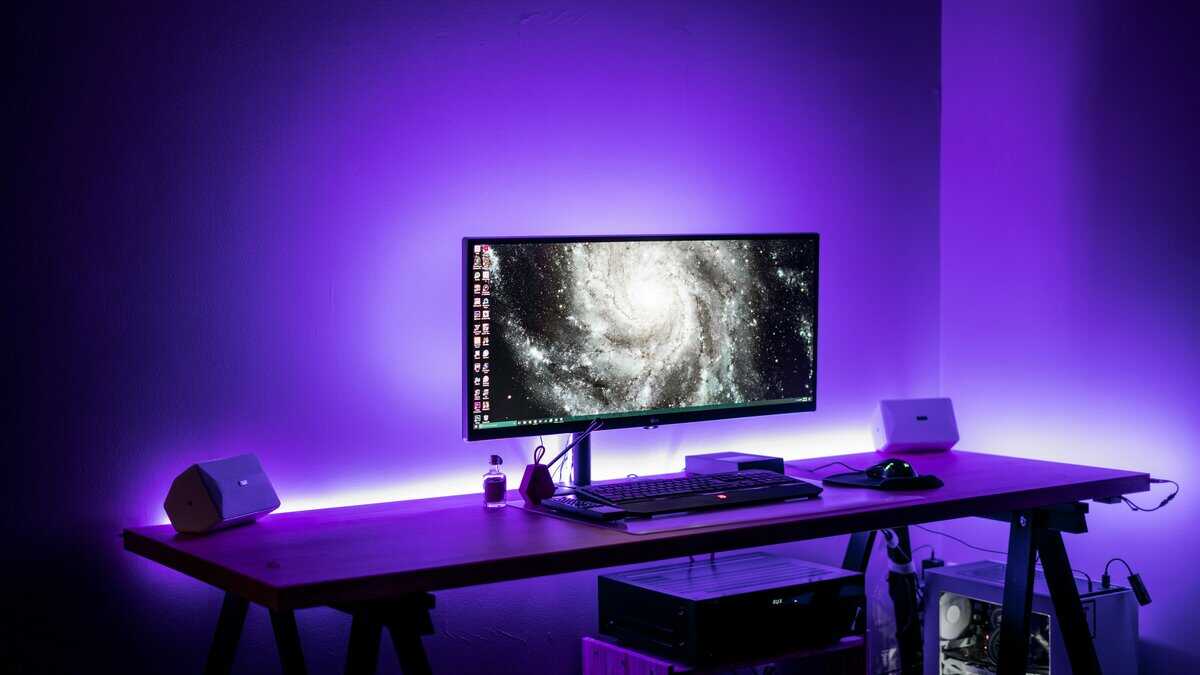
Theory is one thing; buying a monitor is another. Let’s move to specific product recommendations that deliver performance for your dollar. We’ll focus on monitors that address the IPS vs VA for gaming trade-offs for three distinct use cases.
These recommendations prioritize solid build quality and features that matter for gameplay, not just marketing specs. Each is chosen for its durable construction and a feature set that aligns with its intended use, ensuring your investment is a good one.
For Competitive FPS and Esports Players
When you play Valorant or Apex Legends, a fraction of a second determines the outcome. Motion clarity isn’t a luxury; it’s a core requirement. You need a monitor that prioritizes speed, and for that, an IPS panel is the correct tool.
Recommendation: Samsung Odyssey G4 25″
This 24.5-inch, 1080p monitor is a purpose-built speed machine. Its fast IPS panel delivers a 280Hz refresh rate and a true 1ms GtG response time, making motion exceptionally clear. At this speed, ghosting and blur are virtually eliminated, providing a tangible advantage when tracking fast-moving targets.
Samsung delivers solid build quality here, with a clean, slim-bezel design and a tilt-adjustable stand that keeps the setup tidy. Its contrast ratio sits above average for an IPS panel thanks to Samsung’s panel engineering, though it still cannot match a VA display for deep blacks. It offers strong value for any serious FPS player who prioritizes responsiveness.
For Immersive Single-Player and MMO Fans
If you prefer getting lost in the world of Starfield or crawling through dungeons in Diablo IV or Final Fantasy XIV, then visual depth and atmosphere are more important than raw pixel response. This is where the superior contrast of a VA panel provides a more cinematic and engrossing experience.
Recommendation: SANSUI ES-G27C1Q A
This 27-inch curved VA monitor hits a great balance of immersion and price. The 1500R curvature gently wraps the image around your field of view, pulling you into the game. More importantly, its VA panel delivers a static contrast ratio that is typically over 3000:1. This means blacks are genuinely deep, not the washed-out gray seen on an equivalent IPS in a dark room.
The ES-G27C1Q also provides a 180Hz refresh rate, which is sufficient for smooth single-player action. Its build quality is robust for its price, with a functional stand offering height and tilt adjustments. While it may show minor black smearing in the fastest scenes, its high contrast makes it a top-tier value for anyone who wants their games to feel more cinematic.
For gamers who picked up a PlayStation 5 or Xbox Series X, matching your monitor’s capabilities to the console is key. You’ll want to make sure you’re not leaving performance on the table. Learn more about getting the most out of your next-gen setup in our comprehensive guide to the best HDMI 2.1 monitors.
For Mixed-Use: Gaming, Streaming, and Work
Most people need a monitor that can do it all. It must be fast enough for a shooter, have vibrant colors for a stream, and offer crisp text for productivity. For this jack-of-all-trades role, a versatile IPS monitor is the most effective solution.
Recommendation: LG 27GR83Q-B
The LG 27GR83Q-B is well-regarded for a reason. Its 27-inch UltraGear IPS panel is an excellent compromise: a fast 1ms response time for competitive shooters, very good color accuracy with 98% DCI-P3 coverage for content creation, and wide viewing angles for everything else. The 1440p resolution at high refresh is the modern sweet spot for high-fidelity gaming that doesn’t demand a top-tier GPU.
LG produces durable products, and this monitor’s build is solid, supported by a stand that allows for height, pivot, and tilt adjustments. Its contrast is typical for an IPS, but its balance of speed, color fidelity, and build quality makes it one of the best overall values on the market. It’s an ideal pick for the gamer who does a little bit of everything.
There is a third panel type above both, covered in our best OLED gaming monitor guide.
Answering Your Final Questions on IPS vs. VA
Even after reviewing the specs, a few common questions arise. Let’s address these final uncertainties with direct answers.
Is a Curved Screen Better on a VA or IPS Panel?
A curved screen is a more natural fit for a VA panel.
The purpose of a curve is to enhance immersion, which pairs perfectly with the deep blacks VA panels produce. More importantly, the curve helps mitigate one of VA’s main weaknesses: its average viewing angles. By wrapping the edges of the screen toward you, it keeps the picture more consistent across the panel.
Curved IPS monitors exist, but they are less common and often more expensive. Since IPS panels already have excellent viewing angles, the curve is more of a stylistic choice than a functional one. For a value-conscious gamer, a curved VA monitor offers a package where the technology and form factor work together to create a more immersive experience.
Is Screen Burn-In a Real Risk for Modern Gaming Monitors?
For today’s gaming monitors, permanent screen burn-in is extremely rare. It is not a practical concern for either IPS or VA panels.
What you might encounter is temporary image retention, where a faint ghost of a static UI element, like a game’s HUD, lingers for a few moments after it disappears.
Image retention can be slightly more common on some VA panels, but for nearly any gaming scenario, it is a non-issue. The on-screen image changes so frequently that no single element remains in place long enough to cause a problem.
Unless you plan to leave a static image on your screen for many hours a day, you do not need to worry about burn-in or image retention. A monitor’s build quality, from its internal components to its stand, will have a far greater impact on its lifespan.
What Is a Realistic Budget for a Good IPS or VA Gaming Monitor?
“Budget” is relative, but for a value-focused gamer, the goal is a durable, high-performance monitor without paying for unnecessary features. These price tiers get you into reliable models from reputable brands, not the cheapest options that compromise on quality.
Here’s a realistic breakdown of what to expect:
Entry-Level Value: This is the most competitive bracket. You can find excellent 1080p high-refresh-rate (144Hz+) IPS monitors for esports, alongside solid 1080p and even some 1440p curved VA panels. Build quality is functional, providing the core performance for a great gaming experience.
Mid-Range Sweet Spot: This range unlocks the modern gaming standard: 1440p resolution at 165Hz or higher. You’ll find high-performance IPS monitors with both speed and great color, as well as faster, higher-quality VA panels. Monitors here typically have better stands, more robust build quality, and more connectivity. This tier offers the best performance-per-dollar.
High-End: Crossing this line means you’re paying for premium features like 4K high-refresh rates, Mini-LED backlights for superior HDR, or ultrawide formats. Performance improves, but the value proposition diminishes. For most value-conscious gamers, the sweet spot is firmly in the mid-range.
At Budget Loadout, we believe building a high-performance gaming setup shouldn’t be confusing or expensive. Our guides are designed to help you find durable gear that offers the best value for your money. Budget Loadout
Related Articles