Searching for the best mid range GPU? This is the category where price and performance meet for most PC gamers. A good mid-range card delivers a strong 1080p and capable 1440p gaming experience. Cards like NVIDIA’s RTX 5060 and AMD’s RX 9060 XT define this segment, providing modern features without the high cost of top-tier models. This guide will provide specific recommendations for different use cases and price tiers.
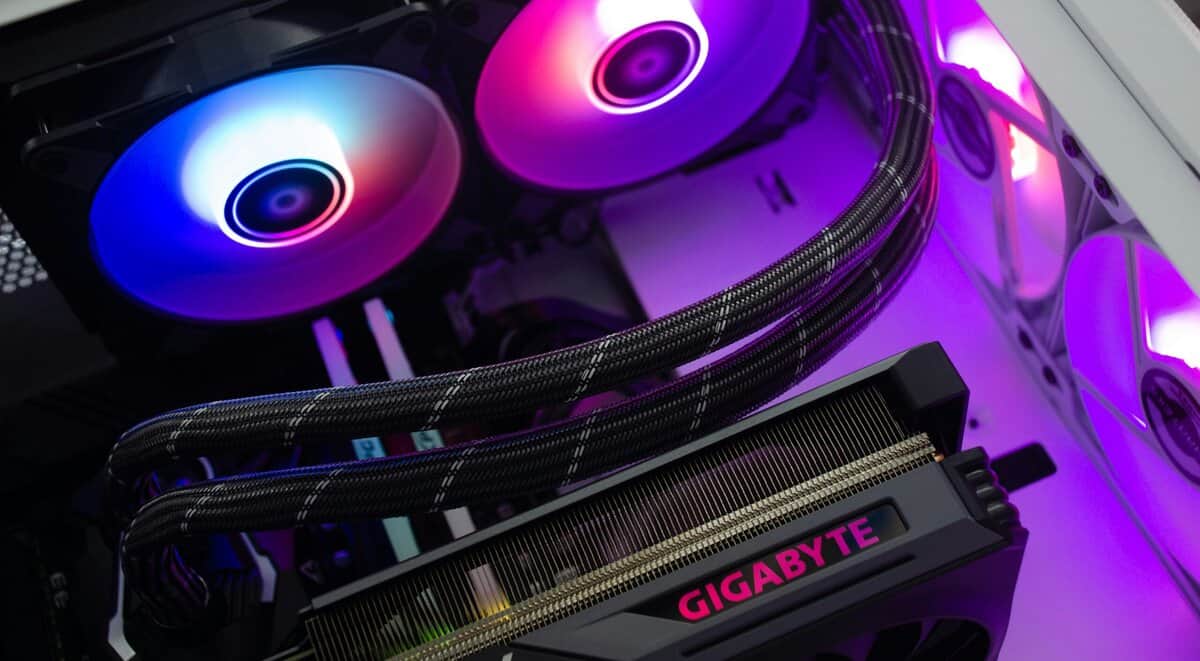
- The RTX 5060 (~$350) is the best all-around mid range GPU for 1080p high-refresh gaming with DLSS 4 and excellent power efficiency
- The Intel Arc B580 (~$300) offers the best budget value with 12GB VRAM, strong rasterization, and competitive pricing
- The AMD RX 9060 XT 16GB (~$450) delivers the most VRAM at this price tier, ideal for 1440p gaming and future-proofing
- 8GB VRAM is the minimum for modern gaming — 12GB or 16GB gives you headroom for higher-resolution textures and longer GPU lifespan
- Don’t overspend on a high-end GPU if you’re gaming at 1080p or 1440p — mid range cards deliver 90% of the experience at half the cost
Table of Contents
- DLSS 4 with Multi Frame Generation effectively doubles frame rates in supported titles
- 145W TDP makes it one of the most power-efficient mid range GPUs available
- Strong ray tracing performance that AMD and Intel can't match at this tier
- Only 8GB VRAM may feel limiting in some AAA titles at maximum texture settings
- Street pricing sits ~$50 above MSRP due to ongoing supply constraints
- Requires a PCIe 5.0 motherboard to take full advantage of bandwidth improvements
- 12GB VRAM at ~$300 offers the best memory-per-dollar ratio in the mid range
- Strong 1080p rasterization that matches or beats the RTX 4060 in many titles
- DisplayPort 2.1 support future-proofs your setup for high-refresh monitors
- Ray tracing performance falls behind NVIDIA alternatives at the same price point
- Intel's XeSS upscaling has fewer supported games compared to DLSS or FSR
- Some older DX11 titles may still show lower performance compared to NVIDIA or AMD cards
- 16GB VRAM provides serious headroom for 1440p ultra textures and modded games
- Rasterization performance edges out the RTX 5060 by 10-22% depending on the title
- PCIe 5.0 x16 interface provides maximum bandwidth for demanding workloads
- At ~$450, it sits at the top of the mid range budget and may stretch some builds
- Ray tracing performance still trails behind NVIDIA's RTX 5060 in most titles
- No reference model available — partner card quality and pricing varies significantly
Why Mid Range GPUs Are the Sensible Choice for Most Gamers
High-end graphics cards command extreme prices for marginal performance gains, while the cheapest options often require immediate visual-quality sacrifices. This makes the mid-range the practical choice for budget-conscious gamers who want value, not just the lowest price.
A mid-range GPU isn’t defined by a strict dollar amount. It represents the point of maximum performance-per-dollar. These cards provide the power needed for popular games without charging a premium for enthusiast features many users will not use.
The Value Proposition of the Mid Range
Today’s mid-range cards are more capable than ever. They handle demanding AAA titles at 1080p with high settings and are competent for 1440p gaming, particularly when using upscaling technologies like NVIDIA’s DLSS or AMD’s FSR.
A mid-range card is a durable, high-value component for a gaming PC. It should be built to last several years, offering a reliable foundation for high-framerate FPS gaming, complex MMOs, and entry-level streaming.
| Feature | Low-End GPU | Mid-Range GPU | High-End GPU |
|---|---|---|---|
| Primary Use Case | 1080p Low/Medium Settings | 1080p/1440p High Settings | 1440p/4K Ultra Settings |
| Future-Proofing | 1-2 Years | 3-4 Years | 5+ Years |
| Price-to-Performance | Compromised | Optimal | Diminishing Returns |
While a cheaper card might seem like a good deal, it often means sacrificing longevity and reducing settings sooner. If you are considering that tier, our guide on the best budget graphics card explains the specific tradeoffs involved.
Understanding the 2026 Mid Range GPU Market
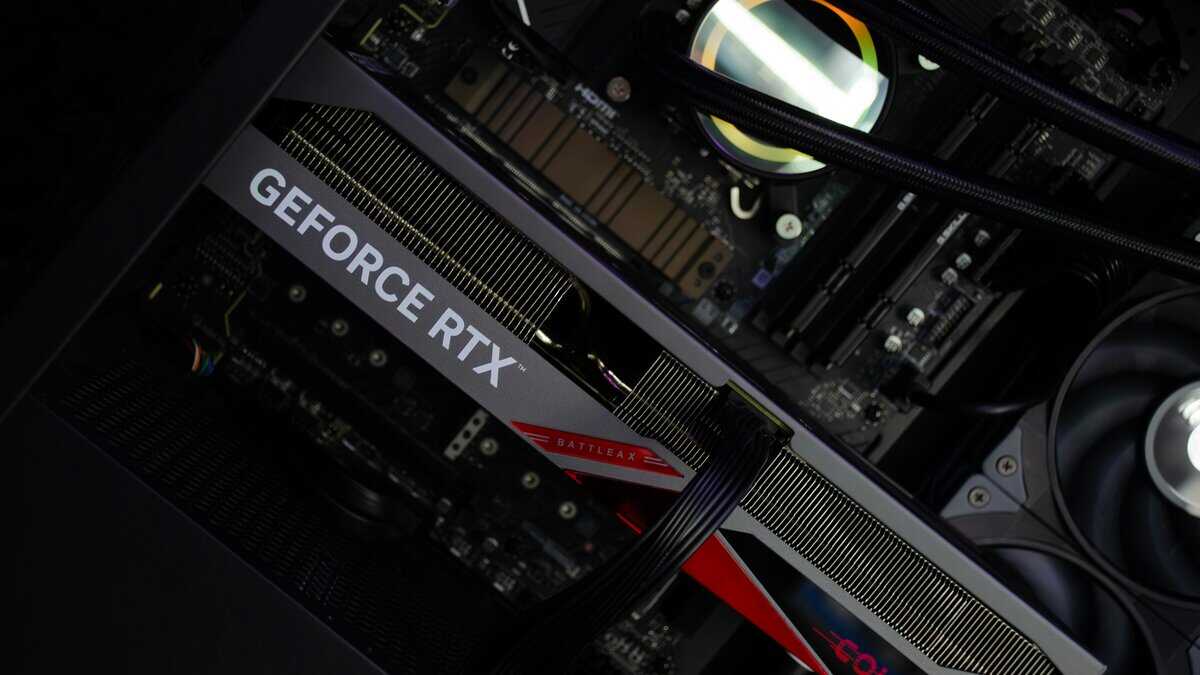
To select the right mid-range GPU, you must understand the market. The graphics card space is a competition between NVIDIA, AMD, and Intel. Each has a different strategy that directly impacts the performance, features, and price of their products.
Understanding their approaches helps you see past marketing and identify genuine, long-term value.
Understanding Brand Strategies
NVIDIA is the market leader. Its strategy is built around a feature-rich, closed ecosystem. It promotes proprietary features like DLSS (Deep Learning Super Sampling) and leads in ray tracing performance. This makes its cards, like the RTX 5060, a direct choice for gamers who prioritize visual effects.
AMD’s approach is to deliver strong raw performance for the price. It competes by offering superior raw rasterization performance for your money. Cards like the RX 9060 XT often produce more frames per dollar in traditional games where ray tracing is not a factor. Its alternative to DLSS is FidelityFX Super Resolution (FSR), an open-source upscaler that works on a wider range of hardware, including older GPUs.
Intel is the newcomer attempting to enter the market with its Arc series. It is aggressively pricing its cards as budget-friendly options, but its driver and feature support are still maturing. Intel is not a top contender in the mid-range yet, but its progress makes it a brand to watch.
Performance Metrics That Actually Affect Your Games
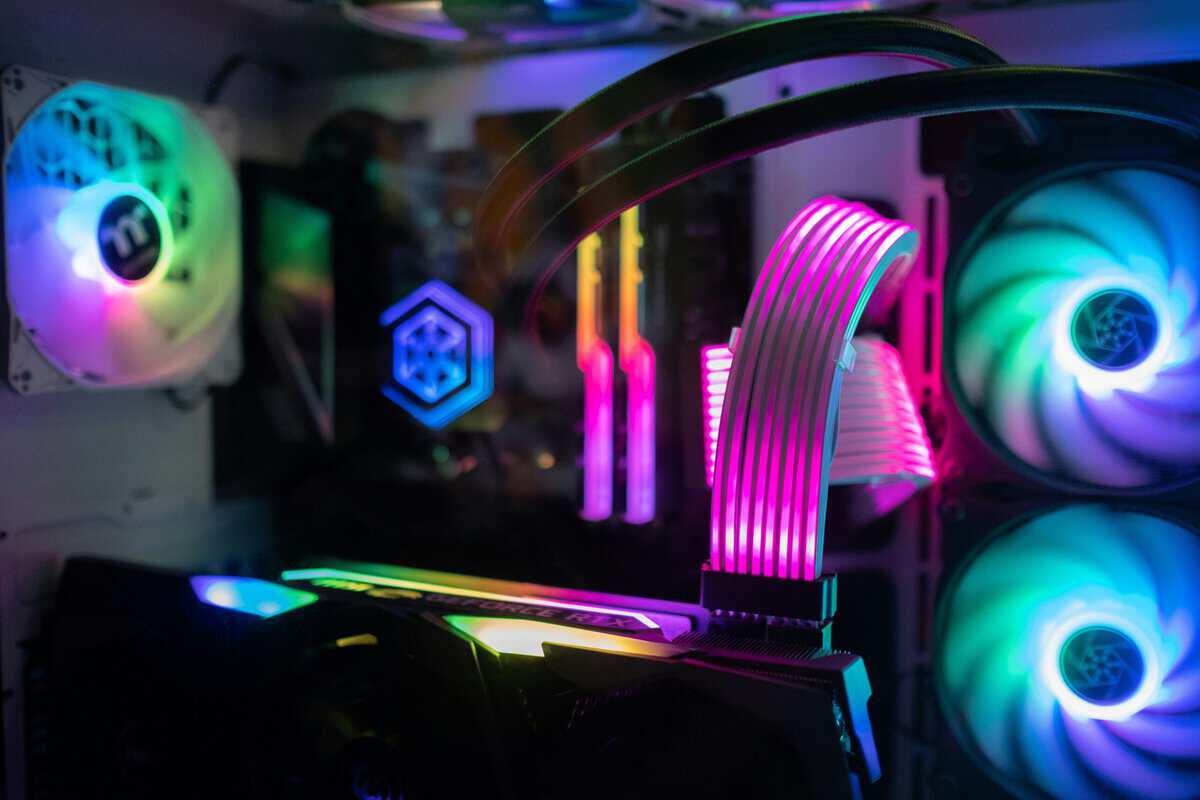
When shopping for the best mid-range GPU, the spec sheet can be confusing. It’s important to focus on the numbers that actually dictate game performance. Understanding a few key specs is how you identify real value.
The most discussed spec is VRAM (Video RAM). It acts as the GPU’s dedicated, high-speed workspace for storing game assets like textures. If this workspace is insufficient, your PC must pull data from slower system RAM or an SSD, causing stuttering that breaks immersion.
Why VRAM Is More Important Than Ever
For years, 8GB of VRAM was the standard for mid-range cards. With modern games built on demanding engines like Unreal Engine 5, that is no longer sufficient for a smooth 1440p experience. As game worlds become more complex and textures sharper, VRAM requirements have increased.
As of 2024, the standard for mid-range gaming GPUs has become 12GB. This is a 50% increase from the 8GB norm of 2022 and enables smooth 1440p gameplay. For anyone building a PC intended to last, this shift is critical. It is the difference between a durable build and one that feels outdated quickly.
Choosing a card with at least 12GB of VRAM is a practical step for future-proofing your build. It means you will be able to play upcoming AAA titles at 1440p with high-quality textures without hitting a performance bottleneck.
Beyond VRAM: Key Build Considerations
While VRAM is critical, it does not tell the whole story. A few other specs are equally important for a balanced and reliable gaming rig.
Memory Bandwidth: This measures how fast the GPU can access its VRAM. High bandwidth is necessary for high-resolution gaming, as it allows the card to process large texture files efficiently. A card with less but faster VRAM can sometimes outperform a card with more but slower VRAM.
Thermal Design Power (TDP): TDP, measured in watts, indicates how much heat the GPU produces and how much power it requires. A higher TDP requires a more powerful power supply unit (PSU) and effective case airflow to prevent thermal throttling. Always verify that your PSU can support the card’s power draw.
Build Quality & Cooler Design: Not all cards are built the same. Partner cards from brands like ASUS, Gigabyte, or MSI often feature superior cooling solutions—larger heatsinks, more fans, better thermal paste—than stock reference models. A better cooler results in lower temperatures, allowing the GPU to maintain its boost clocks for longer and deliver more consistent performance. Good build quality also means it is more durable and less likely to fail.
Looking past simple benchmarks and understanding these core specs helps you judge if a GPU is a sound long-term investment. If you want a better sense of what performance to target, check our guide on the average FPS for a gaming PC.
Head to Head GPU Comparison for Mid Range Gaming
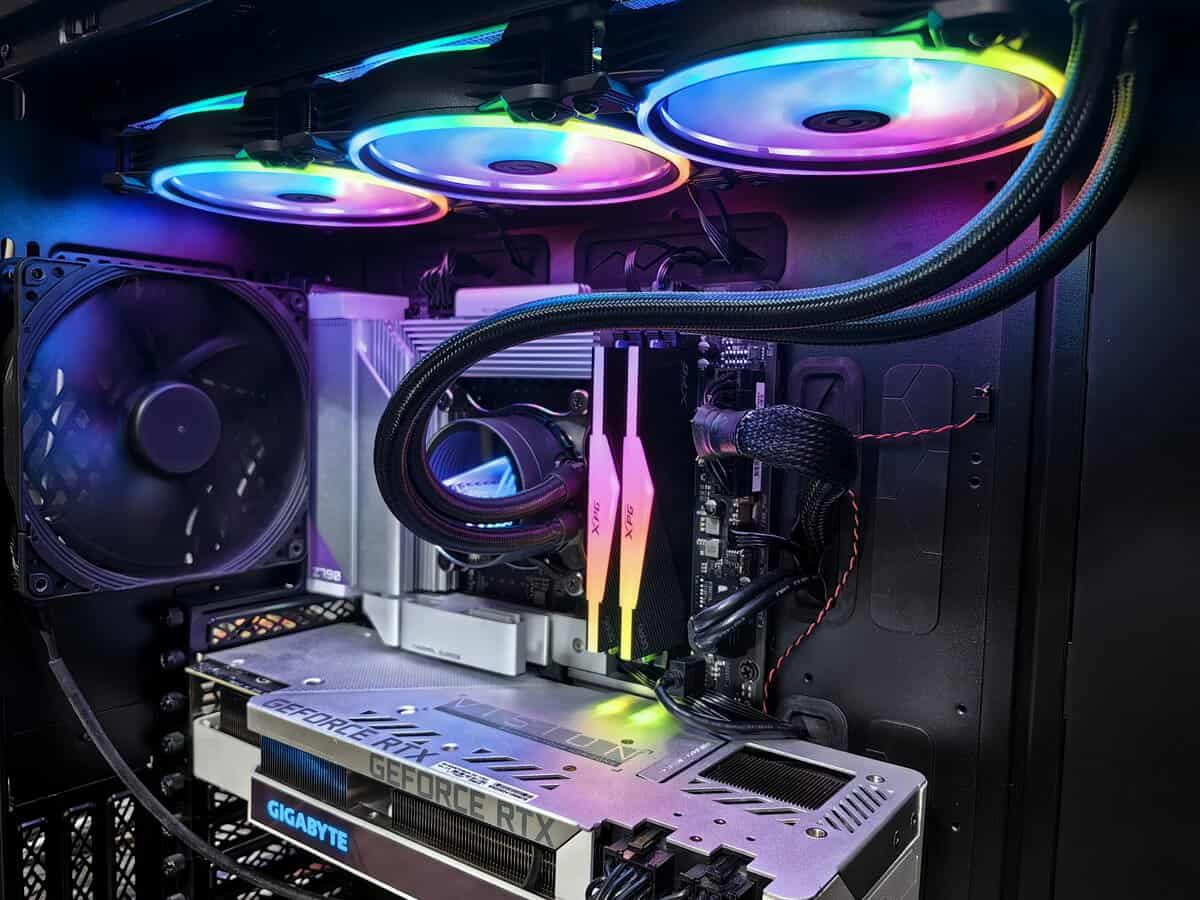
A spec sheet is one thing, but actual in-game performance is what matters. We are comparing the top mid-range GPUs from NVIDIA and AMD to identify the real-world tradeoffs.
This is not about finding a single “winner.” It is about finding the best mid range gpu for your budget and the games you play.
Raw Rasterization Power
Rasterization is the foundation of 3D graphics performance. It is the process a GPU uses to draw frames before adding lighting effects. For many gamers, especially those playing competitive titles like Counter-Strike 2 or Valorant, this is the most important metric.
This is an area where AMD has traditionally offered strong value, often delivering more frames per dollar. A card like the Radeon RX 9060 XT is a rasterization workhorse, performing well in titles like Valorant or Apex Legends. If your goal is to maximize frame rate at 1080p or 1440p for fluid, responsive gameplay, AMD often has a performance-per-dollar advantage.
NVIDIA’s competitor, the GeForce RTX 5060, also performs well, but its value is more closely tied to its entire feature set. In a direct dollars-to-frames comparison based on pure rasterization, AMD often holds a slight lead in this price category. This makes it a strong choice for gamers who prioritize raw FPS above all else.
Ray Tracing and Upscaling Technologies
This is where the major differences appear. Ray tracing simulates realistic light and shadow but is computationally expensive and reduces performance. Due to their dedicated RT Cores, NVIDIA’s GPUs have a clear lead in handling these workloads.
In a graphically intense game like Cyberpunk 2077 with ray tracing enabled, an RTX 5060 will deliver a smoother, more playable experience than its AMD equivalent. The visual difference can be significant, altering a game’s atmosphere.
The primary differentiator is upscaling technology. NVIDIA’s DLSS (Deep Learning Super Sampling) uses AI and dedicated Tensor Core hardware to reconstruct images from a lower resolution. This often results in better image quality and superior motion clarity compared to AMD’s FSR (FidelityFX Super Resolution). While FSR is open-source and compatible with more hardware, the maturity and quality of DLSS is a significant reason many gamers choose NVIDIA.
To provide a clearer view, the following table compares current contenders.
Mid Range GPU Performance Comparison 2026
A direct comparison of the leading mid-range GPUs across key metrics including gaming performance, features, and overall value.
| GPU Model | Target Resolution | Avg. 1440p FPS (Raster) | Ray Tracing Performance | Power Draw (TDP) | Street Price (Est.) | Best For |
|---|---|---|---|---|---|---|
| NVIDIA RTX 5060 | 1080p/1440p | 65-75 FPS | Strong | ~115W | $300 | 1080p FPS gaming with ray tracing and DLSS. |
| AMD RX 9060 XT | 1080p/1440p | 75-85 FPS | Moderate | ~245W | $420 | High-FPS 1440p rasterization performance in MMOs. |
| NVIDIA RTX 5060 Ti | 1440p | 80-90 FPS | Very Strong | ~160W | $380 | 1440p gaming with DLSS and ray tracing. |
| AMD RX 9060 XT | 1080p | 60-70 FPS | Weak | ~190W | $330 | Value-focused 1080p gaming with high VRAM. |
| Intel Arc B580 | 1080p | 60-70 FPS | Moderate | ~225W | $280 | Budget streaming and content creation. |
As the table shows, the choice is not simple. An AMD card may offer more raw frames, while an NVIDIA card provides better features and power efficiency. Your decision depends on what you value most.
Power, Durability, and Build Quality
Practical factors like power draw cannot be ignored. They affect your electricity bill, case temperatures, and PSU requirements. NVIDIA’s 40-series cards are generally efficient, running cooler and quieter with a lower TDP than their AMD counterparts. This makes them a good fit for smaller builds where airflow is limited.
When it comes to build quality and durability, the specific partner card you buy is as important as the GPU chip. Companies like ASUS, MSI, or Gigabyte produce custom versions of NVIDIA and AMD cards. These often come with more substantial cooling systems, more robust power delivery, and better overall durability than reference models.
A well-built card with a large heatsink and multiple fans will maintain its boost clock speeds for longer, providing more consistent performance. Always check reviews for the specific partner model you are considering, as build quality and cooling effectiveness can vary significantly.
GPU Recommendations for Your Specific Gaming Needs
General advice is a starting point. The best mid-range GPU for you depends on your monitor, the games you play, and your performance expectations. We’ve matched specific cards to common use cases, focusing on performance, build quality, and long-term value.
The 1080p High-Refresh FPS Gamer
Recommendation: NVIDIA GeForce RTX 5060
For competitive gamers playing titles like Valorant, Apex Legends, or Call of Duty at 1080p, maximizing frame rate is the priority. The NVIDIA GeForce RTX 5060 is a strong contender here. Its main advantages are high power efficiency and access to DLSS 3, which can provide a significant frame rate boost necessary for hitting 144+ FPS on a high-refresh monitor.
The main tradeoff is its 8GB of VRAM on a narrow memory bus, which limits its future viability for 1440p gaming. For a dedicated 1080p esports system, its performance and low power draw are compelling for the price. Any partner card with a dual-fan cooler will provide sufficient cooling for this GPU.
The 1440p All-Rounder for MMOs and AAA Titles
Recommendation: NVIDIA GeForce RTX 5060 Ti
If you need one card to handle both high-FPS shooters and visually demanding AAA games like Cyberpunk 2077 or Alan Wake 2 at 1440p, the NVIDIA GeForce RTX 5060 Ti is a suitable target. It offers a significant performance increase over the non-Ti 4060, making it a capable 1440p card.
Its ray tracing and DLSS support allow you to enable advanced visual effects without a major performance penalty. The compromise is its price, which is at the upper end of the mid-range. While the 8GB model is adequate, the 16GB version offers better longevity for texture-heavy games and is the recommended choice for a new build. If you plan to game at 1440p for the long term, this is a durable and powerful investment. You can find more detail in our guide on the best graphics card for 1440p.
While AMD’s RX 9060 XT offers strong rasterization for its price, particularly in MMOs, the RTX 5060 Ti’s superior feature set—especially DLSS and more mature ray tracing—makes it a more complete package for gamers who want to experience all modern graphical features.
The Budget Streamer and Content Creator
Recommendation: Intel Arc B580
For aspiring streamers on a strict budget, encoding performance is as important as in-game FPS. The Intel Arc B580 is a unique and valuable option here. It delivers competitive 1080p gaming performance and, critically, its hardware support for AV1 encoding is a significant advantage.
AV1 provides better video quality at lower bitrates, which is a major benefit for streaming to platforms like YouTube. The tradeoff is Intel’s driver maturity; while it has improved substantially, you may encounter occasional issues with older games.
With 16GB of VRAM and its excellent media engine, the A770 offers a combination of gaming and creation features that NVIDIA and AMD do not match at this price point. It is a value-driven choice for new content creators.
Finalizing Your Purchase: Practical Advice
Picking the right GPU is the first step. The next is buying it at a good price and installing it correctly.
The used market can be a source of low prices but also carries risk. If you buy used, only do so from platforms with strong buyer protection. Ask the seller directly if the card was used for cryptocurrency mining, as this intensive, continuous workload can reduce a card’s lifespan and durability. A new card with a full warranty is the safer, more reliable option.
Smart Shopping and Build Quality Checks
Price is only half the equation. You must ensure the card is compatible with your system.
Partner Card Reviews: Not all RTX 5060 models are identical. Read and watch reviews on specific models from brands like ASUS, MSI, or Gigabyte to learn about differences in cooling, noise, and build quality.
PSU Compatibility: Check your power supply’s total wattage and available connectors. Ensure it can handle the GPU’s TDP (Total Draw Power) with at least 50-100W of headroom.
Physical Fit: Measure your case. A large, triple-fan GPU is useless if it is too long to fit inside your PC case.
A common mistake is focusing only on the GPU chip. The partner company that assembles the card is responsible for the cooler and power delivery. A card with an inadequate cooler will overheat and throttle, negating the performance you paid for.
Got Questions About Mid-Range GPUs? We’ve Got Answers.
Even after reviewing benchmarks, some questions may remain. Here are answers to common concerns that arise before making a purchase.
Should I Wait for the Next-Gen GPUs to Launch?
This is a common dilemma. The next generation of GPUs will be faster, but they will also launch at higher prices, with limited availability and new drivers that may have initial bugs.
If your current GPU is struggling, buying a proven, available mid-range card provides an immediate upgrade. You can use your PC now instead of waiting months for a hypothetical product that might be outside your budget.
The “next big thing” is always coming. Continually waiting can lead to indecision, leaving you with an underperforming system. A solid purchase today is better than a perfect one that never happens.
How Much VRAM Do I Really Need for 2026?
For 1080p gaming, 8GB of VRAM is still functional but is becoming a limitation in the newest titles, forcing users to reduce texture quality.
For 1440p gaming, 12GB should be considered the new minimum. Less VRAM is a significant compromise that will quickly become a bottleneck, causing stuttering and texture pop-in. To ensure your card remains viable for several years, selecting one with 12GB or more is the practical choice for future-proofing.
What’s the Real Difference Between DLSS and FSR?
NVIDIA’s DLSS (Deep Learning Super Sampling) generally produces better image quality. It uses dedicated AI hardware (Tensor Cores) to reconstruct the image, resulting in a clean, stable picture that can appear sharper than native resolution, especially in motion.
AMD’s FSR (FidelityFX Super Resolution) is open-source, which is a major advantage. It works on a wide range of GPUs, including older models and NVIDIA hardware. While it provides a good performance boost, the image quality can appear softer or exhibit more “shimmering” artifacts compared to DLSS, particularly at lower quality settings.
If your priority is the best possible visual quality from upscaling, DLSS currently has the advantage.
For more budget gaming gear guides, tips, and recommendations, check out BudgetLoadout.com — your go-to resource for gaming on a budget.
Related Articles