The choice between a gaming laptop vs desktop comes down to a fundamental trade-off: performance for portability. There is no single “best” answer, only the right answer for your specific needs, budget, and how you actually play games.
For raw, uncompromised performance and long-term value, a desktop PC remains the superior choice. If you require a rig that can travel for school, work, or to a friend’s house, a gaming laptop is your only practical option.
- A gaming laptop vs desktop decision hinges on whether you value portability or raw performance-per-dollar
- Desktops consistently deliver more power for the same budget, with easier upgrades and better thermals
- Gaming laptops have closed the gap significantly and now handle 1080p and 1440p gaming with ease
- Factor in the hidden costs: laptops need peripherals, desktops need a monitor, keyboard, and mouse
- For long-term value, a desktop wins; for flexibility and space savings, a laptop is the smarter pick
Table of Contents
Which Gaming Rig Should You Choose: Desktop or Laptop?
This isn’t just about comparing spec sheets. It’s about how your gaming machine fits into your life. A desktop offers better performance-per-dollar, giving you more raw power for your money and a clear path to upgrade components down the road. It’s an investment in a stationary battle station.
Laptops, on the other hand, pack significant gaming horsepower into an all-in-one package you can carry in a backpack. That convenience comes with unavoidable trade-offs in cost, cooling, and the ability to upgrade.
This guide will break down the real-world differences that will impact your gaming experience. We will cover:
- Performance-Per-Dollar: How much raw gaming power your money actually buys.
- Upgrade Potential & Durability: The long-term value and resilience of each platform.
- Real-World Use Cases: Specific recommendations for FPS gaming, streaming, MMOs, and student life.
- Product Recommendations: Concrete examples of what your money can get you.
The Core Trade-Off: A desktop is a long-term investment in raw power and modularity. A gaming laptop is an investment in convenience and the freedom to game anywhere there’s a power outlet.
Ultimately, choosing the right rig means being honest about which of these benefits aligns with your priorities. To simplify that initial decision, here’s a head-to-head comparison of what you can expect.
| Feature | Gaming Desktop | Gaming Laptop |
|---|---|---|
| Performance-Per-Dollar | Higher. You get more powerful components for the same price. | Lower. You pay a premium for compact, power-efficient parts. |
| Upgradeability | Excellent. Nearly all components are user-replaceable. | Limited. Only RAM and storage are typically upgradeable. |
| Portability | None. A stationary setup confined to one location. | Excellent. Designed for travel and use in different locations. |
| Build & Durability | High. Individual parts are easily repaired or replaced if something fails. | Variable. A single accident can damage the entire unit. Build quality is a key factor. |
Performance Per Dollar: The True Cost of Power
When you’re trying to get every last frame out of your budget, the gaming laptop vs. desktop debate comes down to performance per dollar. For the same amount of cash, a desktop PC will always deliver more raw gaming power than a laptop.
This isn’t a design flaw. It’s the unavoidable price of portability.
This gap is most obvious in the $1,000 to $2,500 price range, where the majority of gamers make their purchase. In this bracket, a well-planned desktop delivers noticeably more performance for your money, even after accounting for peripherals.
For example, a $1,400 desktop build can significantly outperform a $1,400 laptop in demanding games. That performance difference means higher, more stable frame rates at the same settings.
Why Desktops Deliver More Bang for Your Buck
It all comes down to power and cooling. Desktop components have room to breathe. Full-sized graphics cards and CPUs are packed into spacious cases with large fans, letting them run at higher, sustained speeds without overheating. They are designed to draw more power and turn it directly into more frames.
A gaming laptop has to cram all that hardware into a slim chassis. This forces manufacturers to use more expensive, specially engineered parts that are both powerful and power-efficient. This is the “portability tax“: you pay a premium for the miniaturization needed to game on the go.
A desktop GPU might draw 300 watts of power, while its “equivalent” laptop version is limited to 120 watts. Even if they both have “RTX 4070” in the name, that power difference translates directly into lower frame rates in demanding games.
$1,400 Gaming Setup Showdown
To make this tangible, let’s see what a $1,400 budget gets you in the real world. This comparison includes the cost of essential peripherals for the desktop, ensuring we’re comparing two complete, ready-to-game setups.
| Component/Feature | Gaming Desktop Build ($1,400 Total) | Gaming Laptop ($1,400) |
|---|---|---|
| CPU | AMD Ryzen 5 7600X / Intel Core i5-13600K | Intel Core i7-13650HX / AMD Ryzen 7 7735HS |
| GPU | NVIDIA GeForce RTX 4060 Ti (8GB) | NVIDIA GeForce RTX 4060 Laptop (8GB, lower power) |
| RAM | 32GB DDR5 @ 5600MHz | 16GB DDR5 @ 4800MHz |
| Display | 27″ 1440p 165Hz IPS Monitor (Included in budget) | 15.6″ 1080p 144Hz IPS (Built-in) |
| Storage | 1TB Gen4 NVMe SSD | 1TB Gen4 NVMe SSD |
| Build Quality | High-airflow case, standard PSU, robust motherboard. Varies by parts selected. | Varies by model, typically plastic or aluminum chassis. Look for metal construction for better durability. |
| Upgrade Path | Full modularity (CPU, GPU, RAM, Storage, PSU) | Limited to RAM and storage upgrades only |
The desktop not only has a more powerful GPU but also offers double the RAM and a larger, higher-resolution monitor for the same total cost. The laptop is a capable machine, but its power-limited components and smaller screen are clear trade-offs for portability.
Upgradeability and Durability: A Long-Term Investment
The initial price is just the beginning. The real cost of a gaming rig is how much you spend over its lifetime to keep it functional and relevant. This is where upgradeability and durability come in, and it’s where the two platforms differ most.
This is a conversation about long-term value.

A desktop PC is built from standardized, modular parts. This is its single biggest advantage for long-term ownership. When a new generation of graphics cards arrives and your frame rates dip, you can swap out the old GPU. Need more processing power for streaming? A CPU upgrade is a straightforward project. If you’re curious, our guide on how to build a gaming PC can help you start.
This design makes a desktop an evolving system. You replace individual parts as they age, fail, or fall behind, extending the life of your core build for years.
The Laptop Upgrade Path
Gaming laptops are a different story. The components that determine gaming performance (the CPU and GPU) are permanently soldered to the motherboard. The performance you buy on day one is the performance you’re stuck with.
Upgrades are almost always limited to two things:
- RAM: You can usually add more memory if an open slot is available.
- Storage: Adding a second SSD or swapping the main drive is typically possible.
These are useful but won’t help you run next year’s AAA titles at higher settings. A laptop’s gaming lifespan is dictated entirely by its GPU, meaning the whole machine starts to feel outdated in just 3-5 years.
A desktop is a system you improve piece by piece over a decade. A gaming laptop is a single unit you replace entirely when its performance is no longer sufficient.
Build Quality and Resilience to Failure
Durability is another area where desktops have a clear advantage. Even a premium gaming laptop with a sturdy metal chassis is still a single, complex electronic device.
One bad drop or a spilled drink can be a fatal blow. A fried motherboard or a cracked screen often results in a repair quote so high that buying a new laptop makes more sense. The entire machine is a single point of failure.
A desktop is a box of separate, easily replaceable parts.
- Keyboard dies? A minor annoyance and a $50 replacement.
- Monitor fails? You can buy a new one without touching your PC tower.
- Power supply gives out? It’s a standard, off-the-shelf part you can swap in under an hour.
This built-in resilience makes a desktop a more forgiving platform. A problem is rarely a total loss; it’s just a component to replace. For anyone prioritizing long-term value and the ability to repair and adapt their rig, the desktop is the clear winner.
Thermals and Noise: The Unseen Performance Factors
Raw specs on a product page are only half the story. The real test is how a rig performs an hour into a demanding game, which comes down to thermal management. This is a critical battleground in the gaming laptop vs. desktop comparison.
A desktop PC’s greatest advantage is sheer size. All that empty space inside the case is for airflow. Combined with large fans and optional liquid coolers, a desktop easily pulls cool air over the CPU and GPU, preventing them from overheating and experiencing thermal throttling.
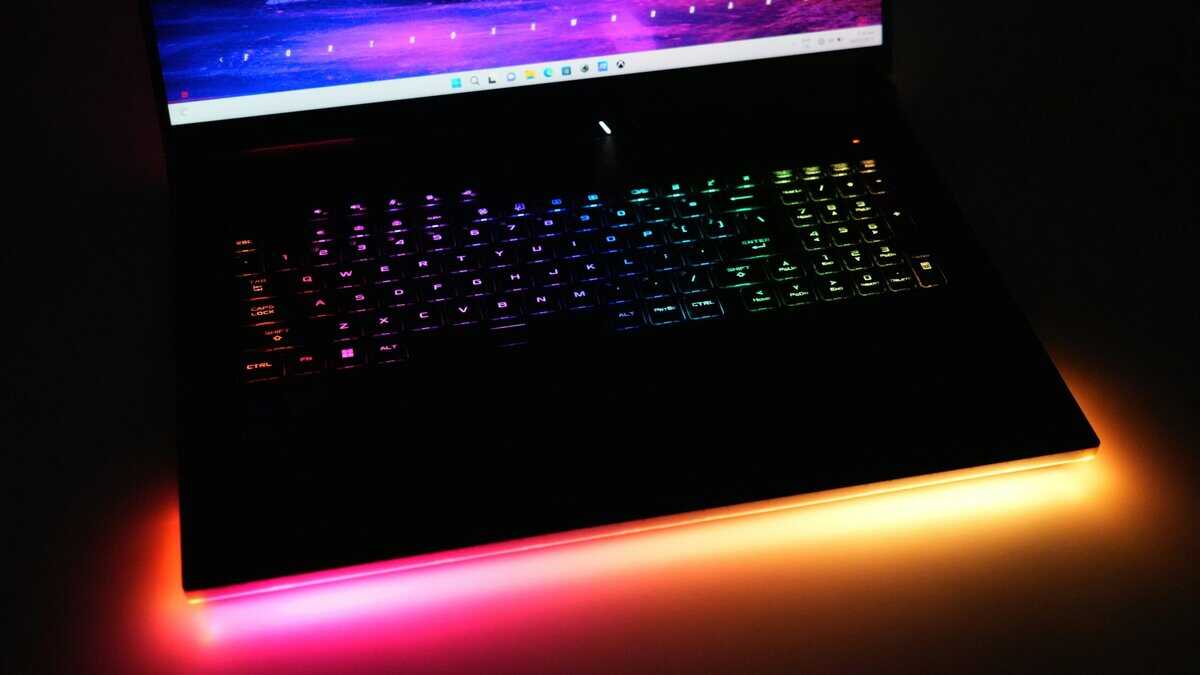
When a component thermal throttles, it intentionally slows itself down to prevent damage from heat. For you, that means sudden frame drops and stuttering. Because desktops handle heat so well, their parts can run at maximum clock speeds for hours, delivering a smooth, consistent experience. It’s still smart to monitor your temperatures, and you can learn about a normal CPU temp in our detailed guide.
Laptop Cooling: A Cramped Compromise
Gaming laptops face a significant engineering challenge: they must dissipate as much heat as a desktop but in a chassis less than an inch thick. This is managed with a complex array of copper heat pipes and small, fast-spinning fans.
While these systems are effective for their size, they have limits. Launch a graphically intense shooter or a large-scale MMO, and those laptop fans will spin at maximum speed to prevent overheating. The result is a constant, high-pitched noise that often requires a headset to ignore.
Even with fans at full blast, the chassis itself can become uncomfortably hot, especially around the keyboard and exhaust vents. This can lead to the very thermal throttling that desktops avoid, causing your frame rate to dip the longer you play.
A desktop stays cool and relatively quiet under load, maintaining peak performance indefinitely. A gaming laptop often gets loud and hot, sometimes sacrificing frame rates to prevent overheating during extended play.
The Real-World Impact on Gaming
This thermal gap has practical consequences. For a competitive FPS player, consistent frame rates are non-negotiable; a stutter from throttling can cost you a gunfight. For a streamer, a desktop’s superior cooling allows the CPU to handle both gaming and video encoding without being pushed to its thermal limit. This thermal headroom is what allows them to push components to their absolute limits without worrying about performance dropping off, solidifying the desktop’s place as the top choice for pure, sustained power.
Portability: The Laptop’s Main Advantage
Portability is the single biggest reason to consider a gaming laptop. For a college student in a dorm, a frequent traveler, or anyone in a small apartment, the laptop is an all-in-one package that a desktop cannot match.
It’s the freedom to game almost anywhere you can find a power outlet: a friend’s couch, a hotel room, or even on the go if you know how to charge your gaming laptop in a car. But the dream of untethered, high-performance gaming rarely matches the reality.
The Myth of Gaming on Battery
The most significant compromise is battery life. A gaming laptop might last for hours while browsing the web, but the moment you launch a demanding game like Cyberpunk 2077 or Baldur’s Gate 3, that battery life plummets. You’ll be lucky to get under an hour of real gameplay.
To get the full performance you paid for, you must be plugged into a wall outlet. Laptops automatically throttle the GPU and CPU on battery power to conserve energy. For any serious gaming session, you’re effectively tethered to a power source. You aren’t tied to a desk, but you are tied to a wall.
Portability for a gaming laptop means the freedom to move between power outlets. High-performance gaming on battery power is not a practical reality for modern AAA titles.
The “Docked” Laptop and Peripherals
The other practical reality is that the all-in-one design is often insufficient for comfortable or competitive gaming. The built-in keyboard and trackpad are functional in a pinch, but most gamers plug in external gear almost immediately.
- External Mouse: Essential for accuracy in any FPS like Valorant or for precise control in an MMO.
- Mechanical Keyboard: Offers a more responsive and durable experience.
- Headset: Crucial for immersive audio and team communication.
- External Monitor: Many gamers eventually add a larger, high-refresh-rate screen, turning their laptop into a compact desktop anyway.
Once you have a mouse, keyboard, and headset connected, the clean, space-saving advantage diminishes. Your laptop becomes the core of a “docked” setup that resembles a small desktop station. While high-end gaming laptops from brands like Razer or Alienware have excellent metal chassis that hold up to travel, they still live within these practical constraints.
The Best Rig for Your Gaming Style
We’ve covered the technical differences in performance, cooling, and cost. Now, let’s match the hardware to the way you play. Find the profile that sounds most like you, and your choice will become clearer.
For the Competitive FPS Gamer (Valorant, CS2, Apex Legends)
If you play games where every frame and millisecond counts, your goal is to gain a tangible hardware advantage.
Winner: Desktop
A desktop is the standard for competitive play for a reason: thermals. Its superior cooling allows your CPU and GPU to run at peak clock speeds for hours without throttling. This means your frame rate stays high and, more importantly, consistent during long matches where a single stutter can cost you the round. A desktop also lets you pair your system with a high-refresh-rate monitor (240Hz or higher) and invest more of your budget into a GPU that can actually drive those frame rates.
For the University Student or Frequent Traveler
You need a machine that handles gaming but is also portable enough for the library, lectures, or travel. Space is limited, and versatility is key.
Winner: Laptop
For most students, a gaming laptop is the only practical choice. Its all-in-one design provides the necessary blend of academic utility and gaming power. The hassle of moving a tower, monitor, and peripherals between a dorm and home makes a desktop a non-starter for many. A modern gaming laptop with solid build quality, like an ASUS TUF Gaming A15 or Lenovo Legion LOQ, offers robust performance in a compact footprint, handling coursework and demanding games effectively.
For the Aspiring Streamer or Content Creator
You plan to not only play games but broadcast them on Twitch or create videos for YouTube. Your system must run a demanding game while simultaneously encoding high-quality video.
Winner: Desktop
For serious content creation, a desktop is the superior tool. The higher multi-core performance of desktop CPUs (like an AMD Ryzen 7 or Intel Core i7) provides the power to handle both gaming and high-quality x264 software encoding without compromising in-game frame rates. More importantly, a desktop’s cooling is critical. Streaming places the entire system under a heavy, sustained load that generates significant heat. A desktop’s spacious case and large fans manage that heat effectively, preventing performance drops that would ruin a stream.
For the Casual MMO or RPG Player (WoW, Baldur’s Gate 3)
You sink time into sprawling MMOs or epic single-player RPGs. You want an immersive, consistent experience during long play sessions and good value for your money.
Winner: Desktop (but it’s a close call)
For pure long-term value, the desktop gets the nod. Its modularity means you can install a new GPU in a few years to handle next-gen open-world games without buying a whole new machine. Better cooling also ensures smooth performance during a four-hour raid. However, a gaming laptop is a very strong contender here. The performance demands of many popular MMOs and RPGs are less punishing than the latest shooters, meaning a mid-range laptop can deliver a great experience. The flexibility to play on the couch or at a friend’s house is a significant quality-of-life benefit that might be worth the performance trade-off for you.
If you land on a laptop, our guide to budget gaming laptops is the place to start.
Frequently Asked Questions
Can a gaming laptop replace a desktop in 2026?
For many gamers, yes. A high-end gaming laptop in 2026 can match or exceed the performance of a mid-range desktop PC. However, for the enthusiast who prioritizes the best performance-per-dollar, unlimited upgrades, and superior cooling, a desktop remains the better choice. A laptop can replace a desktop if you accept the trade-offs in price, thermals, and future-proofing.
Is it cheaper to build or buy a gaming desktop?
Building your own desktop is almost always cheaper than buying a pre-built with the same components. You avoid paying for assembly labor or a company’s profit margin, letting you allocate your budget to the parts that matter most. The trade-off is convenience: a pre-built arrives ready to go with a warranty on the whole system.
How long does a gaming laptop last compared to a desktop?
A gaming desktop will outlast a laptop, often by a significant margin due to its modular design. You can upgrade individual components like the GPU or CPU as they age. A gaming laptop’s core components are soldered and cannot be upgraded, giving it an effective lifespan of about 3 to 5 years before it feels outdated. Desktops are also easier and cheaper to repair.
Do I still need peripherals for a gaming laptop?
Yes. While a laptop is an all-in-one device, you’ll want external gear for any serious gaming. The built-in trackpad and keyboard aren’t ideal for games requiring speed and precision. At a minimum, you’ll want a gaming mouse for accurate aiming and a headset for better audio and communication. Many gamers also add a mechanical keyboard and a larger external monitor.
Making the right choice comes down to understanding your personal needs and budget. For more guides and reviews to help you assemble the perfect value-focused setup, explore Budget Loadout at Budget Loadout.
Related Articles