The top 1440p monitor for most gamers is the AOC Q27G2S. It delivers a 165Hz IPS panel, solid build quality, and a price under $200. For those who prioritize deep contrast over color accuracy, the Dell S2722DGM offers a curved VA panel at a similar price point. Both represent the current sweet spot for budget-conscious gamers who want a meaningful upgrade from 1080p without the GPU demands of 4K.
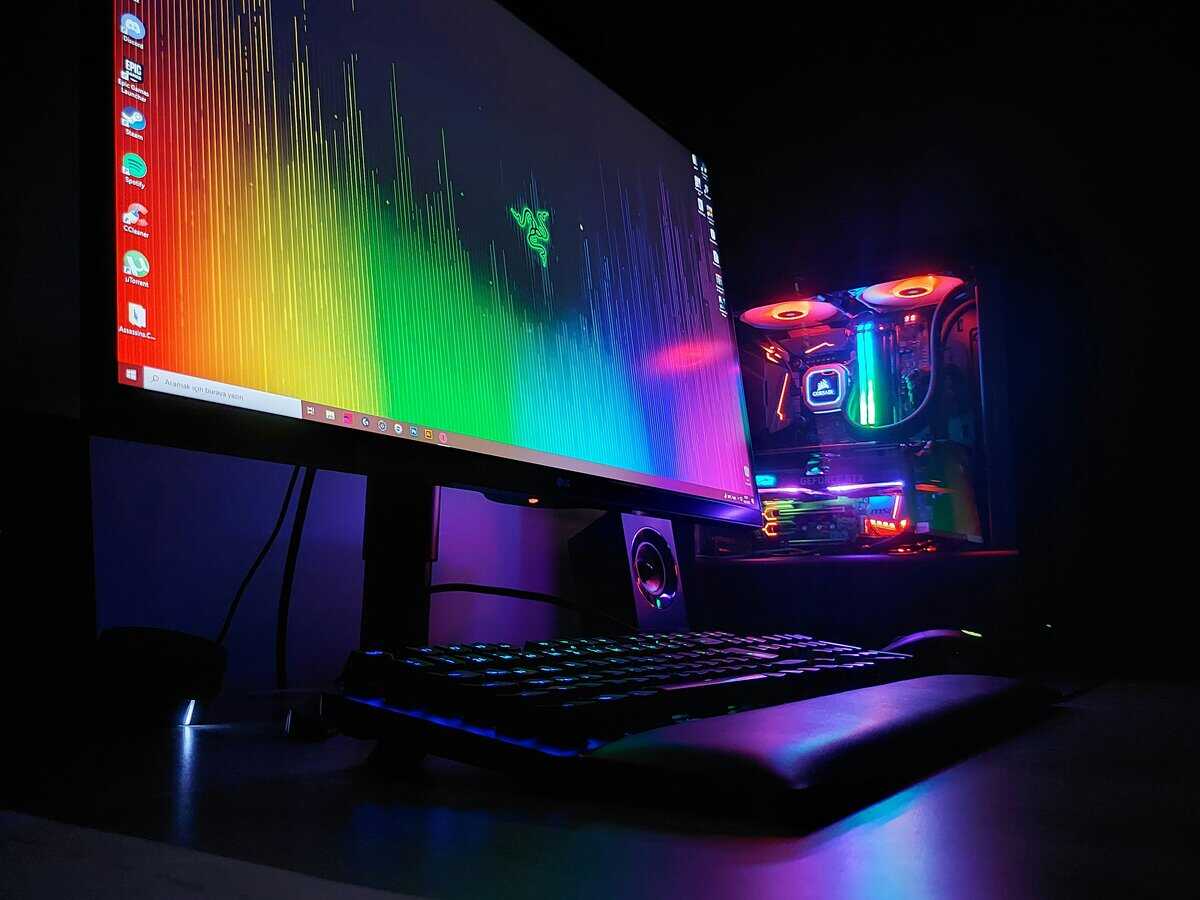
- 1440p monitors hit the sweet spot between sharpness and performance — text is crisper than 1080p without demanding a top-tier GPU
- IPS panels offer the best color accuracy and viewing angles, while VA panels deliver deeper contrast for darker game environments
- A 27-inch screen is the ideal size for 1440p, giving sharp pixel density without needing to sit uncomfortably close
- Budget 1440p monitors between $180-280 now include features like 165Hz refresh rates and adaptive sync that were premium just two years ago
Table of Contents
- 165Hz IPS panel delivers smooth, color-accurate gameplay
- Priced under $200 for excellent value
- 1ms response time keeps ghosting minimal
- Limited HDR at this brightness
- Stand offers tilt only
- No USB-C input
- Curved VA panel delivers deep contrast and rich blacks
- 165Hz refresh rate for smooth competitive gameplay
- Dell's reliable build quality and customer support
- Narrower viewing angles than IPS
- Some motion smear vs IPS
- Stand lacks height adjustment
- Built-in KVM switch for seamless multi-device use
- USB-C input for convenient laptop connectivity
- 170Hz panel with excellent response times
- BGR layout may affect text clarity
- Pricier than AOC and Dell
- Modest HDR performance
Our Top 1440p Monitor Picks
We evaluated dozens of 1440p monitors based on panel quality, refresh rate, build construction, and real-world value. These four represent the best options across different priorities and budgets.
| Monitor | Panel | Refresh Rate | Best For | Price |
|---|---|---|---|---|
| AOC Q27G2S | IPS | 165Hz | Best overall value | ~$180 |
| Dell S2722DGM | VA (Curved) | 165Hz | Contrast and dark room gaming | ~$230 |
| Gigabyte M27Q | IPS | 170Hz | Productivity and gaming hybrid | ~$250 |
| LG 27GP850-B | Nano IPS | 165Hz (OC 180Hz) | Color accuracy and FPS gaming | ~$200 |
AOC Q27G2S: Best Overall Value
The AOC Q27G2S hits the fundamentals without unnecessary extras. Its 27-inch IPS panel delivers accurate colors and wide viewing angles, while the 165Hz refresh rate handles competitive shooters with ease. The stand offers full height, tilt, and swivel adjustment, which is rare at this price point.
The tradeoff is contrast. Like most budget IPS panels, blacks appear more gray than truly dark. For bright, fast-paced games like Valorant or Apex Legends, this is a non-issue. For atmospheric horror games played in a dark room, consider the Dell below.
Dell S2722DGM: Best for Contrast
The Dell S2722DGM uses a VA panel, which delivers a 3000:1 contrast ratio compared to the typical 1000:1 of IPS displays. Dark scenes in games like Alan Wake 2 or Resident Evil have genuine depth. The 1500R curve adds immersion without being distracting.
The compromise is pixel response time. VA panels are inherently slower than IPS, which can cause slight smearing in fast motion. Dell’s overdrive settings help, but competitive FPS players who prioritize motion clarity over contrast should stick with IPS.
Gigabyte M27Q: Best for Productivity and Gaming
The Gigabyte M27Q earns its slightly higher price with versatility. The 170Hz refresh rate edges out competitors, and the KVM switch lets you control two devices with one keyboard and mouse. This is genuinely useful if you work from home and game on the same monitor.
Color coverage hits 92% DCI-P3, making it suitable for light photo editing alongside gaming. The USB-C connectivity is a practical addition for laptop users. Build quality is solid, though some users report minor IPS glow in the corners.
LG 27GP850-B: Best for Color and Speed
The LG 27GP850-B uses LG’s Nano IPS technology, which delivers faster response times than standard IPS while maintaining excellent color accuracy. It covers 98% DCI-P3 and can overclock to 180Hz. For gamers who also do creative work, this balance is hard to beat.
The stand offers full ergonomic adjustment, and build quality reflects LG’s premium positioning. The main downside is availability. This model frequently goes in and out of stock, so grab it when you see it near the $200 mark.
Is 1440p the Right Upgrade for You?
A 1440p monitor makes sense if you have the GPU to drive it. The resolution offers 77% more pixels than 1080p, which translates to noticeably sharper images, especially on a 27-inch screen. Text is crisper, game worlds are more detailed, and the overall experience feels more immersive.
The practical question is whether your graphics card can keep up. A 1440p 144Hz+ monitor paired with a GPU that can only push 60 FPS at that resolution creates a mismatch. You are paying for refresh rate headroom you cannot use.
Resolution Decision Matrix
| Resolution | Best For | Typical GPU Requirement | Key Trade-Off |
|---|---|---|---|
| 1080p | Purely competitive gamers prioritizing maximum FPS on entry-level hardware. | RTX 3050 / RX 6600 | Lower visual detail and immersion. |
| 1440p | Gamers wanting a balance of high frame rates and sharp visual quality. | RTX 3060 / RX 6700 XT | Requires a decent mid-range GPU for optimal performance. |
| 4K | Cinematic single-player experiences where visual fidelity is paramount. | RTX 4070 Ti / RX 7900 XT | Extremely demanding; sacrifices frame rates for resolution. |
For most gamers with a mid-range build, 1440p is the logical choice. You get a real visual upgrade without needing top-tier hardware, especially when using upscaling technologies like DLSS or FSR.
Specs That Actually Matter
Monitor spec sheets are filled with marketing numbers. Focus on the features that genuinely affect your experience.
Panel Type: IPS vs. VA
IPS panels offer accurate colors and wide viewing angles. They are the default choice for most gamers because they handle a variety of content well. Budget IPS models have weaker contrast, meaning dark scenes can look washed out, and you may notice “IPS glow” in the corners during dark scenes.
VA panels excel at contrast. They produce deep blacks that make atmospheric games feel more immersive. The tradeoff is slower pixel response times, which can cause visible smearing or “black trails” behind fast-moving objects. This is a real issue in competitive shooters.
The practical choice: If you play a mix of genres and value versatility, go IPS. If you primarily play cinematic single-player games in a dark room, VA offers a more immersive picture. For a deeper look, you can check out our full guide on why a 144Hz monitor is a game-changer.
Refresh Rate and Response Time
A 144Hz refresh rate is the current baseline for gaming monitors. The jump from 60Hz to 144Hz is immediately noticeable. Everything feels smoother, from cursor movement to in-game camera pans. Going higher to 165Hz or 170Hz offers diminishing returns, but costs little extra.
Response time measures how quickly pixels change color. Lower is better because it reduces motion blur. Manufacturers advertise “1ms” response times, but these numbers are often achieved with aggressive overdrive settings that introduce visual artifacts. Trust independent reviews over spec sheet claims.
Adaptive Sync: FreeSync and G-Sync
Adaptive sync technology matches your monitor’s refresh rate to your GPU’s frame output, eliminating screen tearing. This is a must-have feature.
FreeSync is an open standard that works with AMD GPUs and most modern NVIDIA cards. G-Sync is NVIDIA’s proprietary version, which historically required expensive dedicated hardware.
Today, most budget monitors are “G-Sync Compatible,” meaning they are FreeSync monitors certified to work with NVIDIA GPUs. For value-focused builds, a good FreeSync monitor is sufficient. You do not need to pay extra for native G-Sync.
Matching Your GPU to Your Monitor
A monitor is only half the equation. Your graphics card must consistently produce frame rates that match or exceed your refresh rate, or you are paying for potential you cannot use.
Real-World Performance Expectations
Mid-range GPUs like the NVIDIA RTX 4060 or AMD RX 7600 XT handle 1440p well in most scenarios, but performance varies by game.
In demanding AAA titles like Cyberpunk 2077 at high settings, expect 60-80 FPS at native 1440p. This is playable but does not fully utilize a 144Hz+ monitor. For cinematic games where visual fidelity matters more than frame rate, this is acceptable.
In optimized esports titles like Apex Legends or Valorant, the same GPU can push 150-200+ FPS at 1440p. This is where high refresh rate monitors shine, delivering the responsive feel competitive players need.
Upscaling Technology Bridges the Gap
DLSS (NVIDIA) and FSR (AMD) are essential tools for budget gamers. These technologies render games at a lower internal resolution, then use intelligent algorithms to upscale the image to your monitor’s native 1440p.
The performance gains are substantial. Enabling DLSS Quality mode in a demanding game can boost frame rates by 30-50% with minimal visual impact. This makes high-refresh 1440p gaming achievable on more modest hardware. If you want to understand how these upscaling technologies actually work under the hood, this breakdown of DLSS, FSR, and PSSR covers the differences worth knowing.
If you are building a value-focused 1440p system, factor upscaling into your expectations. A mid-range GPU paired with DLSS or FSR can deliver a better experience than the raw specs suggest. For more GPU guidance, see our guide on picking the best budget graphics card.
Choosing a Monitor for Your Gaming Style
The best 1440p monitor depends on the games you play most.
Competitive FPS
For Valorant, CS2, or Apex Legends, prioritize refresh rate and response time. A 165Hz+ IPS panel with fast pixel response gives you the smoothest motion clarity. Input lag should be minimal. Features like contrast ratio and color accuracy matter less when you are focused on spotting enemies and hitting shots.
Our pick: AOC Q27G2S or LG 27GP850-B
Immersive Single-Player
For Baldur’s Gate 3, Elden Ring, or cinematic story games, visual quality takes priority. Color accuracy and contrast enhance the experience. A high refresh rate is nice but less critical when games run at 60-80 FPS anyway.
Our pick: Dell S2722DGM (for contrast) or LG 27GP850-B (for color)
Productivity and Gaming
If you work from home and game on the same monitor, versatility matters. Look for USB-C connectivity, a KVM switch, and accurate colors for document work. The ability to connect a laptop and a gaming PC to the same display simplifies your setup.
Our pick: Gigabyte M27Q
Console Gaming
Both PlayStation 5 and Xbox Series X support 1440p output natively. This delivers higher frame rates than 4K while providing a sharper image than 1080p. A 1440p monitor is the practical choice for console gamers who want performance and clarity.
Our pick: Any of our four recommendations work well with current-gen consoles.
Build Quality: Do Not Overlook the Stand
A great panel on a wobbly stand is a frustrating experience. Budget monitors cut costs somewhere, and the stand is often where compromises appear.
Look for height adjustment at a minimum. This lets you position the screen at eye level, which matters for comfort during long sessions. Tilt is standard. Swivel and pivot are nice but not essential for most users.
Check reviews for comments about “stand wobble” or “build quality.” A flimsy stand is a daily annoyance that spec sheets never reveal. All four of our recommended monitors have adequate to good stands, with the LG 27GP850-B offering the most robust construction.
Frequently Asked Questions
Here are straight answers to common questions about 1440p monitors.
Is 27 Inches The Best Size For 1440p?
Yes. At 27 inches, 1440p delivers approximately 109 pixels per inch. This is sharp enough that individual pixels are not visible at normal viewing distances, and text renders crisply without Windows scaling. You can find 32-inch 1440p monitors, but the lower pixel density makes the image noticeably less sharp up close.
Will 1080p content look blurry on a 1440p monitor?
Somewhat. When a monitor displays content below its native resolution, it must scale the image. This introduces some softness. Older games or video content at 1080p will look watchable but not as crisp as on a native 1080p display. Modern games running at native 1440p look excellent.
Do I need G-Sync, or is FreeSync enough?
FreeSync is sufficient for most gamers. Modern NVIDIA GPUs work with FreeSync monitors through “G-Sync Compatible” certification. You no longer need to pay a premium for native G-Sync hardware unless you want the absolute best adaptive sync experience at very low frame rates.
How long do gaming monitors typically last?
With normal use, expect 3-5 years before noticeable degradation. Panel brightness decreases over time, and some users experience dead pixels. Build quality affects longevity. Our recommended monitors from AOC, Dell, LG, and Gigabyte all come from established brands with reasonable quality control.
When you upgrade, don’t just discard your old display. There are many practical ideas for your old computer monitor that are better than sending it to a landfill.
At Budget Loadout, we provide clear, hype-free recommendations to help you build a high-performance gaming setup without breaking the bank. Find your perfect gear at https://budgetloadout.com.
Related Articles