Building a gaming PC under $500 is achievable, but requires realistic expectations. This budget will not buy a 4K system that runs new releases on ultra settings. It will, however, get you a capable 1080p machine for the world’s most popular games, provided you allocate your funds wisely.
- Building a gaming PC for under ~$500 is achievable in 2026 if you prioritize the GPU and buy smart on other components
- A Ryzen 5 5500 paired with 16GB DDR4 RAM provides a capable foundation that handles modern games at 1080p
- Used or last-gen GPUs offer the best value at this price — a used RTX 3060 or RX 6600 delivers strong 1080p performance
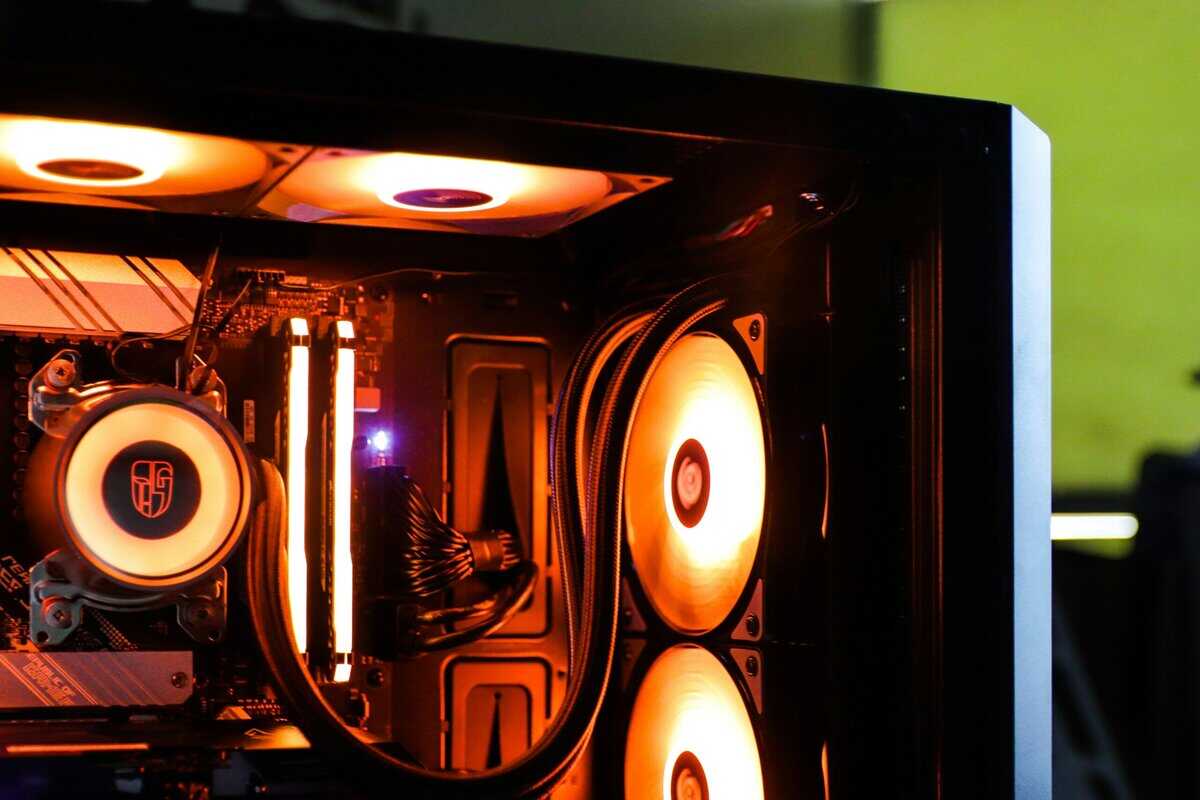
- Skip RGB, fancy cases, and expensive coolers — put that budget toward a better GPU and SSD instead
- A ~$500 build won’t match a console’s convenience, but it offers upgradeability, modding, and access to the full PC gaming library
Table of Contents
What a $500 Gaming PC Can Realistically Do
Before selecting parts, it’s essential to set a performance baseline. The primary goal for a PC at this price is to deliver a smooth, responsive experience in the games you play most frequently. This means prioritizing stable frame rates over maximum graphical settings.
This type of system will handle popular esports titles effectively. Games like Valorant, CSGO, League of Legends, and Fortnite (on performance mode) are optimized to run on a wide range of hardware. You can expect to achieve 60 FPS or higher at 1080p, often with medium to high settings. For competitive players, this performance is more than adequate.
Performance in Demanding Games
For graphically intensive AAA games like Cyberpunk 2077 or the latest Call of Duty, compromises are necessary. Reaching a stable 60 FPS is often possible, but it will require reducing in-game settings to low or medium.
This is the fundamental tradeoff of budget PC building: you exchange graphical fidelity for fluid gameplay. This is comparable to a console experience, but with the added benefits of PC flexibility and a clear upgrade path for the future.
A common mistake is expecting a $500 system to perform like one that costs twice as much. Success is about smart resource allocation—investing in components that matter for 1080p gaming and knowing where to save.
If you can extend your budget, builds for the best gaming PC under $1000 offer a significant performance increase, often allowing for higher settings in demanding titles.
The long-term durability of your sub-$500 PC depends on your component choices. Investing in a reliable power supply and a case with adequate airflow is critical. These choices protect your components and provide a solid foundation for future upgrades.
To provide a clearer picture, here is what you can generally expect across different game genres.
Expected 1080p Performance by Game Type
This table outlines the performance you can realistically target with a well-planned $500 gaming PC. It aligns expectations with the demands of each game type.
| Game Genre | Target Frame Rate (FPS) | Typical Graphics Settings |
|---|---|---|
| Esports (Valorant, CSGO) | 60 – 120+ FPS | Medium to High |
| MMOs (Final Fantasy XIV) | 50 – 60 FPS | Medium |
| AAA Titles (Cyberpunk 2077) | 45 – 60 FPS | Low to Medium |
| Indie & Older Titles | 60+ FPS | High to Ultra |
As shown, you will have a functional experience in a large library of games. The key is understanding that for the newest, most demanding titles, you’ll be tuning settings for performance over visual fidelity—a standard tradeoff for any budget-conscious builder.
The Most Important Choice: APU vs. Dedicated GPU
When building a gaming PC for under $500, you must make one critical decision at the outset: build around an APU, or include a dedicated GPU?
This choice dictates how the rest of your budget is allocated and defines your PC’s initial performance. There is no single “best” option, only the one that is right for the games you intend to play.
An APU, or Accelerated Processing Unit, combines the CPU and graphics processing onto a single chip. It is a processor with integrated graphics that are sufficient for light gaming. This is a significant budget-saver, as it merges two of the most expensive components into one. This frees up funds for better RAM, a quality power supply, or more storage—all of which contribute to a more responsive and durable machine.
The APU route involves a clear performance tradeoff. It will handle popular esports titles like Valorant and MMOs at 1080p with playable frame rates. However, it will struggle with new, graphically intense AAA games. The advantage is that the overall build quality of an APU system is often higher because the budget is not stretched as thin.
The Dedicated GPU Route
Opting for a separate, or dedicated, graphics card provides more gaming performance immediately. Even an entry-level GPU will outperform any APU, allowing you to play more demanding titles at higher settings. This is the path for anyone who plays modern FPS games or story-driven AAA titles and wants the best possible visuals from the start.
However, that performance comes at a cost. Fitting a CPU and a GPU into a sub-$500 build requires significant compromises elsewhere. You will likely have to select a weaker CPU, a basic motherboard with fewer features, or a case with suboptimal airflow. The overall build quality can be lower as every dollar is contested.
If you are leaning this way, our guide on the best budget graphics card can help you find a GPU that doesn’t consume your entire budget.
The core dilemma is this: an APU build offers a better-balanced, more durable PC with a clear upgrade path. A dedicated GPU build prioritizes immediate gaming performance at the expense of other components.
Making the Right Call for Your Use Case
Let’s break this down into specific scenarios to aid your decision.
You’re an Esports and MMO Gamer: If your primary games are CS2, League of Legends, or Final Fantasy XIV, an APU like an AMD Ryzen 5 is a logical choice. The integrated graphics are sufficient for these titles, and the money saved can be invested in faster RAM, which directly improves APU performance.
You’re an Aspiring Streamer: Streaming is CPU-intensive. An APU build allows for a more powerful processor, but your in-game graphics will be limited. A dedicated GPU build with a cheaper CPU is better for the game’s visuals but may struggle to encode the stream simultaneously. Neither option is ideal for streaming. For a starting point, the APU route often provides a more stable overall system, but expect to stream at lower resolutions and bitrates.
You’re a AAA Game Enthusiast: If you need to play the latest single-player titles, a dedicated GPU is mandatory. You will have to accept lower settings and make disciplined component choices, but it is the only way to get a playable experience in those demanding titles from day one.
Choosing Your Components for Maximum Value
Building a gaming PC under $500 is an exercise in making smart compromises. Every dollar allocated to one component cannot be spent elsewhere. This section provides a strategy for making value-driven choices that prioritize stable performance and system longevity.
The goal is a balanced system, not one that crams in the most powerful GPU at the expense of everything else. A cheap, unreliable power supply or a motherboard with no upgrade potential can turn the project into a dead end. Getting the foundation right is essential.
The CPU and GPU Balancing Act
The core of your build will be the processor and graphics card. On a tight budget, you need a CPU that is sufficient for gaming and daily tasks without consuming funds needed for the GPU.
A strong candidate is a CPU like the AMD Ryzen 5 5500. It provides six cores and twelve threads, which is adequate for 1080p gaming and moderate multitasking. It delivers reliable performance without requiring an expensive motherboard or aftermarket cooler, making it a good value proposition.
For the graphics card, expectations must be realistic. An entry-level card like the AMD Radeon RX 6500 XT or a comparable used model is a common choice. It will handle esports titles well and can run modern AAA games at 1080p on low-to-medium settings. It is not a high-performance card; its limited VRAM and memory bus are the tradeoffs for its price.
The goal is a functional pairing. A weak CPU will bottleneck a decent GPU, wasting its potential. Conversely, an overpowered CPU paired with a bottom-tier GPU is wasted money. The Ryzen 5 5500 and an entry-level card represent a sensible compromise.
This approach has proven effective. For instance, analyses from early 2026 showed that a Ryzen 5 5500 CPU, which had dropped to under $100, became a cornerstone for sub-$500 builds capable of delivering over 60 FPS in demanding titles like Cyberpunk 2077 on medium settings when paired with a competent budget GPU. These builds demonstrated that solid 1080p performance was achievable without relying on weak integrated graphics.
Motherboard, RAM, and Storage: The Unsung Heroes
While less exciting than the CPU or GPU, these components are critical for system stability and user experience. Skimping too much here is a common mistake.
Motherboard: You do not need flashy features, but you need reliability. Look for a basic B450 or A520 motherboard for an AMD build. Ensure it has at least two RAM slots (four is better for future upgrades) and an M.2 slot for a fast SSD. Build quality in this context means stable power delivery for the processor.
RAM: For modern gaming, 16GB of DDR4 RAM is the standard. Settling for 8GB will cause stuttering and poor performance in many games. A dual-channel kit (2x8GB) running at 3200MHz is the ideal target for this budget.
Storage: A Solid State Drive (SSD) is mandatory. The speed difference compared to a mechanical hard drive affects everything from boot times to game loading screens. A 500GB NVMe M.2 SSD offers a good balance of speed and capacity for your operating system and several games.
Power Supply and Case: The Foundation of Durability
These final two components are about protecting your investment and ensuring your PC has a future.
Your Power Supply Unit (PSU) is arguably the most important component for system longevity. A cheap, unrated PSU can be a safety hazard and may damage other components when it fails. Look for a 450W or 500W PSU with an 80+ Bronze efficiency rating from a reputable brand. This ensures stable power delivery and provides some headroom for minor upgrades.
The case does more than hold components—it is responsible for airflow. A case with poor ventilation will cause components to overheat, throttling their performance and reducing their lifespan. Even a budget case should have a mesh front panel and include at least one fan. Durability means a sturdy steel frame, not flimsy plastic.
Navigating the Used Parts Market Safely
To maximize a gaming pc under $500, the used market is a critical resource. It is not just an option; it’s a method for stretching every dollar. However, it also carries risks if you are not careful.
The goal is not just finding the cheapest part, but finding value—components that perform above their price point. A graphics card from a previous generation can deliver performance that new parts in the same price range cannot match. The key is knowing which parts are safe to buy used and which are not.
What to Buy Used
Some components have long operational lifespans with no moving parts, making them relatively safe to buy second-hand with proper vetting. These parts offer the best risk-to-reward ratio for a budget build.
Graphics Cards (GPUs): A used GPU is where you can find the most significant savings. Cards from gamers or even ex-mining cards that were properly maintained can have years of life left.
Processors (CPUs): CPUs are extremely durable. They are arguably the safest component to buy used because they generally either work or they do not.
RAM (Memory): Like CPUs, RAM sticks are very reliable. As long as they pass a memory test (like MemTest86), they are typically fine.
What to Avoid at All Costs
Conversely, some components are not worth the risk. A failure in these parts can be catastrophic, potentially destroying your entire system. This is where spending more for a new part with a warranty is the correct decision.
The golden rule of budget building is this: never buy a used power supply or storage drive. A failing PSU can damage every component, and a dying SSD or HDD means your data is lost. The small amount saved is not worth that risk.
These parts have finite lifespans and degrade over time. Buying new is the only way to ensure your build has a reliable foundation.
Vetting Sellers and Inspecting Parts
Success in the used market requires due diligence. Approach it with a methodical checklist.
Check Seller Ratings and History: On sites like eBay, look for sellers with a long history of positive feedback, specifically for computer hardware. A new account selling a high-end GPU for a low price is a major red flag.
Request Recent Benchmarks: Ask the seller for a recent photo or screenshot of the component running a benchmark. For a GPU, ask for a FurMark score; for a CPU, a Cinebench score. This provides evidence it was working recently.
Inspect Physical Condition: Scrutinize high-resolution photos for damage. Look for bent pins on the CPU, bulging capacitors on the motherboard, or excessive dust and corrosion. These are signs of poor maintenance.
Confirm the Return Policy: Do not buy from a seller who does not offer a reasonable return policy. This is your only recourse if the part arrives non-functional.
By being strategic about what you buy used and thoroughly vetting who you buy from, you can build a more powerful gaming pc under $500 without sacrificing stability.
Building a PC That Can Grow With You

A gaming PC under $500 is not a dead end; it is a foundation. Think of it as a starting point that you can improve as your budget and needs expand. A few strategic choices now will prevent future costs and complications when you are ready to upgrade.
This is about maximizing your initial investment. For example, spending an extra $10 on a motherboard with four RAM slots instead of two may seem minor, but it allows you to add two more sticks of RAM later instead of replacing the entire kit. This small decision preserves the value of your first purchase.
Planning Your Upgrade Path
The most common and effective upgrade path for a budget build is to start with a capable APU and add a dedicated graphics card later. This strategy provides a fully functional PC now while you save for the single most impactful gaming component.
When you are ready, you can install the new GPU and its drivers to instantly boost your system’s gaming performance. This works because the rest of your system—a reliable power supply, sufficient RAM, and a competent CPU—is already in place. The new graphics card completes the system rather than necessitating a full rebuild.
Your first build is a starting point. By selecting parts with future potential, you ensure that your $500 investment continues to provide value as you add more powerful components. It is the difference between a disposable build and a system that evolves with you.
Key Components for Future-Proofing
To make this strategy work, certain components are more critical than others. They form the backbone of your build, and selecting them correctly is key to its longevity and expandability.
The Power Supply (PSU): Do not buy a PSU that only meets your current needs. Instead, select one with extra wattage. A quality 550W 80+ Bronze unit provides enough headroom to support a mid-range graphics card later, saving you from buying a new PSU and rewiring the system.
The Motherboard: As mentioned, a board with four RAM slots is a smart choice. You should also ensure its feature set can support a better CPU from the same generation down the line.
The Case: It is tempting to buy the cheapest case available, but this can cause problems later. Choose a case with good airflow and enough physical space to accommodate a larger, more powerful graphics card in the future. A cramped case with poor ventilation will cause new components to overheat and throttle. Investing in a case with good build quality protects your components and ensures they run cool.
Got Questions About Your Budget PC Build?
Entering the world of PC building often raises questions. When working with a tight budget, getting the answers right can be the difference between a successful build and a frustrating experience. Let’s address the most common questions about building a gaming PC under $500.
We will clarify issues around streaming, build quality, and whether buying a pre-built machine is a better option.
Can a $500 PC Handle Streaming?
The direct answer is: not well. A budget PC will struggle to run a game and encode a high-quality stream simultaneously. The processor is required to perform two demanding tasks at once, and at this price point, there isn’t enough processing power to do both without significant performance loss in the game.
When you start streaming a demanding game like Valorant, your in-game frame rate will likely drop significantly. It might be functional for very simple or older games, or by reducing your stream quality to a low resolution and bitrate, but it will not be a smooth experience. For consistent streaming, a more powerful build or a dedicated streaming PC is necessary.
How Much Does Build Quality Really Matter?
Build quality is not a luxury; it is a critical aspect of a successful budget build. It refers to the durability and reliability of your core components, especially the case, motherboard, and power supply. A flimsy case with poor airflow will cause components to overheat, shortening their lifespan and throttling their performance.
Skimping on the power supply is even riskier. A low-quality PSU is a significant gamble. An unstable power supply can deliver inconsistent voltage, leading to system crashes or, in a worst-case scenario, damaging your other components. Spending an additional $15-$20 on a reputable 80+ Bronze rated PSU is one of the smartest investments for the long-term health of your gaming pc under $500.
Do not confuse “budget” with “cheap.” The goal here is value and durability. A well-built machine with thoughtfully chosen components will always outperform and outlast a system where every part was selected based on the lowest possible price.
Is It Better to Buy a Pre-built or Build It Myself?
At the sub-$500 price point, building the PC yourself is almost always the better option. Pre-built manufacturers must account for labor costs and profit margins, which often leads them to use lower-quality components that are not advertised, such as the power supply, motherboard, or storage drive.
When you build the PC yourself, you have complete control over every component. This allows you to allocate your money to what matters most, ensuring you get a quality PSU, a decent case with good airflow, and the best CPU/GPU combination for your budget. Furthermore, the building process provides valuable knowledge about how your system works, which simplifies future troubleshooting and upgrades. You get a better, more reliable machine for the same price, and the experience is rewarding.
Find the perfect balance of price and performance for your gaming needs at Budget Loadout. Explore our curated guides now: Budget Loadout
Related Articles